










ZODIAK ONLINE
ArtBridge House, Area 47
Sect. 5, P/Bag 312
Lilongwe, Malawi
Sect. 5, P/Bag 312
Lilongwe, Malawi


A PIJ–ZBS joint investigation reveals how lax procurement, foreign dumping, and zero testing capacity are turning life-saving cancer treatment into a fatal gamble.
Malawi is facing a grave, unmonitored public health threat: the widespread distribution of substandard, falsified, and expired cancer drugs across both public hospitals and private pharmacies, a joint investigation by the Platform for Investigative Journalism (PIJ) and Zodiak Broadcasting Station (ZBS) reveals.
Despite a nationwide influx of cancer treatments, Malawi cannot independently test oncology medications—a gap leading oncologists believe has already cost lives, according to interviews conducted for this report.
While general pharmaceutical suppliers are heavily regulated, the joint investigation reveals that cancer drugs flow through far less oversight. These compromised medications reach major tertiary referral hospitals—including Kamuzu Central Hospital (KCH) in Lilongwe and Queen Elizabeth Central Hospital (QECH) in Blantyre—as well as private commercial pharmacies.
The joint-investigation builds on landmark findings from a multi-nation study published in The Lancet Global Health and funded by the US National Cancer Institute. Led by researchers from the University of Notre Dame and local experts, the study analyzed 251 chemotherapy doses collected across four African countries, including Malawi, between April 2023 and February 2024.
The findings were alarming: nearly a quarter (24%) of all samples had expired before reaching the lab—some by almost a full year. Defective medications surfaced at every sampling site, from state-run central hospitals to private retail pharmacies.
Chemical assays revealed that up to 24% of tested doses failed standard quality tests, with active ingredient levels wildly volatile—dipping as low as 28% and spiking to a toxic 120%. Worse still, standard visual checks missed 91% of these compromised drugs, proving that dangerous chemical flaws remain entirely invisible to the naked eye.
Researchers tested seven key anti-cancer drugs: Methotrexate, Oxaliplatin, Cisplatin, Cyclophosphamide, Doxorubicin, Ifosfamide, and Leucovorin.
Due to an absence of official licensed suppliers for cancer treatments, tracking the precise entities responsible for delivering specific batches analysed in the study proved difficult for the follow up investigation.
However, a hospital pharmacist familiar with the study linked some of the substandard drugs to foreign government donations.
According to Dr Ibrahim Chikowe, a lead researcher on the study, Malawi urgently needs stronger drug surveillance to determine how these substandard medications are affecting patient survival.
“We could detect in some samples drugs that looked falsified, but we did not focus on falsification; what we focused on was whether the drugs were substandard based on international standards,” said Chikowe.
He warned that Malawi's inability to test oncology drugs has opened the door to widespread, compromised treatments.
“Malawi, like most of the countries covered in the research, does not have any laboratories for analysing cancer drugs,” he added.

Cheap is Costly
To buy medicines from private suppliers, public hospitals must first obtain an “Out-of-Stock” confirmation letter from the state-run Central Medical Stores Trust (CMST). For anti-cancer medications, facilities must also secure import permits from the Pharmacy and Medicines Regulatory Authority (PMRA).
This decentralised procurement system traces back to around 2019, when government policy was relaxed after the CMST struggled to maintain stock of essential drugs. Central hospitals were granted permission to buy privately whenever the Trust ran dry. That authority eventually trickled down to district facilities, which are now permitted to spend up to 10 per cent of their supply budgets on direct local purchases.
However, medical insiders argue that this shift created a dangerous loophole: procurement rules that prioritize low cost over high quality.
According to multiple health sector sources, this cost-first approach has compromised hospital supplies and fueled corruption. Hospital procurement committees often operate under the flawed assumption that safety and quality were already verified during initial vendor pre-qualification. In reality, sources say, that vetting rarely happens—even during emergency purchases for life-saving drugs.
“Most of the times we are looking for cheaper medicines, according to our pockets, what we can afford and there are so many outlets in Malawi and that's why I am emphasizing on regulation,” added Dr Amos Msekandiana.
Beyond local purchasing flaws, foreign aid brings its own risks. One pharmacist at Kamuzu Central Hospital familiar with the UNC study blamed the influx of substandard drugs on foreign donations, accusing international sources of using Malawi as a dumping ground.
“Manufacturers are avoiding the high cost of disposing of them at source at home, knowing African countries like ours lack stringent testing mechanisms for drugs and are desperate. As a result, some of the defective drugs in our hospitals arrived via donations,” he added.
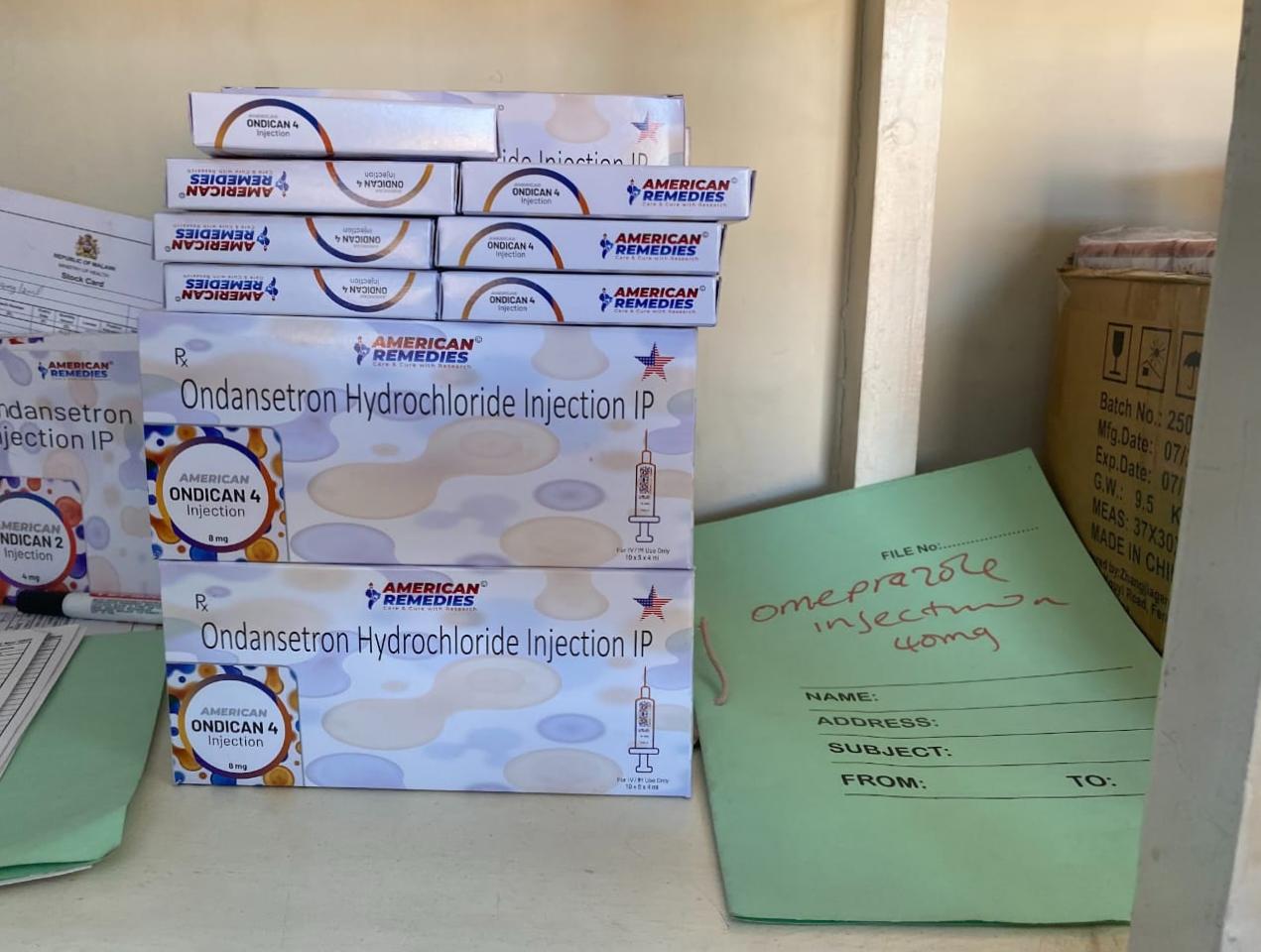 The Human Toll at the Bedside
As defective supplies enter the country through foreign donations and state procurement via the Central Medical Stores Trust (CMST), frontline medical staff are left to navigate a system that turns life-saving care into a fatal gamble.
In the wards, the consequences are immediate and devastating. Oncologists across Malawi’s major referral hospitals interviewed for this article describe patients whose lives were cut short not by cancer, but by severe lapses in quality control.
One oncology pharmacist, speaking on condition of anonymity, recalled witnessing a deadly overdose caused by compromised methotrexate—a frontline drug used to treat lymphoma and leukaemia.
It is a nightmare Dr Richard Nyasosera, Lead Oncologist at Kamuzu Central Hospital (KCH) in Lilongwe, knows all too well. He points to a catastrophic case involving Oxaliplatin, a standard chemotherapy drug for colorectal and gastrointestinal cancers.
Shortly after administering what should have been a routine dose, Dr Nyasosera watched his patient suffer severe, atypical toxicity that ultimately proved fatal. He believes the patient died of an acute overdose—triggered by a batch heavily overconcentrated with active ingredients.
“If we have fake or substandard drugs, they will not work on the patient,” says Dr Nyasosera.
“I have had incidents where I prescribed, for example, capecitabine, and found that even though the dosage I used was within the normal API, the patient overreacted. There was toxicity from capecitabine; unfortunately, that patient died. It is with such cases in mind that when the API is higher, exceeding 110% or 120%, it is the patient who suffers. Clinical observation indicated that the patient died due to the drug—the symptoms were clear side effects of the treatment. Now the issue is, if we have substandard drugs and the API exceeds 110% or 120%, the patient suffers, but the doctor would not know that the API is high because we simply receive the drugs from suppliers hoping all is well,” he added.
The oncologist was quick to add, however, that the issue of substandard medication was not limited to Malawi or cancer drugs alone. “This issue of substandard drugs affects all medical disciplines, not only cancer care. Even with Panadol, if the API is low, you will not be cured of pain. So this is a very serious issue, and it has to be addressed immediately,” said Dr Nyasosera.
Confronting the crisis
The findings of study comes as the country continues to grapple with problems with fake or substandard drugs. A study by Bahir Dar University in Ethiopia revealed in 2024 that Malawi had the highest proportion of substandard and falsified medicines in the continent.
To close these regulatory gaps, clinicians and health leaders—including Dr Nyasosera and officials from the Medical Council of Malawi (MCM)—are urging authorities, particularly the Pharmacy and Medicines Regulatory Authority (PMRA), to strictly screen oncology imports and blacklist vendors supplying compromised drugs.
Dr Dave Zolowere, Registrar of the Medical Council, described the study's findings as a full-blown crisis requiring urgent national debate.
PMRA Director General Dr Charles Chimenya conceded that substandard cancer treatments are entering the country. He admitted the agency lacks the technical capacity to verify oncology pharmaceuticals, attributing the gap to the relative infancy of local specialist care, which has only existed in Malawi for 15 years.
He noted that the country currently relies on partner international organisations, such as the WHO, for the certification of cancer drugs.
“I can confirm that at PMRA we are aware of the study conducted by UNC, and regarding its findings, it is a worrisome development to some extent, considering that medicines used must be of good quality and safe. However, the challenge is not unique to Malawi; if you look at the findings of the study, you will find that many low- and middle-income countries face similar problems,” said Chimenya.
Dr Chimenya added that the PMRA plans to introduce stricter screening protocols for incoming oncology treatments.
Yet, despite being legally mandated to ensure all pharmaceuticals in Malawi meet strict potency standards, the PMRA remains fundamentally equipped to test only conventional medicines—leaving the country's cancer pipeline completely unverified.
This article was produced by the Platform for Investigative Journalism (PIJ) in collaboration with Zodiak Broadcasting Station (ZBS). PIJ is a non-profit centre for investigative journalism based in Malawi, dedicated to promoting ethical and responsible public interest journalism.
ABOUT THE AUTHORS
GOLDEN MATONGA is a Managing Partner at the Platform for Investigative Journalism (PIJ) and an investigative journalist based in Lilongwe, Malawi. He also writes for the international press, including The New York Times, Financial Times, The Continent and The Guardian. He is a member of the International Consortium of Investigative Journalists (ICIJ). Email:
GABRIEL KAMLOMO is the Director of News at Zodiak Broadcasting Station (ZBS) and an investigative journalist based in Lilongwe. Email: