







ZODIAK ONLINE
ArtBridge House, Area 47
Sect. 5, P/Bag 312
Lilongwe, Malawi
Sect. 5, P/Bag 312
Lilongwe, Malawi

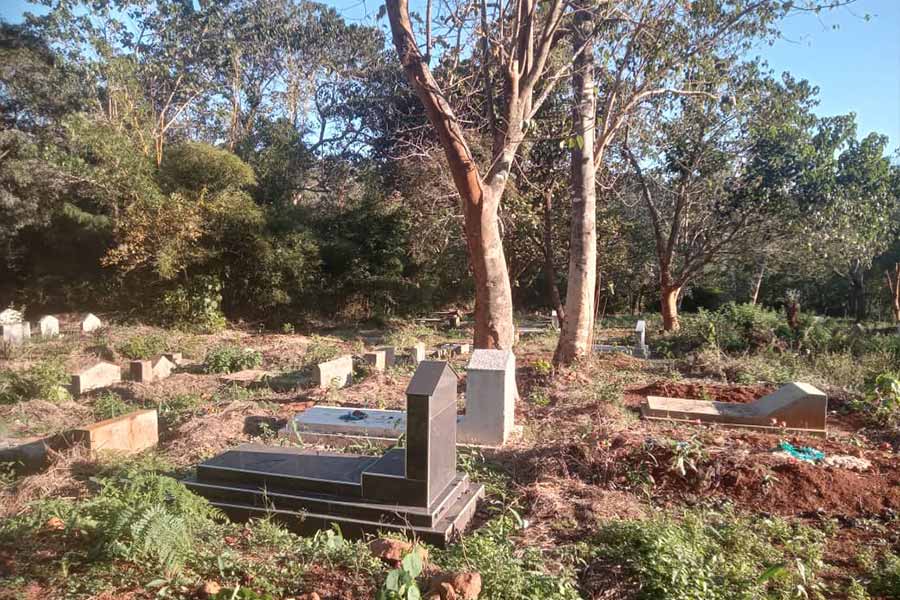
As Malawi pushes to restore its forests, some villagers in Thyolo lament a sacred graveyard is being turned into charcoal and timber.
The graves lie quietly beneath the winter sun. In most areas in the country, the graveyards keep thick trees.
For generations, families from Group Village Headman Bitcha, Zintambira, Smart, Mvyelima, Chilapa, Esnart, Ndinyaza and surrounding villages under Senior Chief Khwethemule in Thyolo have buried their loved ones at the "Ku 21" cemetery and a nearby children's graveyard.
The burial grounds were once protected by towering Mombo trees and dense vegetation that provided shade, preserved soil and stood as living monuments to the dead.
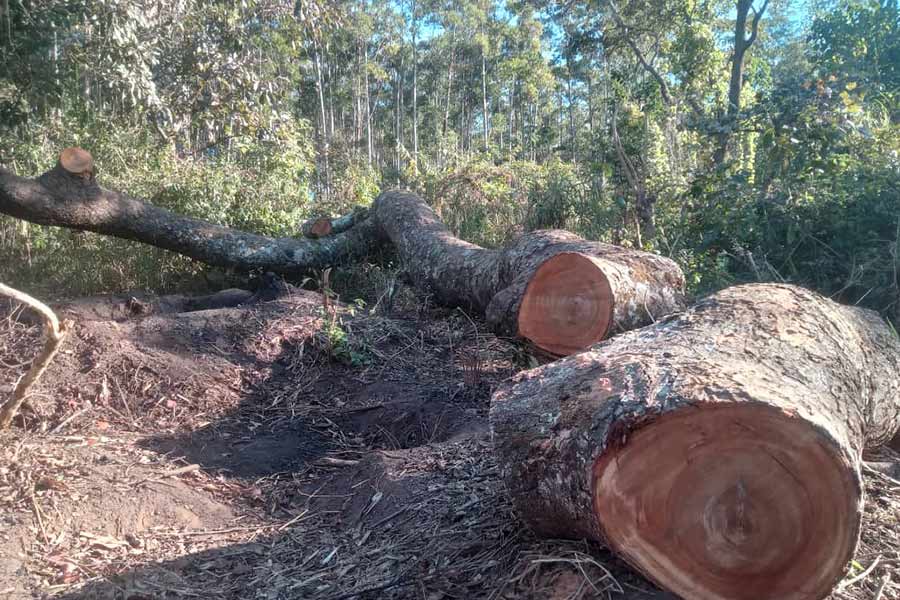
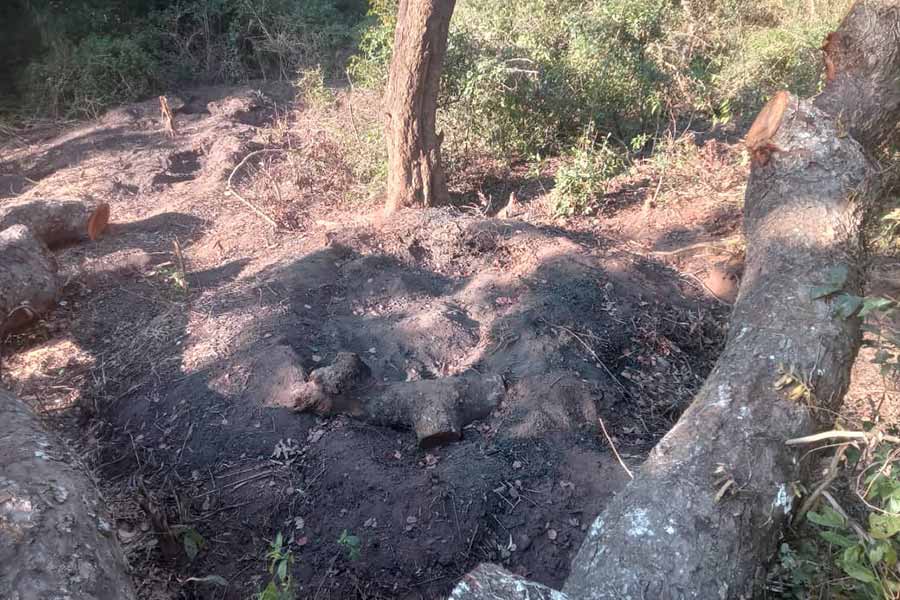
Today, villagers say the silence of the graveyards is broken by the sound of axes and charcoal kilns.
What was once a sacred resting place for ancestors is, according to community members, steadily being stripped of its trees in the name of development.
"They tell us the trees are being cut to make bench chairs for funerals," says Chairperson of Concerned Citizens, Fyson Chigono, standing among tree stumps and scattered charcoal dust.
"But how many years have we heard that story? We do not go to funerals to sit on benches. One charcoal kiln can produce up to 18 bags from these trees. Look around. How many trees have disappeared? Our ancestors are buried here. This destruction must stop, he added"
Villagers allege that some individuals from Village Headman Bitcha have been cutting trees and producing charcoal after claiming they received authorization from traditional leaders. The charcoal and timber, they say, are sold to raise money for funeral benches.
Yet villagers question the accountability behind the initiative.
Earlier this year, they disclose, households contributed K1,000 each towards the same purpose. Months later, no benches have materialized.
The frustration runs deeper than money.
For 70-year-old Edith Kasonga, a Concerned villager, the destruction feels personal.
"Our ancestors never witnessed such things. Akutentha mitu za abale athu (The are burning our ancestors)," she says softly.
"These people came to seek permission to use our graveyard, but now the trees that sheltered our forefathers are disappearing. We called those responsible to explain, but they never came. We will continue pursuing justice," she added.
In many African communities, graveyards are more than burial grounds. They are cultural archives, sacred landscapes connecting the living to the dead. Their destruction represents not only environmental loss, but an erosion of heritage and identity.
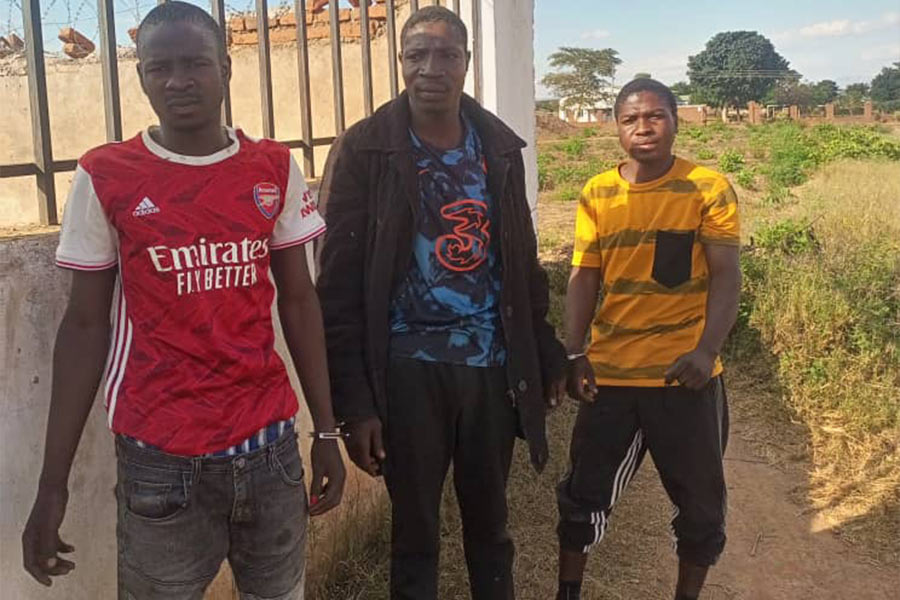
The anger has prompted some descendants of families buried at the sites to organize patrols. Several bags of charcoal allegedly produced within the graveyards have already been confiscated.
Chairperson of Grave Diggers, Stainly Masamba, says those apprehended implicated local village heads.
"We have held meeting after meeting here at the graveyard for three weeks now (June 2026) trying to understand why this is happening," he says.
"We summoned the implicated chiefs, but they did not come. If answers are not provided, we will take the matter to the District Commissioner and other authorities."
On June 16, community representatives formally petitioned the Thyolo District Commissioner to intervene.
However, GVH Bitcha has dismissed claims that he is plundering the graveyard forest. He says it was a collective decision by four Group Village Headmen to make charcoal from a fallen Mombo tree so proceeds could be used to buy timber for funeral benches.
“After noting that we always have problems finding seats for chiefs and others during funerals, we agreed to collect K1,000 from each household for the same purpose. But when we heard that the Mombo tree, which we know does not produce timber, had fallen and people descended on it, we agreed to produce charcoal for sale,” he explained.
The chief alleges that those behind the reports are conniving to dethrone some chiefs in the area.
He also said they have been consulting Senior Chief Khwethemule on all decisions regarding the matter, and that no other tree has been cut down in the graveyard.
"We have also been engaging at least 25 clans that use the graveyard on all the decisions except one which is in the other Group Head Heremani. You need to know that some of these people have ill-motives of dethroning some of us, so they use such stories," he alleged.
He added that they are working to summon leaders of the group accused of organizing unlawful meetings in the graveyard after they snubbed earlier calls.
But, Zodiak findings from some carpenters in the area established that the Mombo tree is produced into hard wood timber, contradicting the chief's claim.
Senior Chief Khwethemule has confirmed that the chiefs consulted him before deploying people to produce charcoal from the fallen tree. He alleges that those raising complaints are disgruntled because they were the ones who descended on the tree.
“When the chiefs hatched the idea of making benches, I told them to discuss with their subjects before collecting money, which they did. And when the tree fell in the graveyard, they also informed me and I directed them on what to do,” chief Khwethemule said.
He suspects the group has a personal issue with the chiefs.
“But I think this group has something against these chiefs. This is because they also reported the matter to the district council without my knowledge. So I am waiting for them,” he said.
The country has long condemned wanton tree-cutting in mountains and other areas. Now, even ancestral and heritage sites face the same threat.
Acting District Forest Officer Francis Yohane says the district council has yet to receive the concerns.
"We are finding out on the reports. We have sent extension officers in the area to check it," he said.
The community's concerns come at a time when Malawi is intensifying efforts to reverse decades of forest loss.
Only days earlier, Thyolo District Council signed Participatory Forest Management Plans with ten Village Natural Resources Management Committees, including Mwashana, Pempheni, Sekanawo and Chingazi, in an effort to restore degraded forests and curb deforestation.
According to DFO Yohane, the five-year initiative aims to restore 56 hectares of degraded land by 2030 and contains punitive by-laws designed to deter illegal tree cutting.
"The goal is to place communities at the centre of natural resource management through customary forests. People must become custodians of the forests that sustain their livelihoods. The plans contain punitive by-laws that would subject anyone destroying natural resources to heavy punishments,” Yohane explains.
The urgency is evident.
District forestry records indicate that Thyolo has lost significant forest cover over the past two decades, with current estimates showing only about 36 percent of the tree cover that existed in 2000 remaining intact.
Environmental experts warn that continued deforestation threatens more than biodiversity. Trees regulate local rainfall patterns, reduce soil erosion, protect water sources and act as carbon sinks that help mitigate climate change.
In a district heavily dependent on rain-fed agriculture, every tree lost carries consequences for food security, water availability and household incomes.
The concerns also resonate with Malawi's broader development agenda.
The country's Vision 2063 blueprint identifies environmental sustainability and climate resilience as critical pillars for achieving inclusive wealth creation. Likewise, the National Forest Policy promotes community participation in forest conservation while discouraging unsustainable exploitation of forest resources.
Internationally, Malawi is a signatory to the Paris Climate Agreement and has committed to reducing greenhouse gas emissions and restoring degraded landscapes under global climate action frameworks. The country is also implementing restoration initiatives aligned with the African Forest Landscape Restoration Initiative (AFR100), which seeks to rehabilitate millions of hectares of degraded land across the continent.
Yet for villagers gathered around the graveyards of Senior Chief Khwethemule, global commitments mean little if local forests continue disappearing.
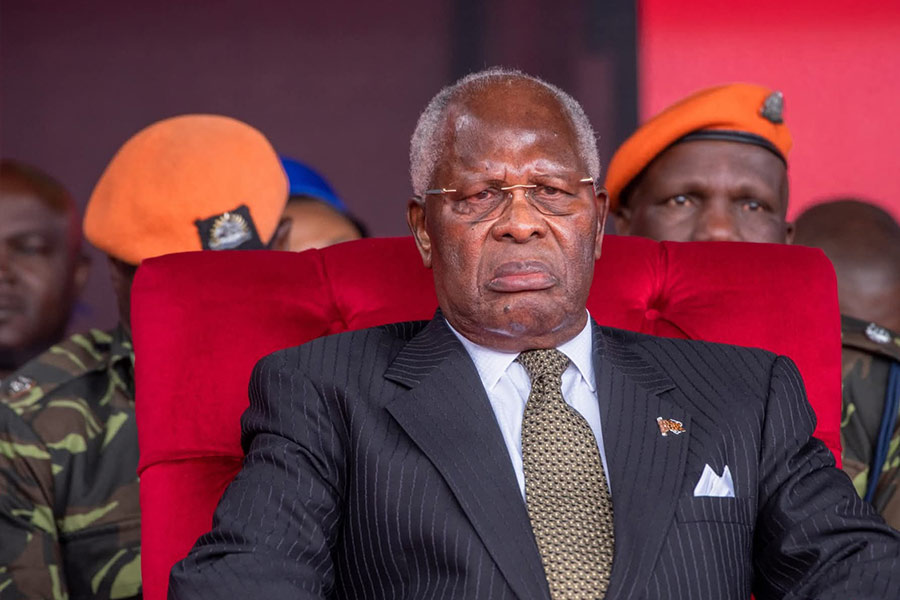
Their concerns echo long-standing allegations that some traditional leaders have facilitated the plunder of community forests, including Chingazi Forest, a brainchild of former President late Bingu wa Mutharika, who originally came from the area.
Traditional Authority Chimaliro of the area believes the newly adopted forestry plans and by-laws could help end such practices.
He said, "If there are chiefs involved in illegal tree cutting in my area, these regulations would apply to everyone equally. No one will be above the law."
Co-operative Development Foundation of Canada (CDF Canada) Forestry Officer for the South, Jimmy Moyo, believes protecting forests is also about protecting people. The organisation is supporting the plan in Thyolo.
"Restoring forests reduces poverty, revives indigenous species and eases the burden on women who often walk long distances in search of firewood," he says.
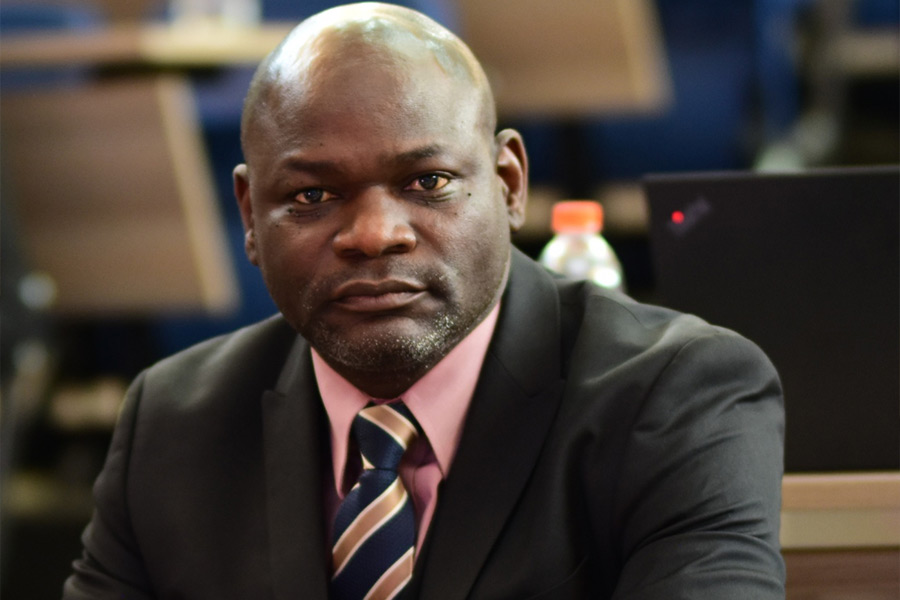
For Environmental advocate Charles Mkoka, Executive Director of the Coordination Union for Rehabilitation of the Environment (CURE), says the growing destruction of graveyard forests is a worrying trend that goes beyond environmental damage.
“These sites are not only important ecological refuges but also cultural and ancestral heritage areas that connect communities to their history and traditions. In many parts of Malawi, graveyards have remained among the few pockets of indigenous vegetation because cultural beliefs and respect for the departed traditionally protected them from exploitation,” he said.
Mkoka argues that tackling the problem requires community action, traditional leadership, law enforcement, and livelihood support.
“First, there is a need to strengthen awareness among communities about the ecological and cultural value of graveyard forests. These areas often serve as biodiversity reservoirs, carbon sinks, and sources of ecosystem services such as soil and water conservation,” he said.
He added that traditional leaders must play a central role in safeguarding the sites.
“Where allegations arise that some leaders are involved in facilitating tree cutting, communities and relevant authorities should engage constructively to restore accountability and reinforce local by-laws that protect graveyards and other culturally significant forests. Chiefs have historically been custodians of both culture and natural resources, and this role should be strengthened rather than weakened.”
Mkoka has also called on government agencies responsible for forestry, environment, and local governance to work closely with communities to map, register, and protect graveyard forests as community conservation areas. He says this would provide a framework for monitoring and enforcement against illegal harvesting.
He further suggested that addressing poverty, energy shortages, and demand for timber and charcoal is critical.
“Communities need access to alternative livelihoods, sustainable woodlots, and affordable energy sources so that pressure on remaining natural forests, including graveyard forests, is reduced.”
According to Mkoka, protecting graveyard forests is about more than trees.
“Protecting graveyard forests is therefore not only about saving trees; it is about preserving our heritage, maintaining ecosystem services, and ensuring that future generations inherit both a healthy environment and a strong sense of cultural identity.”
As dusk settles over 'Ku 21' cemetery, the remaining trees cast long shadows across rows of graves.
For the families who return here to remember parents, grandparents and children, the fight is not simply about charcoal and timber.
It is about memory. It is about dignity.
And it is about ensuring that the last refuge of their ancestors does not become the next casualty of Malawi's struggle against deforestation.