











ZODIAK ONLINE
ArtBridge House, Area 47
Sect. 5, P/Bag 312
Lilongwe, Malawi
Sect. 5, P/Bag 312
Lilongwe, Malawi

In Malawi, agriculture is the backbone of the economy, contributing about 30% of GDP and providing between 60% and 80% of employment. Women comprise a substantial portion of the workforce.
According to Amess Nthala Mwamdaza, a mother of three who was widowed at the age of 28, agriculture is not just a source of income but a tool for transforming lives.
Mwamdaza is the driving force behind Hope for Widows, an organization dedicated to empowering widowed women and restoring hope in their lives.
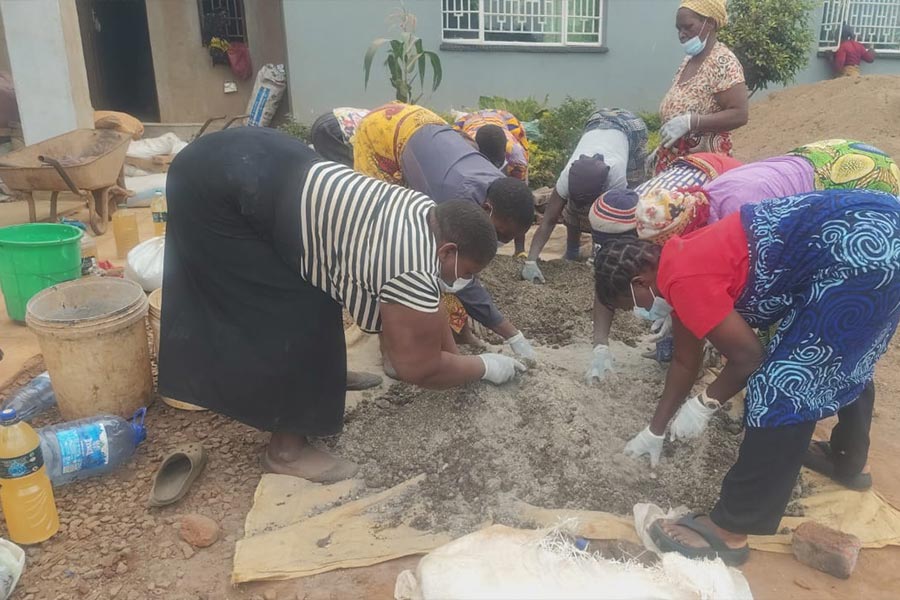
Hope for Widows cultivates maize, soybeans, groundnuts, vegetables, and sugarcane, while also producing organic manure. According to Mwamdaza, the organization's founder and executive director, these activities help members feed their families and generate income.
"After my husband died in 2013, my life changed completely because I had nothing to support my children with. I decided to look for a job at an orphanage," she explained.
"This is where I learned about the struggles widows face in the country. We received many children whose mothers left them at the orphanage so they could access care and support that the mothers could not provide because of poverty," she added.
After witnessing the growing number of children being left at the institution, Mwamdaza began engaging with some of the women to understand the challenges they faced. This marked the beginning of Hope for Widows.
"There were only five of us when we started, and we began by producing manure for sale. We then rented a one-acre plot and started growing maize. We used some of the manure on the farm and harvested 25 bags of maize in the first year. We shared part of the harvest among ourselves to feed our families and sold the rest to reinvest in farming and other income-generating activities."
Today, the organization has about 1,000 members across five branches. It cultivates 15 hectares of upland for various crops and two acres of dambo land for vegetable and sugarcane production.
"I always thank God for the idea of venturing into manure production using locally available materials because, at the time, we could not afford even a single bag of chemical fertilizer. Now, our farmland is rich in nutrients due to the consistent use of manure. We achieve better harvests, even during drought periods, because our soil retains water for longer," she said.
As the organization continues to grow in membership, production, and income, Mwamdaza said it has diversified into tailoring. Some members have been trained to make handbags, which they sell and use the proceeds to invest in their farming businesses.
"These women do not work for the group for free; we pay them monthly so they can send their children to school. Ensuring that children receive an education is one of our core policies. We encourage one another to educate our children because it is a sustainable way to break the cycle of poverty in our lives.
"We understand that some children may not excel academically, but since our goal is to eradicate poverty in our families, we are not leaving them behind. We are working on establishing a vocational training centre where they can acquire practical skills and become self-reliant. We also plan to enroll students from outside the organization and charge a small fee to cover operational costs and support further investment in our farming activities, which remain the backbone of the organization," Mwamdaza said.
With the growing threat of droughts due to climate change, Hope for Widows plans to invest in irrigation farming to enable year-round production and expand its income base.
"To help build financially stable and productive families, we also offer savings and loan services. Through these initiatives, we encourage each member to invest in agriculture and purchase land for housing. This helps ensure that every member has a stable income and a place to call home," she added.
Through agriculture, Hope for Widows is not only bringing hope to its members and their families but also benefiting surrounding communities and beyond. The organization has become a source of employment, knowledge, and raw materials.
The story of Amess Nthala Mwamdaza is one of courage, hard work, resilience, and compassion. Through agriculture, she has transformed her own life and risen above adversity. In doing so, she has also empowered other women to discover their purpose, support their families, and build a brighter future for their children.