










ZODIAK ONLINE
ArtBridge House, Area 47
Sect. 5, P/Bag 312
Lilongwe, Malawi
Sect. 5, P/Bag 312
Lilongwe, Malawi

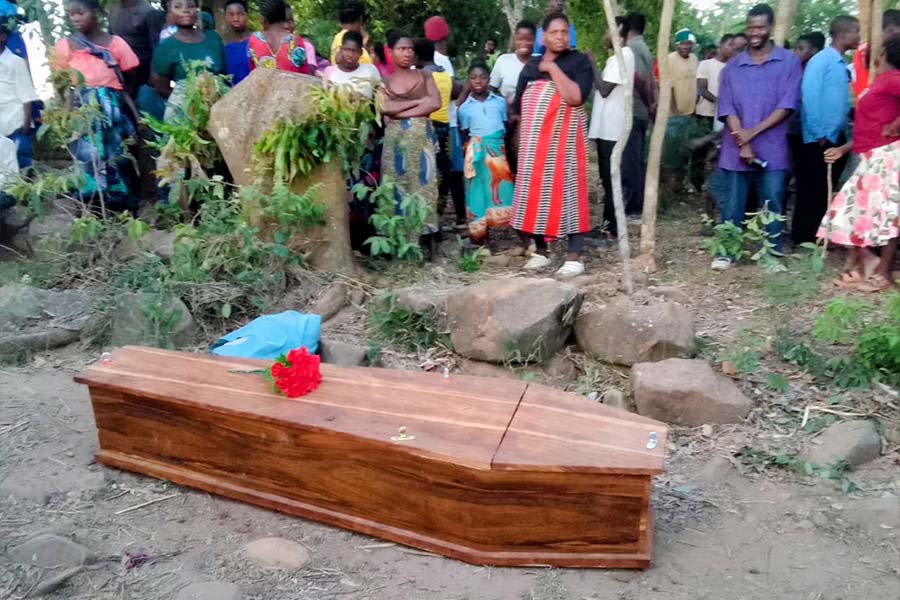
The coffin came back home.
Shortly after midday on October 31, 2026, mourners in Thowera Village, under Senior Chief Ndalama in Thyolo, carried Emily Malizani to her grave. She was 43 years old. A week earlier, she had fallen ill and sought treatment at Thyolo District Hospital before being referred to Mulanje Mission Hospital. Complications linked to high blood pressure later proved fatal.
Her family had prepared to say goodbye. But at the graveside, the burial stopped.
Instead of lowering her into the ground, mourners filled the grave back in. The coffin was carried back to her house. Church members quietly dispersed. Police would later fire teargas to restore order.
All because of a rumour.
The spark came from a claim involving a child. Malizani's youngest son was said to have told mourners that his grandmother, Mary Halimeti, 72, had instructed him to kill his mother and promised to find him another one. She was also alleged to have claimed that she would perform rituals and bring Emily back to life at six o'clock that evening.
Six o'clock came. Emily did not rise. But by then, the damage had already been done.
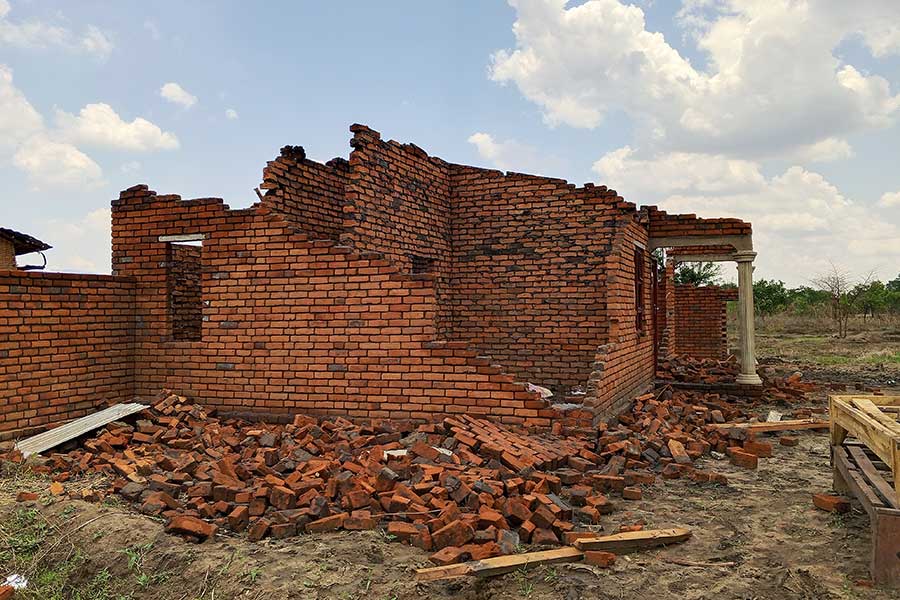
The coffin spent the night at home. Chairs were smashed. Wreaths destroyed. Mobile phones and household items stolen. Roofing sheets were bent and damaged. What should have been a moment of mourning became one of fear, confusion and loss.
"We are currently carrying the burden of replacing things that were damaged. There is nothing that chiefs and the police have done, and the suspects are roaming freely. They have tarnished our image and we are in debt," says Mrs Chimulete, a relative of the deceased.
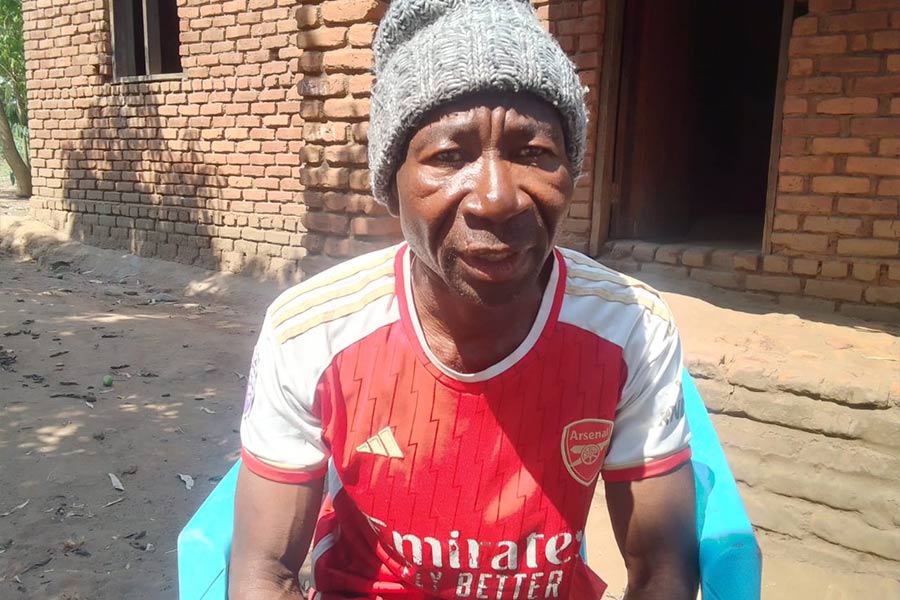
For Village Headman Thowera, it was an incident unlike anything he had ever witnessed.
"What happened in this village is uncalled for," he says. "It has shamed the area because it is the first time a dead body has been returned home from a burial. Everyone who disrupted the funeral will be held accountable."
According to the chief, tensions escalated during a church service when a relative allegedly forced the boy to take Holy Communion. The act was interpreted by some mourners as confirmation that the child had accused his grandmother of killing his mother through witchcraft.
An angry crowd descended on the elderly woman.
Chiefs managed to pull her away before the situation turned deadly.
"If it were not for our efforts, many people would have died that day," recalls Thowera. "We were prepared to die alongside others until we brought the situation under control."
Luchenza Police spokesperson Besike Mwale confirms the matter remains under investigation.
But what happened in Thowera is not an isolated tragedy.
It is part of a pattern.
The Woman Who Ran for Her Life
At 66, Esinati Mailosi still remembers the day her life unravelled.
Not because of anything she had done.
But because of what people believed she had done.
It happened at a funeral in 2025.
A relative had died after a short illness. As mourners gathered in Samuti Village under Senior Chief Boyidi, the atmosphere was heavy with grief.
It was also heavy with suspicion.
"I received a message that the relative who was sick had passed on and I went to the house of the bereaved," she recalls. "Surprisingly, everyone was looking at me. Others were whispering. I could hear them talking about me."
The whispers quickly turned into accusations.
Soon afterwards, she was told to leave the funeral vigil.
No explanation. No evidence. No opportunity to defend herself. Then came the mob.
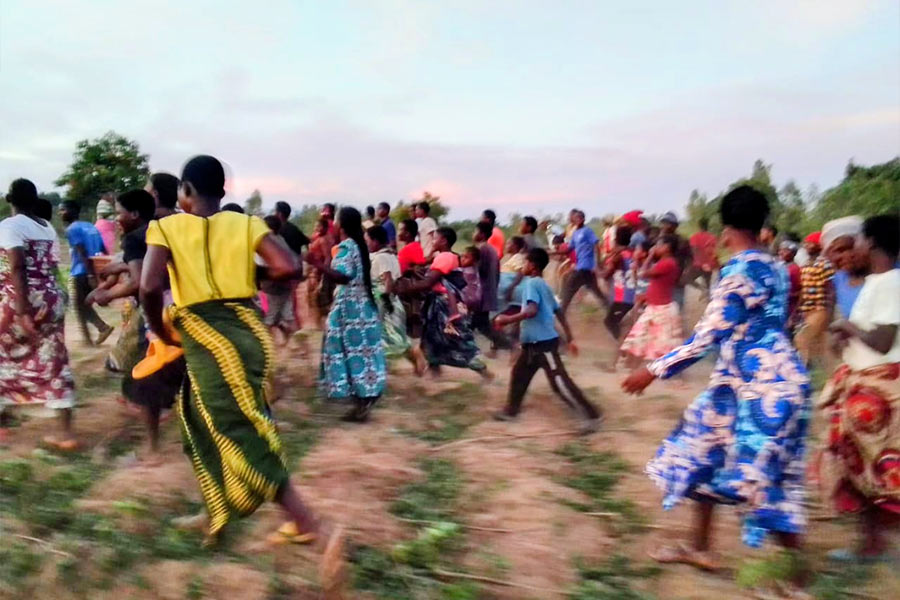
"A group of people armed with panga knives started chasing me, baying for my blood," she says.
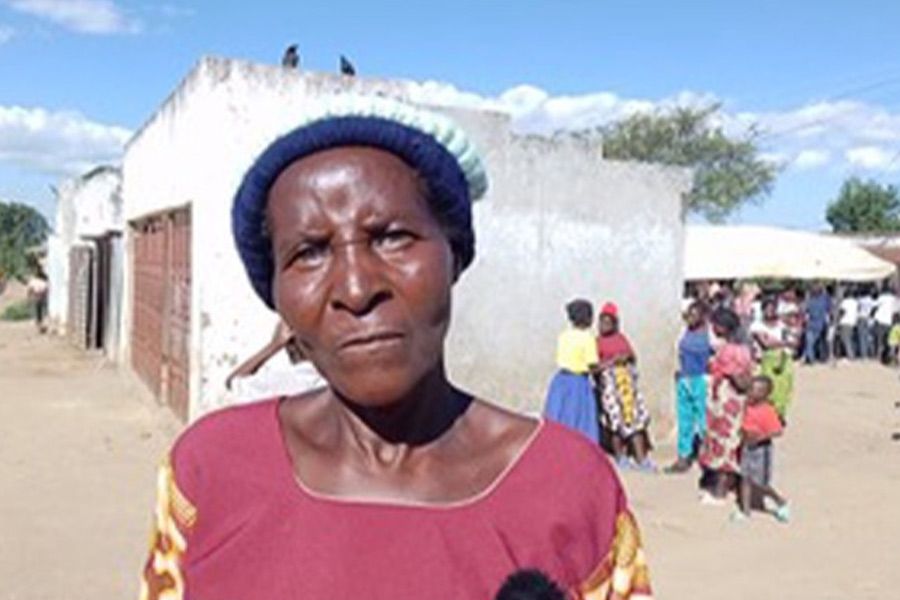
Terrified, Mailosi ran.
She slipped through the back door of her house and fled again, this time seeking refuge from members of the Older Persons Association (OPA), whom she believed were her only chance of survival. And, indeed, they intervened.
OPA members initiated dialogue with her relatives and calmed a situation that might otherwise have ended in bloodshed.
But escaping the crowd did not end her suffering.
That night, lying awake and overwhelmed by fear and humiliation, Mailosi reached a breaking point.
"During the night I thought of committing suicide so that my accusers could be happy and alive," she says quietly.
She pauses.
"If it had not been for OPA, I would have been killed or killed myself. They saved my life."
Today she lives peacefully alongside her relatives.
But the emotional scars remain.
So does her plea.
"People should stop accusing us, the elderly, of practising witchcraft. We don't know it."
Mailosi survived. Not everyone does.
A Killing Field for the Old
In January this year, a 19-year-old student at Thekereni Community Day Secondary School allegedly killed his 89-year-old grandmother, Eurita Zunguza, after accusing her of causing his illness.
The teenager had reportedly been out of school for months.
Frustrated by illness and searching for answers, he found someone to blame.
According to reports, he dragged the elderly woman into a maize field and assaulted her until she lost consciousness. She later died at Changata Health Centre.
The tragedy is not unique.
The Malawi Network of Older Persons Organisations (MANEPO) says at least 15 elderly people have been killed over witchcraft allegations since January this year alone.
Malawi Human Rights Commission (MHRC) Executive Secretary Habiba Osman warns that the figure could surpass last year's total of 22 deaths.
"The continued killings show that older persons remain exposed to violence and discrimination despite measures put in place to protect their rights," Osman says.
The violence is rarely random. It often targets those least able to defend themselves: the elderly, the isolated and the vulnerable.
And many perpetrators are not strangers.
They are neighbours. Relatives. Children. Grandchildren. People the victims once loved, raised and trusted.
Between Law and Belief
Malawi remains caught between law and belief.
While witchcraft accusations continue to shape community behaviour, the country's legal framework does not recognise witchcraft as a proven fact.
In its 2024 report to the United Nations, the Malawi Government stated that the Constitution does not recognise witchcraft and prohibits practices associated with it.
Instead, the Constitution protects fundamental rights, including the right to life, human dignity and freedom from cruel, inhuman or degrading treatment. It also commits the State to supporting and protecting older persons.
The Witchcraft Act of 1911 makes it an offence to accuse someone of practising witchcraft, pretend to practise witchcraft, employ witch-finders or conduct dangerous trials by ordeal.
Authorities continue to enforce the law.
In Nkhotakota recently, a 46-year-old man was fined K400,000 after pleading guilty to accusing his neighbour of witchcraft.
Yet courts are only one side of the story. Public belief remains widespread.
Studies and public consultations conducted during legal reform discussions have shown that a majority of Malawians believe witchcraft exists.
As a result, the Malawi Law Commission recommended reforms that would recognise witchcraft in law, criminalise its practice and introduce stronger penalties for witchcraft-related violence and killings.
Supporters argue that recognising witchcraft would make the legal system more responsive to realities many communities already believe in.
Critics, including human rights activists and legal experts, warn that formal recognition could legitimise accusations and expose vulnerable people, particularly elderly women, to even greater risk of violence.
As the proposals remain under consideration, the debate continues.
And meanwhile, the attacks continue too.
Is Government Doing Enough?
In an effort to strengthen protection for older persons, government enacted the Older Persons Act of 2024 and adopted a National Action Plan on Inclusion and Protection of Older Persons.
According to the National Statistical Office, Malawi is home to more than 1.2 million older persons.
Osman says important progress has been made, but many elderly people still face violence, exclusion, neglect and poverty.
She wants government to fully operationalise the Older Persons Act, increase funding for elderly protection programmes and strengthen police and court responses to perpetrators.
Thyolo District Director of Community and Social Services, Fedda M'bwana, agrees that the problem remains widespread.
"The cases are very rampant," she says. "We are trying to sensitise communities, especially the youth who are the main perpetrators. You heard of a young man in the Nsabwe area who killed his grandmother last month over witchcraft allegations."
Traditional leaders are also raising concern.
Senior Chief Boyidi says communities must fundamentally change how they view old age.
"Ageing is not the same as witchcraft," he says. "Older people need our support."
The chief also believes economic empowerment could help reduce vulnerability among older persons.
"Stakeholders need to support elderly groups with business capital and solar-powered pumps to strengthen their farming activities," he says. "We are also advising people to be careful with the words they use when conflicts arise because misunderstandings can easily escalate."
The Fear That Refuses to Die
Back in Thowera, Emily Malizani was eventually buried. After the chaos subsided, villagers returned and reopened the grave they had earlier filled with soil.
Only then was her body finally laid to rest.
But many questions remain unanswered.
Who will compensate the family for the damaged property?
Who will restore their reputation?
Who will protect Mary Halimeti, 72, the next time a child is misunderstood, a sudden death goes unexplained, or a funeral whisper becomes a death sentence?
At the heart of these tragedies lies fear.
Fear of illness. Fear of death. Fear of the unknown.
And when answers are not found, blame is assigned. Too often, that blame falls on the elderly.
For Esinati Mailosi, survival came through intervention, dialogue and a second chance.
But her story is also a warning. Without action, more lives will be lost.
More families will turn against their own. More elderly people will live, or die, in fear.
Her voice, though soft, carries a message Malawi can no longer afford to ignore:
"We are not witches. We just want to live in peace."