
















ZODIAK ONLINE
ArtBridge House, Area 47
Sect. 5, P/Bag 312
Lilongwe, Malawi
Sect. 5, P/Bag 312
Lilongwe, Malawi


The Africa Rice Center (AfricaRice) and the African Agricultural Technology Foundation (AATF) have signed a five-year Memorandum of Understanding (MoU) to boost rice productivity and strengthen food security across Africa.
The agreement combines AfricaRice’s cutting-edge research and breeding expertise with AATF’s ability to scale technologies to smallholder farmers in 32 countries, which includes Malawi.
Together, the institutions will focus on improving rice value chains, expanding access to high-yielding varieties, and promoting sustainable practices from seed to market, said a press statement.
Africa’s rice sector is showing resilience at a time when global production is shrinking. According to the FAO’s Food Outlook report, global rice output is expected to fall by 1.63% in 2026/27 due to El Niño-related weather risks and profitability challenges in Asia and the Americas. In contrast, Africa is forecast to add about 500,000 tonnes, bringing total production to 29.3 million tonnes.
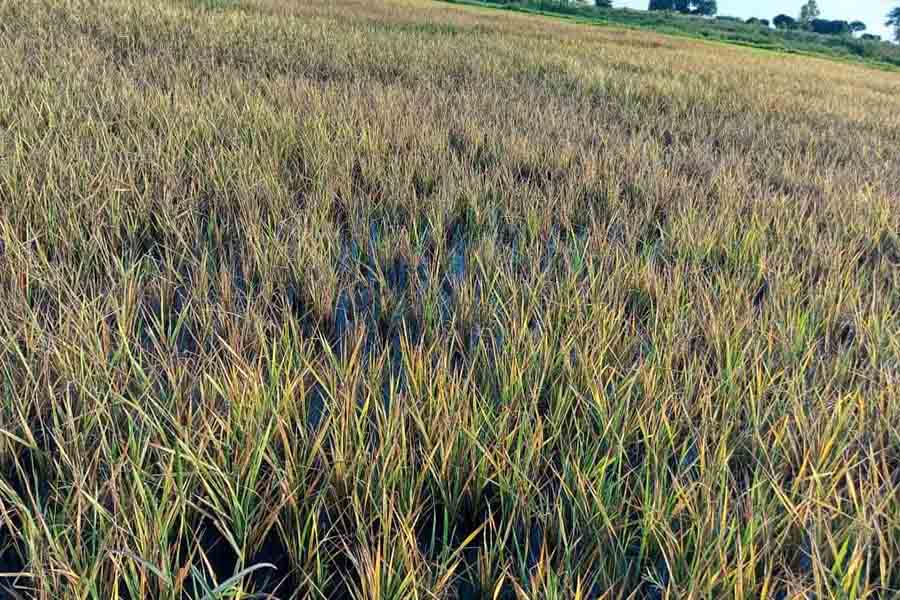
For Malawi, where rice is a staple food in lakeshore districts such as Karonga and Nkhotakota, the partnership could be transformative. Despite favorable conditions, Malawi produced just 127,000 tonnes of rice in 2024, ranking 72nd globally, according to the Food and Agriculture Organisation (FAO).
Exports fell sharply to only 85 tonnes, a 92.6 percent decline from the previous year, underscoring weak competitiveness in regional markets. Average yields remain at 3,000 kilograms per hectare, far below the regional benchmark of 5,000 kilograms.
With farmgate prices hovering around MWK 932 per kilogram in May 2026, farmers struggle to balance rising input costs with limited returns.

Malawi’s government has recognized the urgency of reform. The National Rice Development Strategy II (2024–2030) aims to expand rice cultivation from 77,000 hectares in 2021 to 110,000 hectares by 2030, with a focus on irrigation, mechanization, and value addition.
Private sector investments, including Chambayika Rice Milling Limited and Mphanga Holdings, are strengthening processing capacity, but frequent power outages and export barriers remain major hurdles.
Against this backdrop, the AfricaRice–AATF partnership offers a lifeline. Improved seed access could raise yields closer to regional standards, while mechanization support would reduce drudgery and improve efficiency.
Modern processing technologies could help Malawi capture more value domestically instead of losing paddy to neighboring countries.
Further, empowering farmers with innovations and stronger bargaining power may reduce reliance on exploitative local arrangements, giving smallholders a fairer chance to thrive.
Malawi’s rice sector is often described as a “sleeping giant” — rich in potential but constrained by systemic challenges. If aligned with Malawi’s national rice strategy, the AfricaRice–AATF collaboration could awaken that potential, turning rice into a pillar of food security and economic growth, and ensuring that farmers benefit from science-driven solutions rather than exploitation.