





ZODIAK ONLINE
ArtBridge House, Area 47
Sect. 5, P/Bag 312
Lilongwe, Malawi
Sect. 5, P/Bag 312
Lilongwe, Malawi

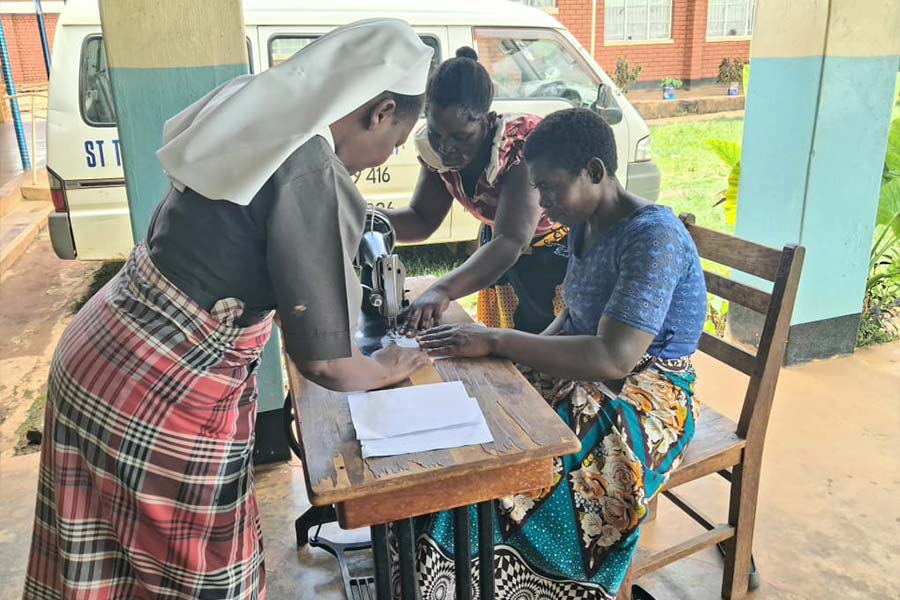
On a Wednesday morning, the peace and quiet of a Catholic parish in Lilongwe is disturbed by the rhythmic hum of sewing machines.
Metal gears, wheels, and belts squeak in motion, complimented by the traditional taka-taka-taka of needles piercing fabric. At each machine sits a woman, quiet and focused, learning a skill that it is hoped will stitch her out of economic quagmire. This goes on each day of the week but Thursday.
Until now, these women-most of them mothers-had no dignified source of income. They either relied entirely on their husbands for support or resorted to undignified means to survive.
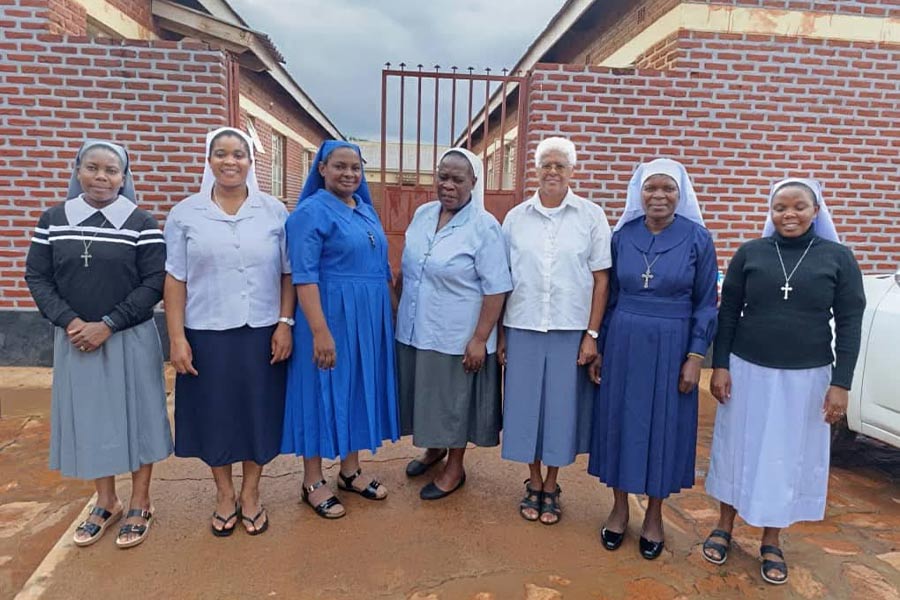
These 40 women comprise the third cohort to graduate in tailoring, fashion, and design under a program spearheaded by Sr. Teresa Mulenga of the Daughters of Mary Theresa (DMTL) (Teresian Sisters) in Malawi.
Stitching Lives Back Together
The program has already helped dozens of underprivileged women launch their own businesses to support their families. Some are single parents; others are living with HIV.
For a year now, 50 women have graduated, with 40 more currently training.
“From the time I learnt sewing, I am no longer the same,” says Grace Kuitanda of Lilongwe. “I am able to do business and earn some money for my house. We are far much better now.”
The majority of women in most parts of Malawi live in constant fear of violence. The spread of disease, discrimination, deprivation of education, poverty, and physical and sexual abuse are challenges that plague them daily. However, the skills and training that Sr. Teresa imparts are making a measurable difference in the quality of their lives.
Sr. Teresa is dedicated to running programs that provide health care, social work, pastoral care, and vocational education for women and children throughout Malawi.
“We do not give them sewing machines yet, but we have machines spared for the graduates,” she explains of the program, whose third cohort is training at Mtima Woyera and Mlale parishes. “They use them here within the compound for those who do not have their own.”
Apart from adult literacy, in Mlale and Kampini areas, the Daughters of Mary Theresa (DMTL) (Teresian Sisters) are also providing early childhood education-ECD.
Turning Waste into Wealth
In a remote village under a tree, another group of women gathers, singing. They have just finished lessons in making manure.
In a country where the average family lives on less than a dollar a day, it is practically impossible for subsistence farmers to afford fertilizers selling at $40 per 50 kg bag. Here is where Sr. Teresa’s program proves a game changer among the village poor.
In the area of Traditional Authority Kamenyagwaza in Dedza district, the Teresian Sisters are running a rural food security and environmental conservation program.
In Malawi, most households rely on maize, and the leftover stalks are often discarded. Sr. Teresa is teaching local farmers to turn those stalks into locally made fertilizer and fuel.
“Since we began using this technique, our maize yield has improved,” says Kondwani Lifani. “We cannot afford to buy fertilizers, and the beneficiaries of the government subsidy program have been drastically reduced. Manure making is the only option for us, and it is working.”
Through the Association of Women Religious in Malawi-AWRIM- Sr. Teresa has heralded a program called AWRIM Healthcare Network through which different congregations of Sisters are taking part in providing health care services in various communities throughout the country.
And in a project known as Little-Way, she is doing poultry farming and producing eggs for sale.
Beyond nutrition and sustainable agriculture, Sr. Teresa has also led initiatives for the cultivation of fruit trees in local parishes to improve community health and incomes.
And to enhance mindset change on environmental conservation, she has connected with the Association of Catholic Chiefs leveraging their traditional authority under Likuni Parish.
Through the initiative, the Daughters of Mary Theresa (DMTL) (Teresian Sisters) have distributed 20 piglets in an arrangement where off-spring will be passed on to more beneficiaries in the area.
The communities have also been trained on caring for woodlots and given 800 tree seedlings.
Amplifying Marginalized Voices
Outside her programs on economic empowerment, Sr. Teresa has focused on enhancing relations between religious and civil organizations, amplifying issues concerning the marginalized and unheard, and building alliances to prevent violence and discrimination against women.
One vulnerable group whose protection she has championed is people with albinism.
In Malawi, people with albinism face economic barriers, extreme discrimination, and severe physical danger. Driven by harmful myths that their body parts bring magical luck and get-rich-quick powers, they are targeted for kidnappings, murders, and even grave robberies.
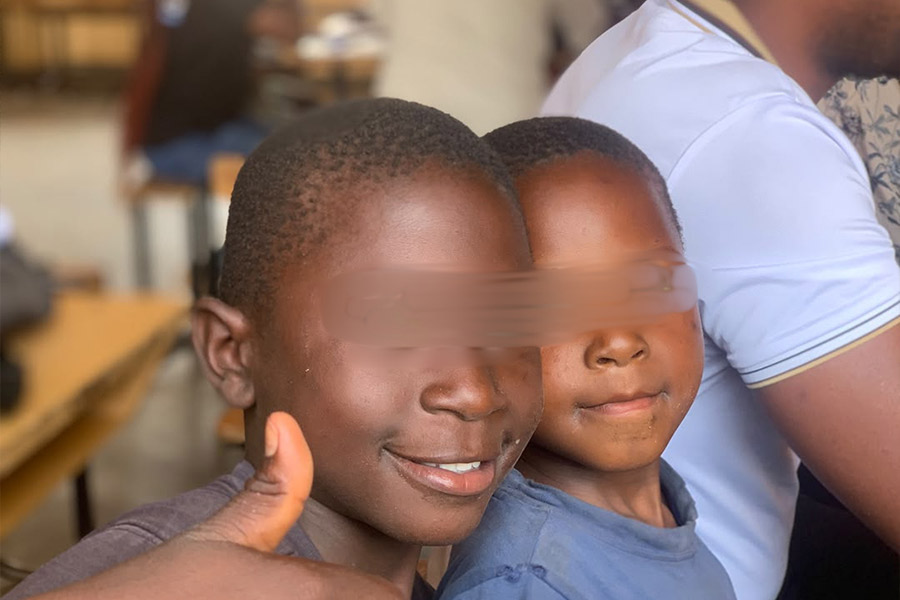
People with albinism live in constant fear. Children drop out of school; adults struggle to find safe jobs. In some cases, employers have outright refused to hire them.
“The dream is to have safe communities for people with albinism,” says Sr. Teresa. “Trying to make sure that they live a comfortable and normal life. Ensuring that they also have basic needs.”
The program is being implemented by Mtendere Hospital in Dedza, managed by the congregation of Daughters of Mary Theresa (DMTL) (Teresian Sisters), which advocates for their rights and physical safety.
The congregation also coordinates efforts to integrate and protect those who are most vulnerable.

Soap, Survival, and Scalability
When COVID-19 struck, hygiene and sanitation suddenly became issues of priority in Malawi—especially for those living with HIV and AIDS, who were a specifically vulnerable group. Soap became a critical need for sanitation as a preventive measure against the spread of the virus.
Mrs. Violet Kumwenda is a mother of one.
She is a beneficiary of the projects led by Sr. Teresa under the congregation of Daughters of Mary Theresa (DMTL) (Teresian Sisters). Mrs. Kumwenda acquired skills in making soaps.
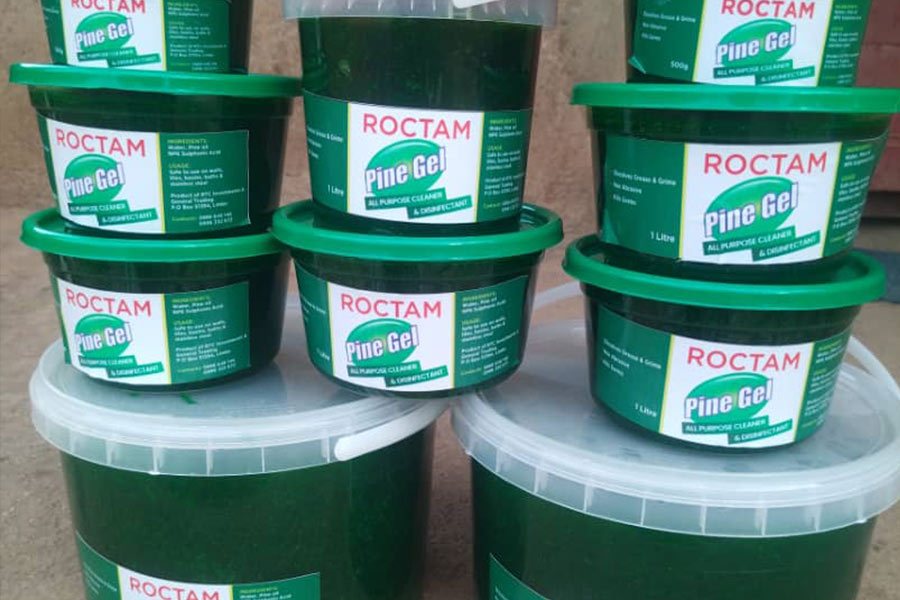
“I specifically enjoy making pine jel. I am employed but the skill helps me save on pine jel. Our customers think we make better pine jel than they buy from other shops. For two years now, this has not only benefitted me but my sister and others. Now I am making dish wash. My first production was 25 bottles. I sold each at K6,000,00. I earn extra cash,” says Mrs. Kumwenda.
She is now looking forward to helping teach the same to young people. Going forward, she plans to get the two products certified by Malawi Bureau of Standards so she can scale-up production.
Sr. Teresa also set up support groups in Bembeke (Dedza), Dzaleka, Msamba in Lilongwe, and other places including Blantyre, where she trained members on how to make soap and earn money.
At least 200 households were trained in soap making at the time, and later over 300 “trainers of trainers” were drilled among members of the Catholic Women Association to carry the skill further afield.
Mrs. Elita Zulu from Msamba Catholic Parish in Lilongwe is now a registered producer of dishwash, petroleum jelly, shower gel, pine gel, laundry soap, candles and hand soaps.
She has a formal outlet in Lilongwe city and manufactures over 20 products.
Mrs. Zulu sees prospects of success in the business she is doing. This mother of three and granny to one says her experience in soap making has taken her places to impart to others and learn more.
“These are very important skills. Its transforming for women. For example, I no longer buy soap products because I am able to manufacture on my own,” says Mrs. Zulu disclosing that her venture is now certified with a mark. She is struggling with sourcing chemicals and packaging of products.
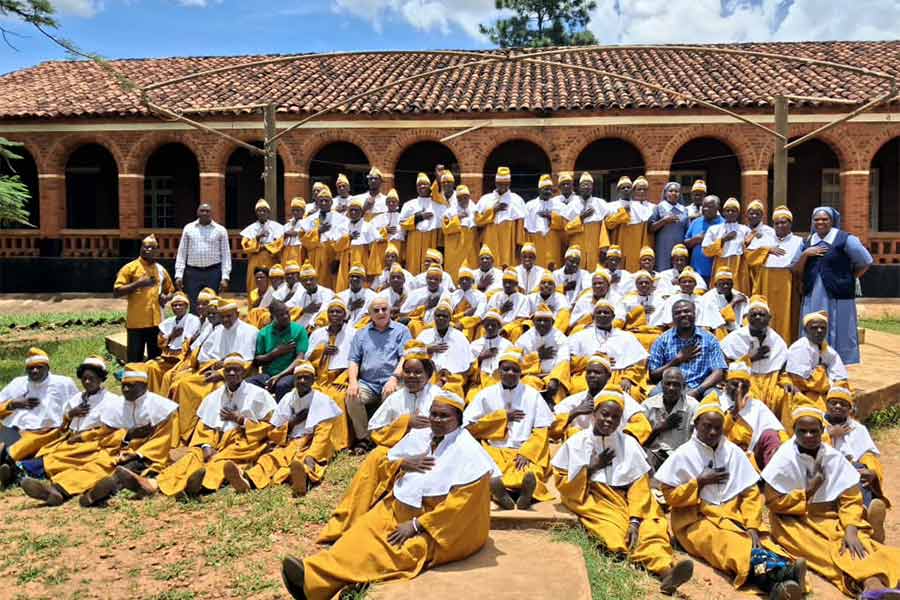
At the refugee camp in Dowa, Sr. Teresa trained 20 trainers.
“We have reached many people. It’s difficult for me to have exact numbers because the trained women keep training others,” says Sr. Teresa. “They should now be more than 5,000 women.”
Occasionally, the women trained by Sr. Teresa assemble in different places to showcase skills acquired and share experiences in how these have transformed their economic well-being.
A Model for Empowerment
Through tailoring, agriculture, advocacy, and vocational training, Sr. Teresa Mulenga is building more than just skills-she is building human dignity, independence, and hope.
The women she has trained are not only transforming their own lives; they are multiplying her impact by teaching others, creating a ripple effect that stretches across the country’s districts, communities and Catholic parishes.
Steadily, the women carrying this forward in Malawi have finally obtained the education and skills necessary to own their place in the country’s economy.