


ZODIAK ONLINE
ArtBridge House, Area 47
Sect. 5, P/Bag 312
Lilongwe, Malawi
Sect. 5, P/Bag 312
Lilongwe, Malawi

Malawi has reported significant progress in its campaign against neglected tropical diseases (NTDs), with 1,811,682 school-aged children treated for schistosomiasis in 2025 and 1,457,562 people reached with ivermectin for onchocerciasis.
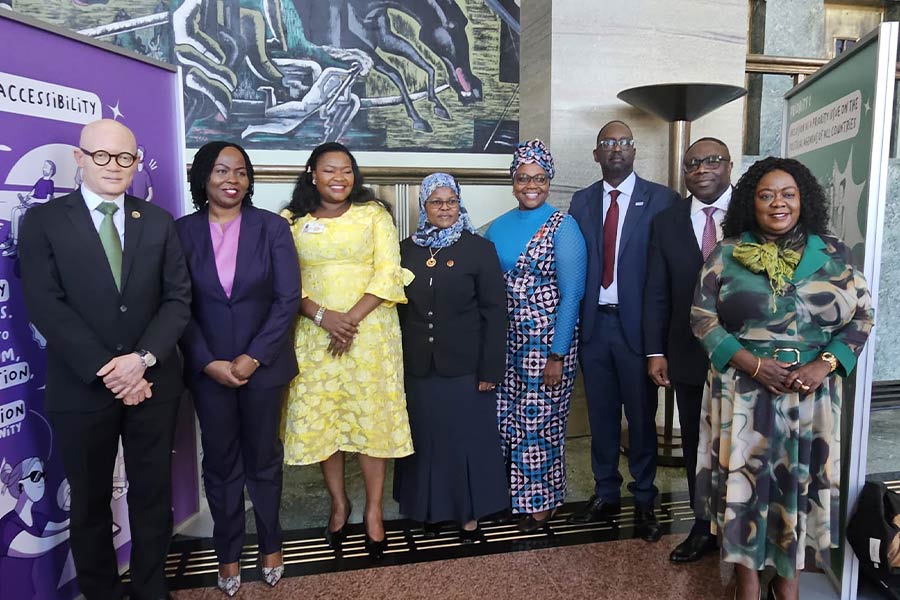
These figures, representing coverage rates of 89% and 82.5% respectively, were highlighted by Minister of Health and Sanitation, Madalitso Baloyi, during a side event on NTDs as a human rights issue at the 61st Session of the Human Rights Council in Geneva, Switzerland.
Schistosomiasis, also known as bilharzia, is a parasitic disease spread through contaminated water. It can cause chronic illness, organ damage, and disability if untreated.
Onchocerciasis, or river blindness, is transmitted by black flies and can lead to severe itching, skin disease, and permanent blindness.
Studies show that mass drug administration campaigns are crucial to control these diseases, break transmission cycles, and protect vulnerable communities.
Baloyi said that the near-90% treatment coverage among children in high-risk districts is leading to a decline in schistosomiasis cases.
Partners such as Evidence Action have provided financial support, enabling Malawi to stay on course toward eliminating NTDs in the near future.
The minister told the meeting that the rollout of Malawi’s National Rabies Strategic Plan (2024–2029), targeting the elimination of dog-mediated human rabies, has been crucial in the campaign.
Training programs for health workers are underway to improve case management and strengthen data collection, she added.
For trypanosomiasis, also known as sleeping sickness, only four districts — Nkhotakota, Kasungu, Ntchisi, and Rumphi — continue to report cases, according to the ministry.
In 2025, Malawi introduced fexinidazole, a new oral drug that is easier to administer, highly effective, and has minimal side effects, which has further helped to attain the gains in the campaign.
Baloyi called for additional support in diagnostics and tsetse fly control to further reduce transmission in Malawi’s woodlands and forests, which are breeding grounds for the parasites that spread the disease.
According to the minister, Malawi has already eliminated several NTDs: trachoma in 2022, lymphatic filariasis (elephantiasis) in 2020, and leprosy in 1994.
Although sporadic leprosy cases have re-emerged, Malawi remains below the WHO threshold of one case per 10,000 inhabitants, said Baloyi.
The government, she said, is working to maintain elimination levels and achieve the WHO Global Leprosy Programme target of zero leprosy among children and zero new disabilities by 2030.
Baloyi stressed that NTDs are not only a health challenge but also a human rights issue.
“Every individual has the right to health, and yet millions continue to suffer from preventable and treatable diseases. This is a violation of their fundamental human rights,” she said.
Malawi’s NTD Master Plan (2023–2030) sets an ambitious goal of eliminating NTDs by 2030, said the minister, emphasizing that Malawi remains committed to seeing a United Nations resolution on NTDs and human rights fully implemented.
“Together, we can create a world where no one is left behind in the fight against neglected tropical diseases,” Baloyi said.
She expressed gratitude to co-sponsors of the resolution — The Gambia, Kenya, Morocco, and Tanzania, and acknowledged partners such as Uniting to Combat Neglected Tropical Diseases and the Anesvad Foundation.