




ZODIAK ONLINE
ArtBridge House, Area 47
Sect. 5, P/Bag 312
Lilongwe, Malawi
Sect. 5, P/Bag 312
Lilongwe, Malawi

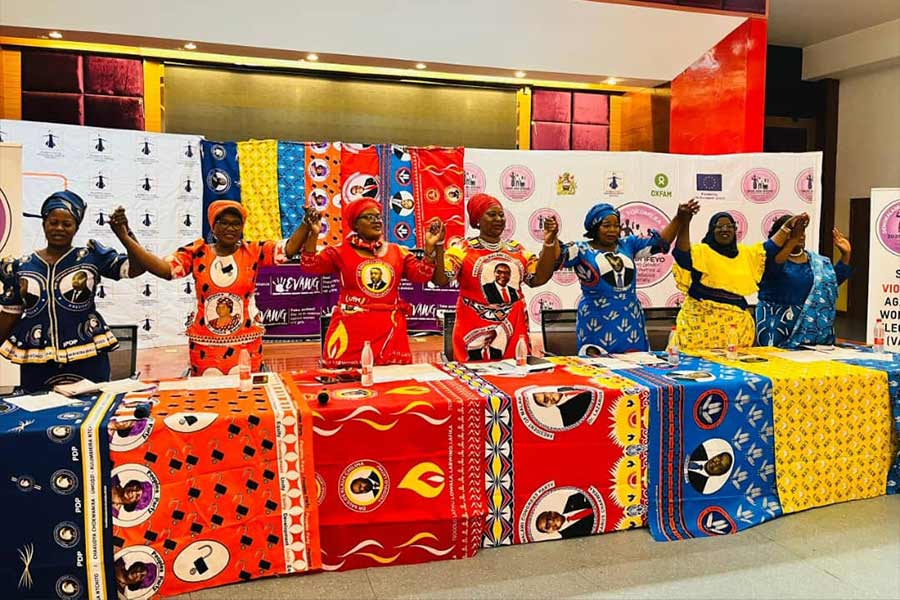
The decision to contest in any competition is first, the decision of the individual.
But the environment of the individual is also key in making that personal decision.
Aquaphobia, for example, will keep one from taking part in any swimming competition.
And so too cultural norms and financial barriers, especially in races such as the September polls.
Of the 1,479 candidates who contested for parliamentary seats on September 16, 2025, only 331 were women. Lomathinda Mtema was among contestants in Mzimba South West constituency.
She never made it.
She should suggest that organizations start supporting women in politics now through campaign materials, finances, and training to start preparations early for the 2030 elections.
In Nankhaka ward, six contested for the ward councilor seat. Among them was Elizabeth Chiwaula
This was her second attempt at the job. But she still did not succeed.
Chiwaula says there are things that happen during campaign that could force women to give up.
The playing field is never level, she says. Even among exclusively women themselves. It is not.
Chiwaula, argued that support for women candidates is uneven- favoring those in rural areas while urban candidates, who face same financial pressures, receive far less.
She calledvfor equitable support for women, regardless of where they are contesting; urban or rural.
Of the 331 women who participated in the September 16 parliamentary election, only 48 won.
Sarah Chisanje is Programs Manager at OXFAM.
She acknowledges the concerns raised by the women-candidates as valid.
For OXFAM, she says, late donor disbursements negatively affected ability to come to the rescue of women when they most needed support to counter cultural norms and financial constraints.
For governance expert, George Chaima, the setbacks go beyond financial constraints.
Chaima says cultural and traditional beliefs are a key obstacles in achieving 50-50 representation.
Society, he argues, still looks down on women as people with leadership abilities although reality has been that women make decisions for the benefit the wider community, unlike men.
He called for widespread awareness campaigns to challenge the long-held perception that women are weak or incapable of leading.
However, for political scientist Wonderful Mkutche, this is largely a result of women failing to trust fellow women with elected positions. Otherwise, he says, women have the numbers to win.
People, including most women, according to Mkutche, hold the perception that women cannot lead. This is the mindset that should change in the drive to achieving the 50-50 representation.
For Executive Director of NGO-GENET, Maggie Kathewera Banda, the numbers of those elected may be low but highlights significant milestones; the election of Dr. Jane Ansah as vice president.
Banda, nonetheless, observes the need for a legal framework for affirmative action that would include guarantee for women representation across political structures through quotas.
The aftermath of the September 16 elections is a pointer to the need for collaboration between NGOs, political parties and community leaders to drive mindset change and confront all impediments standing in the way of women attaining leadership positions in elections.
The Malawi Parliamentary Women’s Caucus, for example, says is committed to lobbying for a legal and policy framework that specifically supports women interested in taking part in politics
Grace Kwelepete is Secretary for the Caucus.
She says, although men and women contest in the same political race, women continue to face unique barriers, including deep-rooted social expectations that hinder their political
The effect of the experience of being a woman and vying for public office in Malawi through a political campaign has completely put some women off. They actually vow never to try it again.
It would appear that the power play shifts from the vacancy at-hand to who wants to occupy it.
Nancy Chaola Mdooko has twice given it a go in Ntcheu-Bwanje constituency, in vain.
She says the loss has left her confused as to what voters look for when electing a leader.
If development projects were measure of performance, her constituency would have ranked first in Ntcheu.
But despite the numerous initiatives she spearheaded, voters still opted for someone else.
Her experience has made it difficult to understand the expectations of the electorate.
The outcomes of the 2025 parliamentary elections in Malawi confirm a persistent and entrenched reality towards gender equality and the long journey untraveled by Malawi to achieving equal representation and ensuring that women are not just participants-but key decision-makers.
We are a society still stuck in the age that believed that the woman’s place is in the kitchen.