




ZODIAK ONLINE
ArtBridge House, Area 47
Sect. 5, P/Bag 312
Lilongwe, Malawi
Sect. 5, P/Bag 312
Lilongwe, Malawi

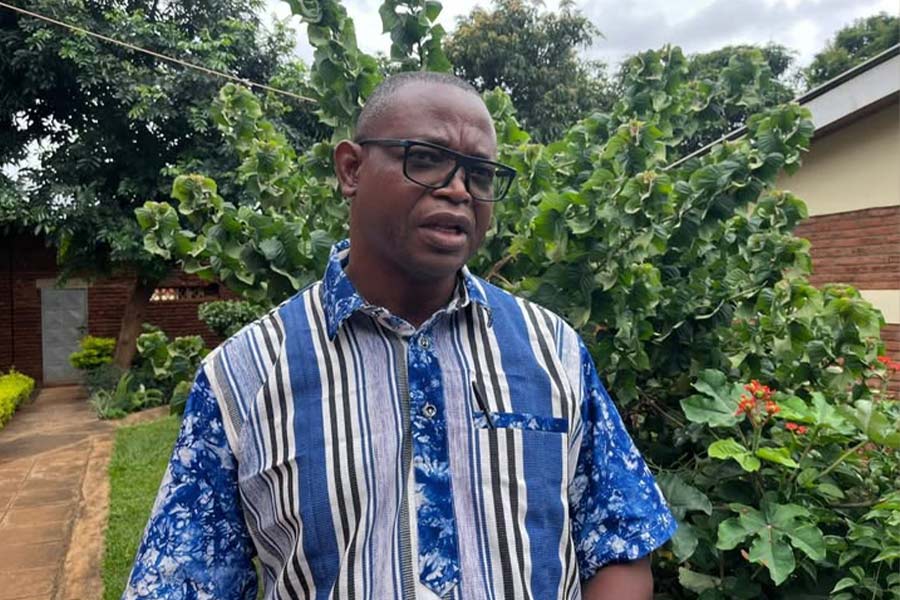
Lilongwe, Malawi — The Centre for Social Concern (CfSC) has recommended that the government introduce legislation to regulate the religious space, warning that faith can be manipulated for unlawful interests if left unchecked.
Presenting the End of Project Evaluation in Lilongwe, researcher Dr. Gerlard Chigona argued that religion, like politics, is vulnerable to abuse and therefore requires legal safeguards.
The evaluation focused on the Inter-Religious Dialogue project among Muslims and Christians in Mangochi, which has been credited with enabling the district to hold its first-ever violence-free election during the September 16, 2025 polls.
“Carry out research with the aim of initiating national conversation for a standalone legislation or guidelines for purposes of regulating the religious space in Malawi. This is in line with the potential manipulation of religion for unlawful interests.
Practical lessons could be drawn from countries within the region. Among other aspects, such a law or guidelines could provide for a regulatory authority in the form of an Inter-Religious Council as part of institutionalising inter-religious dialogue,” said Chigona.
CfSC Executive Director Father Michel Sanou explained that Mangochi was chosen for the pilot project because of its complex historical, religious, and political background, compounded by land pressures, youth unemployment, migration dynamics, and other conflict drivers.
“At the outset, allow me to sincerely thank the Embassy of Ireland for the financial and technical support. Your partnership has enabled the Centre for Social Concern to walk alongside the people of Mangochi in nurturing a culture of dialogue, tolerance, and peaceful co-existence.
“We also extend heartfelt appreciation to our implementing team in Mangochi, the Local Advisory Committee, interfaith structures, traditional authorities, youth and women groups, and all stakeholders who embraced this journey with courage and commitment,” he said.
Abdul Hakim Mussah, Vice Chairperson of the Lilongwe Interfaith Dialogue Association, noted that the project’s impact has extended beyond Mangochi:
“We are now able to sit down and discuss the challenges that we face, regardless of our religious affiliations,” observed Sheik Mussah, who is also a member of the Muslim Association of Malawi.
Historical Context: Mangochi as a Violence Hotspot
Mangochi district has long been identified as a hotspot for political violence in Malawi, often characterized by inter-party clashes, the exploitation of unemployed youth, and tensions during electoral cycles.
Notable Incidents
MCP Vehicle Attacks (September 2025): Assailants stoned and damaged vehicles belonging to the Malawi Congress Party (MCP) in M'baluku.
UTM Advance Team Ambush (August 2018): Vehicles damaged and intimidation reported ahead of a party launch.
DPP Primary Election Chaos (January 2019): Supporters disrupted primaries in Mangochi West, assaulting officials and damaging vehicles.
M'baluku Ambush (July 2019): Suspected DPP functionaries attacked UTM officials en route to a rally.
Post-Election Protest Arrests (July 2019): Police detained MCP supporters during “Anti-Jane Ansah” demonstrations.
Historical Repression (1960s–1970s): Local accounts cite severe MCP-led violence against Masauko Chipembere supporters, including alleged mass killings and destruction of villages.
Key Drivers of Violence
Youth Manipulation: High unemployment makes youth vulnerable to recruitment as political “foot soldiers.” No-Go Zones: Rival supporters often create restricted areas, sparking clashes. Political Strongholds: Mangochi’s UDF dominance has been challenged by DPP, MCP, and UTM incursions.
Religious Tensions: Muslim-Christian disputes have historically intertwined with political rivalries.
Implemented from 2022 to 2026, the initiative titled “Promoting Peaceful Co-Existence Between Muslims and Christians Through Dialogue and Conflict Management” fostered collaboration between faith leaders, strengthened local conflict resolution structures, and transformed youth groups once associated with violence into peace ambassadors.
The evaluation concluded that while Mangochi’s peaceful elections mark a historic breakthrough, sustaining such gains will require: stronger institutional framework, continued interfaith dialogue and government action to regulate religion against exploitation.