








ZODIAK ONLINE
ArtBridge House, Area 47
Sect. 5, P/Bag 312
Lilongwe, Malawi
Sect. 5, P/Bag 312
Lilongwe, Malawi

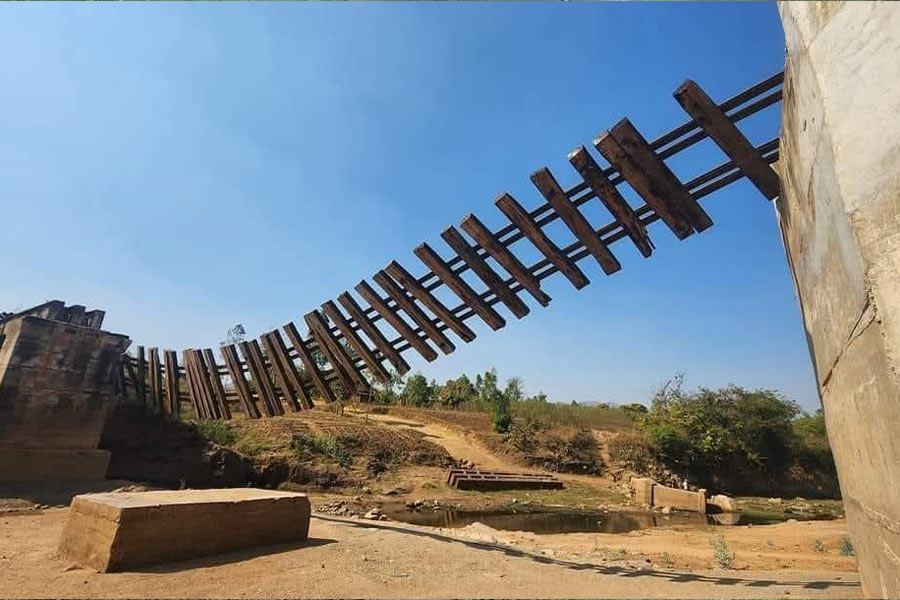
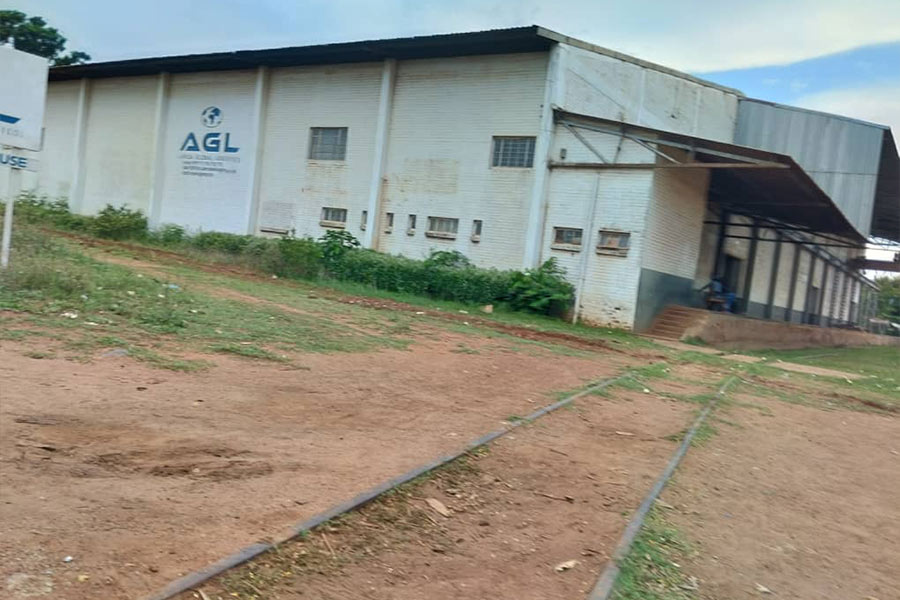
The once-bustling warehouses of Luchenza in Thyolo, home to Malawi’s strategic grain reserves, now sit in quiet, rusting decay.
Where giant steel doors once rolled open to receive maize and dispatch grain across the country, they now remain locked for weeks at a time.
And where trains once rumbled through to ferry produce, fertilizer, cotton, other goods, and people, there is now only the sound of wind through weeds creeping along abandoned tracks.
This is the story of the stalled 72-kilometre Limbe–Sandama–Bangula railway line, a project that once carried the promise of revitalising local economies, strengthening regional trade, and transforming one of Malawi’s most crucial transport assets.
Once a vibrant artery linking Blantyre, Chiradzulu, Thyolo, and Nsanje districts to Mozambique and the broader SADC region, the railway now stands as a testament to lost opportunities and unfulfilled potential.
Chairperson of the Luchenza business community, Simeji Musisi, says economic life collapsed after train services ceased more than a decade ago.
“Luchenza municipality was a business hub. We had everything here, including a Customs Agency,” he said. “Money circulation was good; people came from Blantyre, Mozambique, and Nsanje to buy and trade goods—fish, farm produce, charcoal. Lodges were always full. Now the area is literally dead.”
He suspects vested interests may be contributing to the lack of urgency in restoring the line.
“Government is giving the project little attention because most officials have truck businesses,” he claimed, stressing that railway rehabilitation should be a top priority for the area.
Traditional Authority Nanseta recalls that the railway served generations as a pathway to employment and trade opportunities from the 1950s into the early 2000s.
“Our people used it to travel for work on farms and in mines in Rhodesia, Mozambique, and South Africa, besides importing goods. Many Indian business empires at Luchenza municipality were built through that line,” he said. “Two trains—Mazitolera and Mail—operated daily. It was a great business centre.”

The decline began in January 2015 when floods washed away major sections of the track, including crucial bridges near the Ruo and Shire rivers.
A 2017 rehabilitation roadmap by concessionaire Central East African Railways (CEAR) promised the Limbe–Luchenza section would be completed by December 2021 and the Luchenza–Sandama stretch by May 2022. This, however, did not materialise.
The work formed part of a national rail modernisation plan covering Nsanje Boma, Marka, Bangula, and Nkaya, intended to rebuild Malawi’s rail backbone, reduce transport costs, and create jobs for communities along the corridor.
But COVID-19 disrupted operations, and Cyclones Ana, Gombe, and Freddy later destroyed access roads, washed away embankments, and wiped out months of work.
The consequences for business owners have been severe. Another local businesswoman, Stella John, says the railway once made agribusiness affordable and efficient.
“We could travel to Nsanje to order agricultural produce and sell it the same day. Transport was affordable. Now fares have gone up and business is tough,” she explained.
Today, despite K10.4 billion earlier allocated to the project, the immediate-past government indicated that no contractor was working on the stretch, leaving the future of the line unclear.
Meanwhile, Ministry of Transport and Public Works spokesperson Watson Maingo has asked for more time before commenting on the matter.
As part of the North–South Corridor, the railway also linked Malawi and parts of Zambia to the port of Mtwara in Mozambique, supporting SADC’s long-term vision for integrated economies and seamless trade.
Communities from Luchenza to Bangula say the economy built around the railway has crumbled. Youth unemployment has soared, and transport costs continue to rise.
Agribusiness veteran Edman Kaziweni, who has operated in Luchenza since 1991, shared a similar experience.
“We could go to Nsanje to order fish, sell them, and return the same day. Business collapsed when the train stopped,” he said.
Another grocery trader, Jessie Suluma, added that her restaurant business declined sharply after train services ceased.
“I was cooking and selling nsima at the train station, and I was making a good catch,” she recalled.
In the absence of progress, vandalism has surged, with rail materials and equipment being stolen piece by piece.
T.A. Nanseta is appealing to the new Democratic Progressive Party (DPP) administration to prioritise railway rehabilitation, saying the line is vital for transporting goods, including scarce fuel.
He also recommends improved security to prevent vandalism.
“With tight security in place, railway vandalism can be dealt with. For us in Luchenza, this project should be the first to be implemented by the new government,” he pleaded.
Social commentator Caesar Kondowe argues that reviving the railway would reduce the cost of food in urban areas and increase earnings for farmers.
The stalled railway joins other delayed national projects, including the Nsanje Inland Port and the snail-paced Nsanje–Marka railway line, reflecting what many see as Malawi’s struggle to leverage its strategic position in regional trade under SADC.
Economist Sam Chiwaula believes political and business interests are delaying progress.
“Most political officials own trucks. Reviving rail means losing that business. Yet railway transport is cheaper and the surest way to turn around the economy. The Limbe–Bangula line would open Malawi to Beira Port, unlike Nacala Port, which is limited,” he said.
Records indicate that Malawi saves over 15 percent on fuel transportation by rail compared to road.
Every day the line remains dormant, Malawi loses millions in trade costs, regional integration weakens, communities lose livelihood opportunities, and investor confidence continues to deteriorate.
While neighbouring countries are expanding and modernising their rail networks, Malawi’s strategic corridor remains idle—its rusting steel representing promises delayed and development suspended.
The Limbe–Bangula railway line can still be restored, and the steel can still carry hope.
But until government secures a contractor, releases remaining resources, and treats the corridor as a national priority, the project will remain a symbol of what Malawi could be, yet has not become.
A country waiting for trains that no longer come—and a region waiting for a partner that has yet to rise.