




ZODIAK ONLINE
ArtBridge House, Area 47
Sect. 5, P/Bag 312
Lilongwe, Malawi
Sect. 5, P/Bag 312
Lilongwe, Malawi

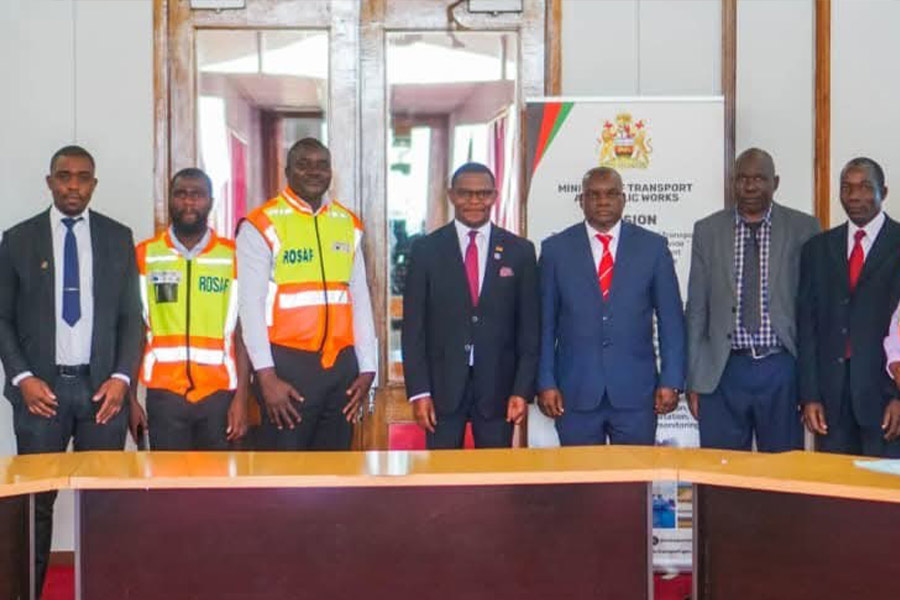
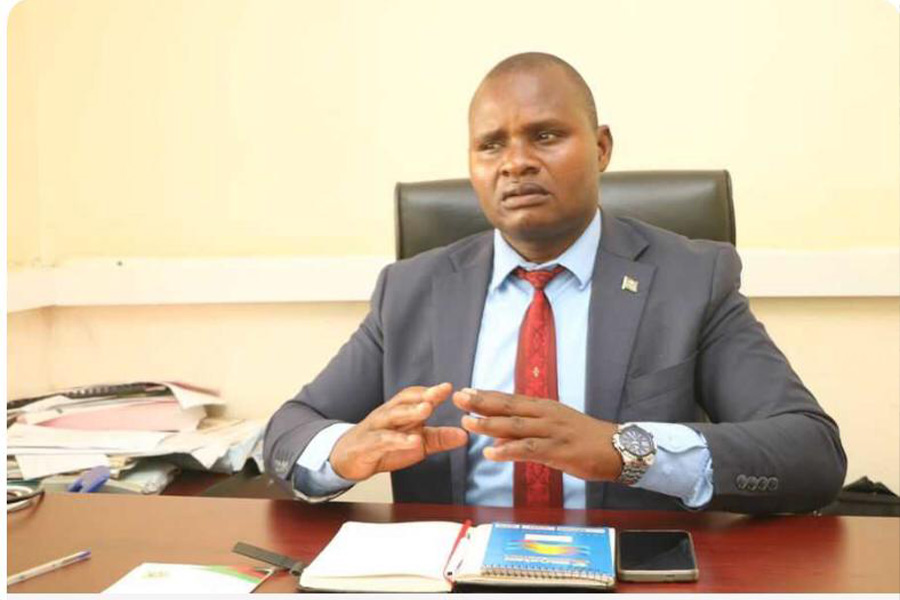
Malawi’s Minister of Transport and Public Works, Dr. Feston Kaupa, has called for intensified enforcement of road safety regulations, stressing that the country must adopt more evidence-based interventions if it is to achieve the global target of reducing road deaths and injuries by 50 percent by 2030.
Speaking during a high-level interface meeting with the Road Safety Alert Foundation (ROSAF) at the Ministry Headquarters on Wednesday, Dr. Kaupa said current strategies, though ongoing—have not delivered the desired reduction in road crashes.
“Despite our enforcement and awareness efforts, accident numbers remain unacceptably high. We need to strengthen evidence-based approaches if we are to achieve the results Malawians deserve,” Dr. Kaupa said.
He noted that while motorcycle taxis (Kabaza) remain among the leading contributors to accidents, other high-risk sectors such as long-distance passenger transport also require urgent attention.
The Minister urged ROSAF and the Directorate of Road Traffic and Safety Services (DRTSS) to broaden their sensitization campaigns to match the growing enforcement needs.
He added, “Our Ministry remains open to any NGO whose interventions truly contribute to safer roads. Together, we must build a safer Malawi".
The meeting came just as Malawi secured an impressive US$105 million World Bank investment under the Resilient and Strategic Transport Operational Enhancement Project, aimed at upgrading key road corridors and implementing iRAP-recommended road safety measures.
ROSAF used the occasion to formally present its ongoing partnership with the International Road Assessment Programme (iRAP), established through a Memorandum of Understanding with the Ministry.
The partnership aims to eliminate high-risk roads and ensure safety improvements meet global 3-star or better standards for all road users.
ROSAF Executive Director Joel Jere emphasized the importance of government leadership in sustaining the gains made through advocacy and evidence-based interventions.
“Government leadership is critical. Our campaigns, capacity-building initiatives, and safer infrastructure advocacy can only achieve sustainable impact with strong institutional backing,” Jere said.
“We will continue mobilizing resources and international support to help Malawi reduce accidents, especially those caused by untrained Kabaza operators.”
Already, 23 schools have been assessed under the Star Rating for Schools (SR4S) programme, with ROSAF and local stakeholders trained to use the tool. The assessments are guiding evidence-based upgrades designed to protect children and other vulnerable road users.
Responding to the Minister’s call to action, DRTSS Director Christopher Kuyera assured that the Directorate will scale up its operations.
“We will intensify both sensitization and enforcement. Road safety is a shared responsibility, and we are committed to playing our part,” Kuyera said.
Malawi’s National Road Safety Strategy 2022–2030 requires all new roads to undergo Road Safety Audits and meet minimum 3-Star iRAP ratings. The new World Bank project will incorporate these standards while delivering a dedicated school safety programme.
According to iRAP’s Safety Insights Explorer, achieving UN Target 4, ensuring over 75% of travel occurs on 3-star or better roads, could save 1,776 lives every year and prevent over 506,000 fatalities and serious injuries over 20 years. This would yield an economic benefit of US$257.5 million, a return of nearly $16 for every $1 invested.
Dr. Kaupa concluded the meeting by reaffirming the Ministry’s commitment to supporting all credible road safety programmes.
With strengthened enforcement, increased multi-stakeholder collaboration, and major investments in safer road infrastructure, Malawi is positioning itself to significantly reduce the tragic burden of road crashes, currently costing the nation 4.7% of its GDP, or roughly $583 million annually.