














ZODIAK ONLINE
ArtBridge House, Area 47
Sect. 5, P/Bag 312
Lilongwe, Malawi
Sect. 5, P/Bag 312
Lilongwe, Malawi


On the surface, Thyolo remains what it has always been, a district of endless tea estates, green hills and tightly knit villages where neighbours know one another by name.
But beneath that familiar landscape, something unsettling is unfolding.
In less than six months of 2026, police have investigated a string of brutal domestic killings that have left wives dead, children murdered, suspects taking their own lives, and entire communities asking the same haunting question.
The latest tragedy is perhaps the most heartbreaking.
Four-year-old Martha James and her one-year-old brother Smart James were not found asleep in their home or playing in the village. Their tiny bodies were pulled from Malamulo Dam on July 20, 2026, after women collecting firewood spotted them floating in the water.
Two days earlier, villagers had reportedly heard the children's parents quarrelling.
Then the couple disappeared.
Now police suspect the children were murdered, and detectives are hunting for the missing parents.
"We immediately visited the scene and conveyed the bodies to Thyolo District Hospital for postmortem examinations. Investigations are continuing while efforts to trace the parents are underway," said Thyolo Police deputy public relations officer Constable Blessings Rabson.
The deaths have shaken even seasoned investigators.
"We suspect murder. They were only four years and one year old. How do children become victims of adults' anger," said one Malamulo Hospital resident Burton Jurton.
It is a question Thyolo has been asking repeatedly this year.
Barely seven weeks before Martha and Smart were found in the dam, another family was destroyed.
Police say Pilirani Lunguzi, 36, allegedly murdered his 22-year-old wife, Zinenani Leonard, and their one-year-old daughter in Traditional Authority Ngolongoliwa after taking them to collect bluegum poles.
The bodies were discovered hidden beneath bluegum leaves with deep cut wounds.
Hours later, Lunguzi allegedly drank a poisonous substance locally known as Lindimu and died inside the Conforzi Tea Plantation.
There would be no trial. No explanation. Only another orphaned family trying to understand the unimaginable.
Just days before that incident, police arrested Victor Nelson Matebule, 39, for allegedly killing his wife, Maria Matias, at Nkunda village, Senior Chief Khwethemule after accusing her of infidelity.
According to police, an argument escalated into violence.
Police allege Matias severed part of her husband's genitals during the struggle before Matebule retaliated by repeatedly beating her with a wooden hoe handle until she died.
It was another domestic disagreement ending in irreversible violence.
Earlier, in January this year, Stella Nkochera from Khonjeni, T/A Kapichi narrowly escaped death after her estranged husband allegedly pierced her with a syringe containing a suspected poisonous substance during a dispute over property following the collapse of their marriage.
Doctors later ruled out poisoning, but she was hospitalized and undergone surgery.
Her husband disappeared. But police arrested and court convicted him to prison.
Viewed separately, each case appears to be another criminal file on a police desk.
Together, they tell a different story. The alleged perpetrators are husbands. The victims are wives.
Increasingly, children are becoming collateral victims. And in one case, the suspect chose suicide after committing murder.
These are no longer random acts of violence. They point to a pattern of domestic conflicts escalating into deadly outcomes.
A bi-annual report for South East Police Region consolidated homicide figures to 20 for Thyolo over the past six months, way higher that 14 recorded last year in the period.
The succession of high-profile domestic murders has become impossible to ignore.
Thyolo's tragedies are unfolding against a broader national backdrop of growing concern over violence and mental distress.
Malawi Police Service statistics show that 95 people died by suicide during the first quarter of 2026, compared to 92 during the same period in 2025. Although the increase appears modest, police describe it as a continuing concern.
Interestingly, police data indicate that the South East Police Region, which includes Thyolo, Mulanje, Chiradzulu and Phalombe, recorded seven suicide cases in the first quarter of 2026, down from 16 during the same period last year.
That statistic, however, masks another disturbing reality.
While recorded suicides in the region have declined, several of Thyolo's most shocking incidents involve murder followed by attempted or completed suicide, events that are often analysed separately from ordinary suicide statistics.
Experts say these "murder-suicide" cases usually emerge from prolonged domestic conflict, jealousy, feelings of hopelessness or an inability to cope with relationship breakdowns.
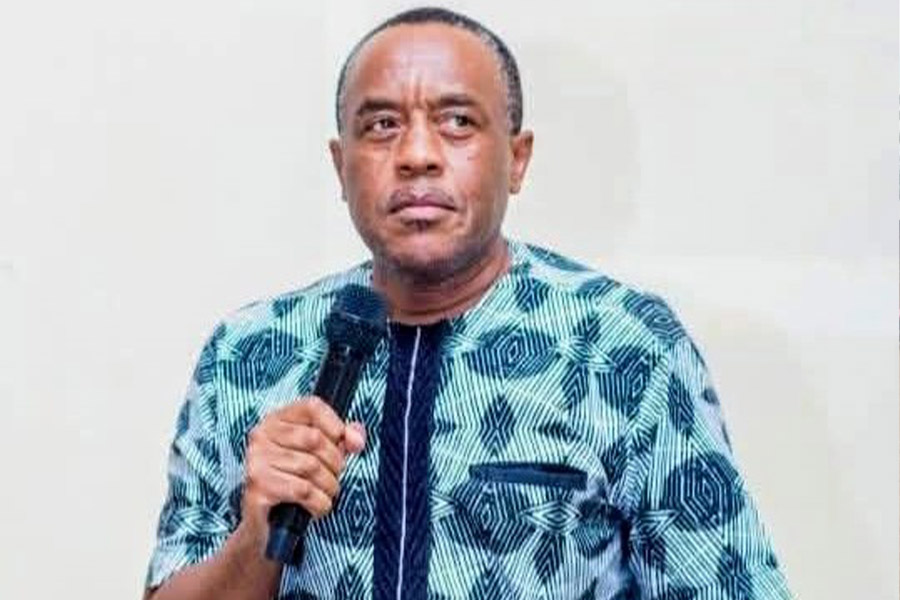
A mental health expert, Professor Chiwoza Bandawe, says this points to frustration and lack of hope among people owing to economic factors affecting families.
"We have what we call Frustration Aggressive Hypothesis which basically says that whenever there is frustration, mainly due to other economic factors, people vent out their frustrations in a violent way; they take their frustrations on other people especially their spouses. As a result, you see in violent acts, this is because their issues keep building up," he said.
Professor Bandawe says there is need to improve long term economic issues and give a sense of hope.
He added," In a short term, it is important to create spaces where men can meet, talk and express frustrations that they are having. These are very important the forums where they can express their fears, and anxieties among others."
At first glance, the motives appear different. Infidelity. Divorce. Family disagreements. Property. Custody.
But beneath each is the same dangerous thread, conflict that escalates without intervention.
Relationship breakdowns that might otherwise end in separation instead become fatal confrontations.
The alleged perpetrators are not strangers ambushing victims on lonely roads. They are intimate partners.
People who once promised protection.
That makes the violence particularly devastating.
Jefferson Milanzie, National Coordinator for Tibe Khonde Mental Health, an organization advocating for openness and more spaces for men, says this is a broader mental health and social crisis that needs urgent attention.
Milanzie notes several underlying factors including untreated conditions such as depression, severe stress, trauma and emotional distress that often go unnoticed because people do not seek help.
"There is also poor conflict resolution and emotional regulation, where domestic disagreements escalate into violence. Economic pressure from unemployment, debt and financial insecurity further strains families," he said.
He adds that alcohol and substance abuse can impair judgment, increase aggression and worsen existing family conflicts, while relationship issues like mistrust, suspected infidelity and separation also play a role.
“Stigma surrounding mental health, especially among men, who are often socialised to suppress emotions and avoid asking for help, leading some to reach a breaking point," he added.
Milanzie stresses these cases should not simply be viewed as criminal acts but as a signal of the urgent need to strengthen mental health awareness, early intervention and family support systems.
He suggested that, "Immediate steps should include strengthening community-based mental health awareness and early help-seeking, expanding access to counselling and psychosocial support, and equipping traditional and religious leaders to identify and refer families in distress".
He also calls for confidential referral pathways for domestic violence and mental health crises, and for promoting positive parenting and peaceful communication at home.
In the long term, Milanzie urges integrating mental health into primary healthcare, introducing relationship and life-skills education for young people and couples, and strengthening economic empowerment programmes to reduce household financial stress.
Research worldwide consistently shows that women face their greatest risk not from strangers, but from current or former intimate partners.
Children, too, become vulnerable when relationships collapse into violence.
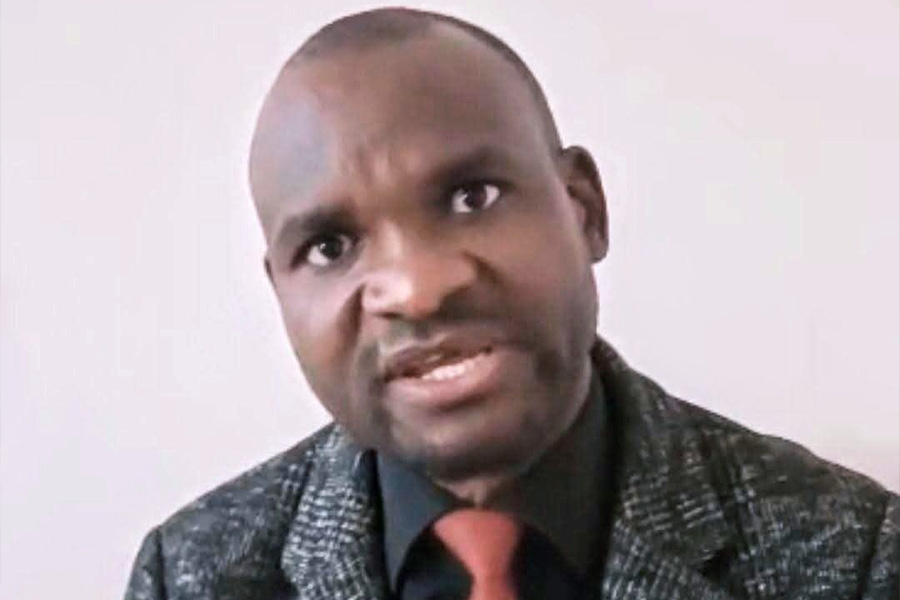
For a child rights activist, Amos Chibwana, who is also the Bwenzi la Ana Executive Director, it is saddening and confusing for the children to die in the hands of people that are mandated to protect them, according to the Child Care, Protection and Justice Act and the Constitution (Section 23).
"It is very uncalled for and must be condemned very much as circumstances surrounding killing of children violates their rights and cause trauma to families. I would suggest that the establishment of community policing and child protection structures needs to be supported with capacity, right information and life skills to handle such cases," he said.
He added that, "We need to sensitize the communities not to rush to making violent decisions when they have issues, but rather expressing themselves for help. It is also high time we moved the courts to conduct mobile court sessions to resolve domestic cases at the community level, so that we prevent such violent acts involving parents that end up affecting children."
Thyolo District’s Acting Director of Social and Community Services, Fedda M'bwana, says her office is intensifying community sensitisation aimed at strengthening family ties.
M'bwana observed that many families in the district are failing to value the importance of family and parental responsibility.
“What we have realised is that there are weak family ties. Most of these families do not value the importance of family, as well as having children and supporting them. So we have been putting systems in place whereby we want to strengthen the ties available in our district,” she said.
She said one of the interventions is raising awareness on the Foster Care system.
“For example, recently, we will be implementing a project in the district whereby we want to raise awareness about the Foster Care system to make sure that all the children who are lacking parental guidance, we are linking them to those that are willing to take care of them,” M'bwana said.
She also attributed the breakdown in family responsibility to high levels of poverty.
“That is why you would see that we receive cases of many children who are being dumped by their parents here in Thyolo. It is one way of running away from parental responsibilities,” she said.
M'bwana added that the department is initiating programmes to address poverty so that parents can adequately support their children.
She added, “So we are also trying to initiate programmes that would address issues of poverty by supporting their family livelihoods so that they can take full responsibility of their children."
Across Malawi, households continue to grapple with rising living costs, unemployment and shrinking incomes.
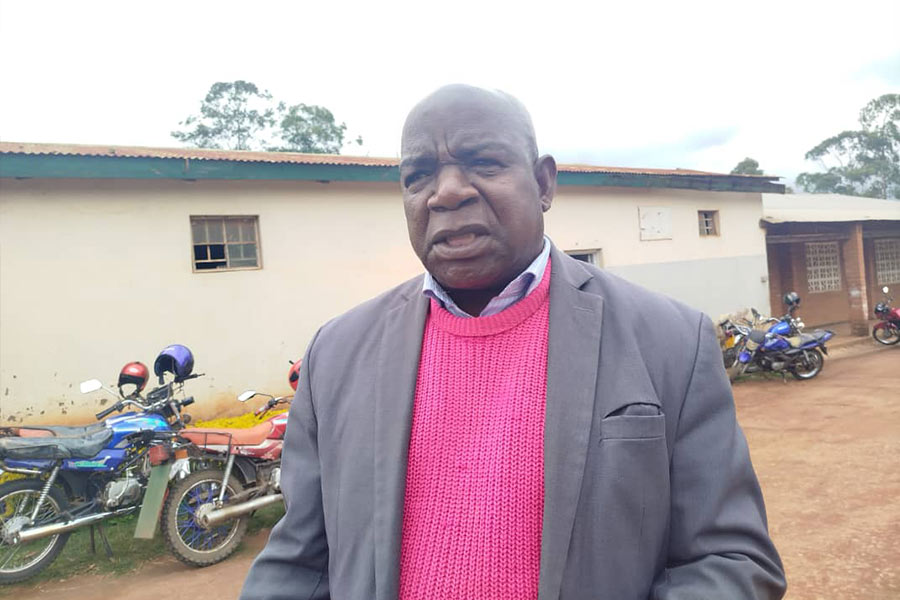
Senior Chief Khwethemule of the district says majority of cases are linked to growing poverty and secrecy among men.
"I think poverty is playing a part as most spouses are not opening up to each other and failing to meet family demands. As for the two children, I am yet to establish what caused their deaths, but I understand that their mother had a mental health issue history where she once hit and assaulted her previous husband," she said.
He said they are working to trace the whereabouts of the parents.
Financial stress alone does not cause murder.
Violence is therefore rarely born in a single argument. It often grows silently.
In rural communities where counselling services are scarce and cultural expectations often discourage men from expressing emotional distress, anger may become the only language some know.
That does not excuse violence. It helps explain why it repeats.
However, Chief Khwethemule insists that they always encourage their subjects to open up when they have family issues not resorting to violence.
For residents of Thyolo, statistics mean little compared to the memories they now carry. Children lifted from a dam.
A young mother buried beside her infant.
Another woman dying after a domestic argument.
Each case leaves another family shattered. Each funeral deepens community fear. And each investigation raises a difficult question for everyone—not only police: How many warning signs were visible before the latest violence began?
Neighbours heard arguments.
Families knew relationships were breaking down. Communities watched disputes simmer.
Yet intervention often came only after death.
The manhunt for the missing parents of Martha and Smart James continues.
If arrested, investigators may eventually establish exactly what happened inside that family.
But solving one case will not solve the larger problem. Because what Thyolo is witnessing cannot be addressed through arrests alone.
It demands stronger family counselling, earlier reporting of domestic violence, improved access to mental health services, community mediation mechanisms and a willingness to treat domestic conflict not as a private matter, but as a public safety issue.
Until then, police may continue opening murder dockets.
For Thyolo, the tragedy is no longer simply that people are dying. It is that home, the place where children should be safest—is becoming the scene of some of the district's most horrifying crimes.