






ZODIAK ONLINE
ArtBridge House, Area 47
Sect. 5, P/Bag 312
Lilongwe, Malawi
Sect. 5, P/Bag 312
Lilongwe, Malawi

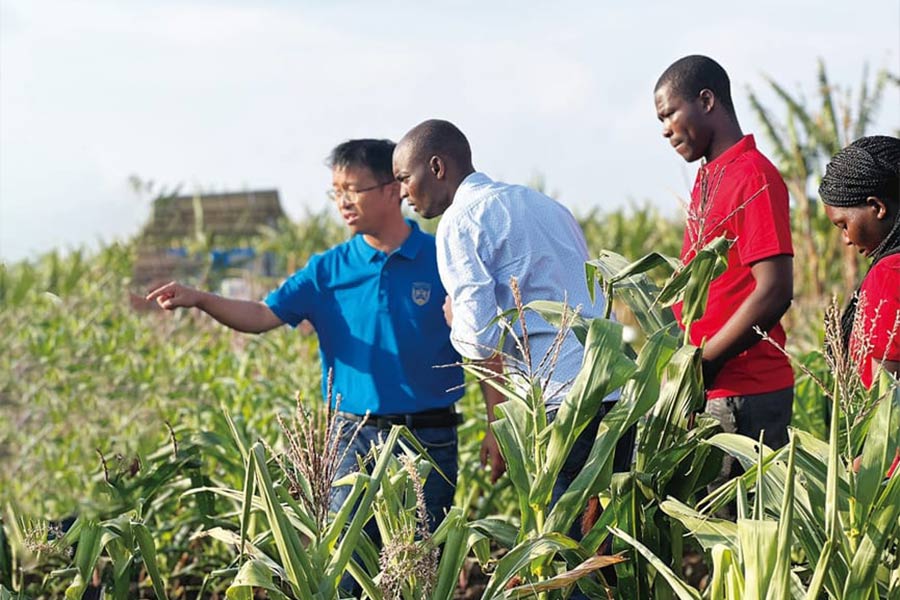
China and Malawi are two nations separated by over 10,300 kms but brought together by mutual respect and a genuine and unquenchable craving for knowledge and prosperity.
For many years now, the government of the People’s Republic of China and Malawi have been cooperating in many spheres of life for the mutual benefit of the peoples of the two countries.
One of the areas of cooperation is the agriculture sector through the building of what have been called the Science and Technology Backyard (STB) model across Malawi.
Through the cooperation, Malawian students are sent to China to acquire special professional agricultural knowledge for use back home to boost the farming industry upon graduation.
In the approach, each student is expected to launch a localized campaign targeting one regional agricultural challenge, mentor at least 30 farmers in field trials, train five extension agents and manage a large-scale demonstration plot in what is referred to as the 1-3-5-1 initiative.
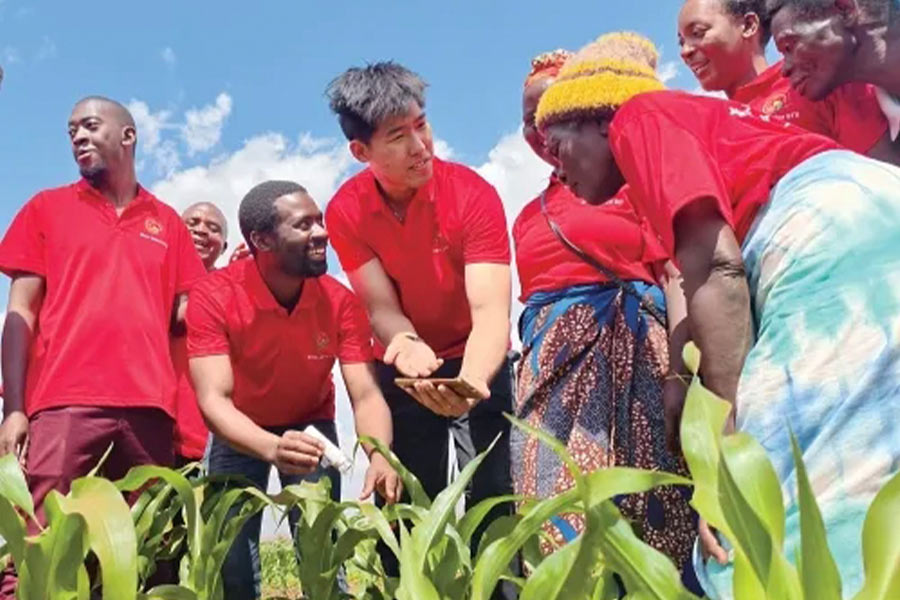
This is a research exercise through which African postgraduate students studying in China, including Malawians, return home to rural villages to establish the plots and live and work alongside smallholder farmers in a hands-on technology transfer to boost food security.
“We have to learn from countries that are doing well in agriculture regarding maximizing yield and China is one of those countries,” one of the students Sylvester Chalowa Panyani once told the Malawi News Agency after a field day showcasing crop density and intercropping trials.
In Malawi, the initiative was rolled out in Lisasadzi Extension Planning Area (EPA) in Kasungu district and Kavuzi EPA in Mzimba district through a “teach-fishing-don’t-give-fish” strategy.
Here, farmers cultivate shared demonstration plots where technologies are tested to solve such challenges as climate impact, plant diseases and also insect pests in crop fields. The initiative has “successfully linked the science community to farming community” as a multistakeholder platform integrating government, enterprise and university knowledge transfer to smallholders.
"Science and Technology Backyards have great achievements, and opens a new chapter educating talents,” says QU Dongyu, Director-General of the Food and Agriculture Organization-FAO of the project that involve many other African countries and is now paying dividends.
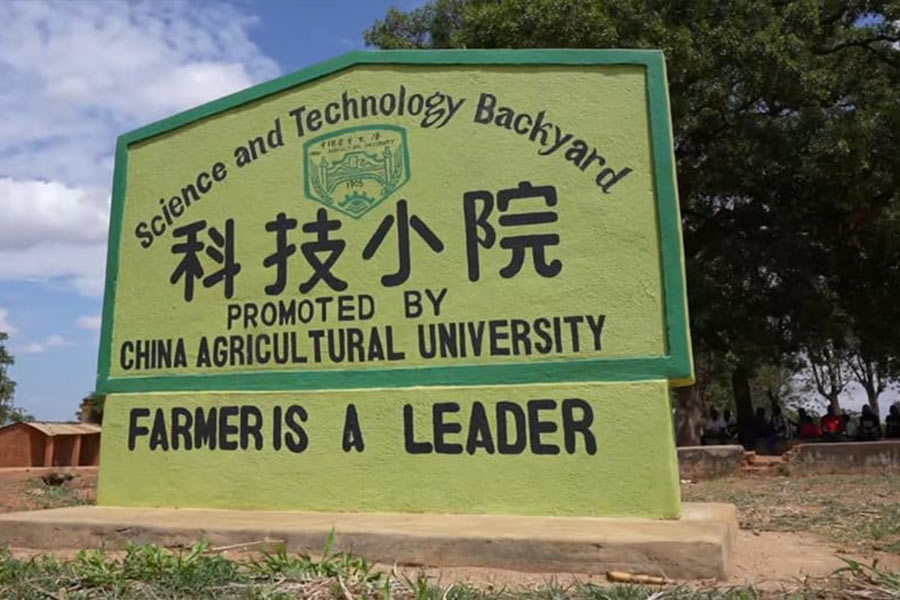
The Science and Technology Backyard (STB) program is funded by the Peoples Republic of China and a total of 47 Malawian students have been supported since inception in 2021.
At the moment, six candidates have been enrolled this year at the China.
Recently, through an investigative reporting approach, a crew conducted field shoots across Malawian farmlands, Science and Technology Backyards (STBs), and other institutions.
The film focuses on the overseas application of advanced agricultural technologies from Quzhou, Hebei. It authentically documents how localized and replicable Chinese agricultural techniques have taken root, contributing to grain yield increases and farmer income growth.
With a genuine frontline perspective from overseas, the documentary vividly tells the story of China-Africa mutual benefit and win-win cooperation, showcasing Hebei's practical commitment to supporting South-South cooperation and safeguarding global food security.
The students are first expected to identify the problem limiting crop production with local farmers and based on their finding, establish field plots for trails for technology innovation and knowledge transfer when the systematic solutions to the problem has been developed.
A series of approaches has been employed to transfer recommended solutions to resolve problems faced smallholder farmers while graduate students finalize theses in rural areas, according to Professor Fusuo Zhang who created the novelty model popularly known as STB.
In under five years, the initiative has caused the assembly of a solid team of college professor-supervisors for the project and recruited 20 masters students from the continent of Africa.
The global mission of the STB is to act as a platform for research, training for young talent and a top platform for “Global South”. Bringing knowledge to farmlands from the Chinese classroom.