








ZODIAK ONLINE
ArtBridge House, Area 47
Sect. 5, P/Bag 312
Lilongwe, Malawi
Sect. 5, P/Bag 312
Lilongwe, Malawi

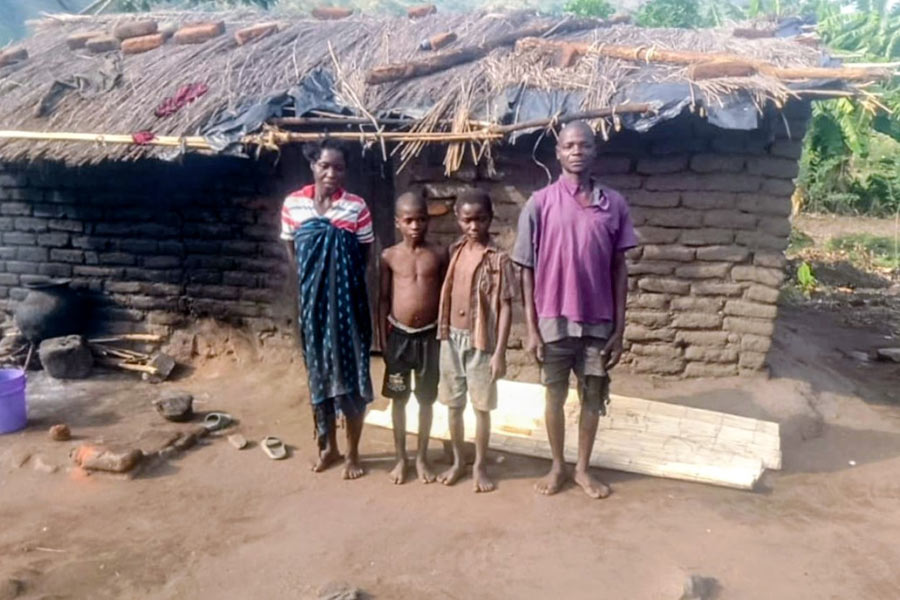
For three years now, families of Nsambambizi in Traditional Authority Changata, Thyolo, have lived between memory and fear, trapped on what survivors now describe as “an island”, cut off by the swelling Limalimanja and Chizindi rivers after the devastating passage of Cyclone Freddy in 2023.
Their houses were swept away. Their gardens disappeared beneath raging waters. Livelihoods collapsed overnight.
Yet despite government purchasing land worth about K14 million in 2024 for at least 70 affected families to relocate to safety, the survivors remain stranded in the same flood-prone area, waiting for the district council to distribute plots and facilitate basic services at the new settlement.
Every rainy season now arrives like a warning siren. For the survivors, the disaster never ended.
Alfred Maluwa, a survivor and father of eight, says they are stranded and suffering because they lack land to cultivate enough food and money to buy another piece of land for rebuilding.
“We are always hungry and living miserable lives with no dignity as we stay in groups. When rainfall starts, we are always in a dilemma about what will happen to us. We were happy when the government bought this land as we were assured of safety, but the delays are not solving matters,” he lamented.
He appealed to the district council to swiftly distribute the land and provide basic necessities.
“We are like people living on an island and dejected,” said Group Village Headman Khongono, himself a victim of the floods. The chief seeks shelter at a daughter's house at Mitondo, in the bordering Chikwawa district.
The traditional leader said families continue suffering because the relocation process has stalled despite repeated engagements with district council authorities.
“The council should consider this as an emergency. This will also give room for the provision of social services to the people. The roads are impassable due to the bad terrain. We are also urging various stakeholders to help us because we are in need of food, a good road and other basic needs since we have not been harvesting anything for the past years,” he implored.
Around him are families whose lives have remained suspended and unproductive since calamity struck southern Malawi with historic force. Children are growing up in temporary shelters. Farmers stare at land they can no longer cultivate. Mothers worry about their school-going children every time clouds gather above the hills.
The people of Nsambambizi are not refusing to relocate. They are waiting to be relocated.
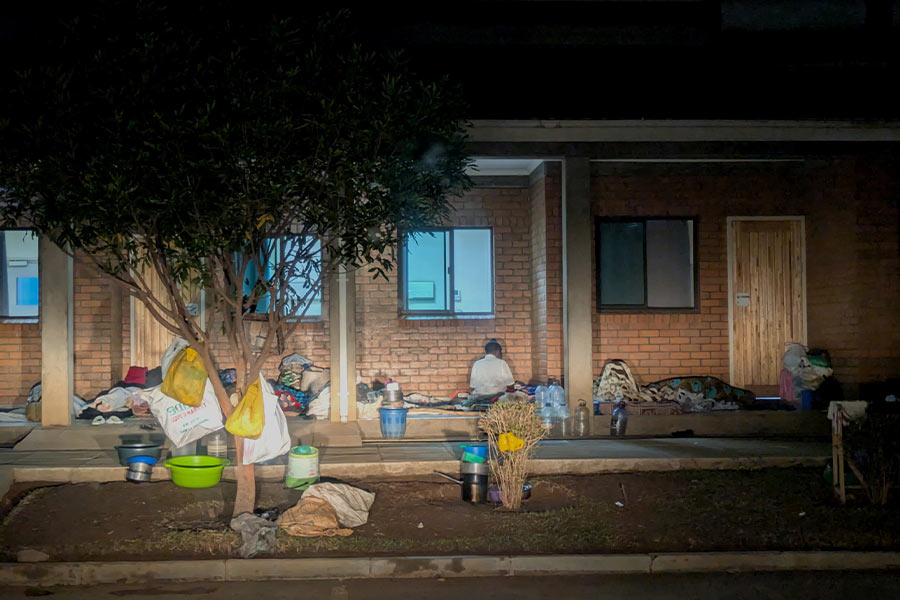
Another survivor, Maenda Magona, says they want to move to higher ground as they continue living in temporary shelters, locally known as Timikhuku, which are unsafe. He adds that the delay rekindles memories of the tragedy.
“They promised to support us after the disaster, including relocating us to the land. We were expecting to be safe at a new site. We are seriously suffering and limited in developing our families owing to lack of land,” he said.
According to Samuel Wakudza Diverson, Area Civil Protection Committee (ACPC) chairperson, the cyclone swept away 95 dwelling units in the area, but the earmarked land parcels, located in six places, will prioritise 70 families.
Diverson says that after the calamity, officials from the Department of Disaster Management Affairs (DoDMA) who visited the area also pledged to provide subsidised housing materials to the survivors for durable rebuilding. This did not materialise.
“We have been reminding the responsible offices to distribute the land, but they always indicate that they are waiting for the District Commissioner to give them a go-ahead,” he said.
Meanwhile, he adds, people in the area feel abandoned because they are forced to travel about 22 kilometres through mountainous terrain to Masambanjati to receive relief items or access social services. The nearest alternative is Mitondo in Chikwawa.
That distinction exposes one of Malawi’s greatest climate governance failures, not merely the absence of policy, but paralysis in implementing it.
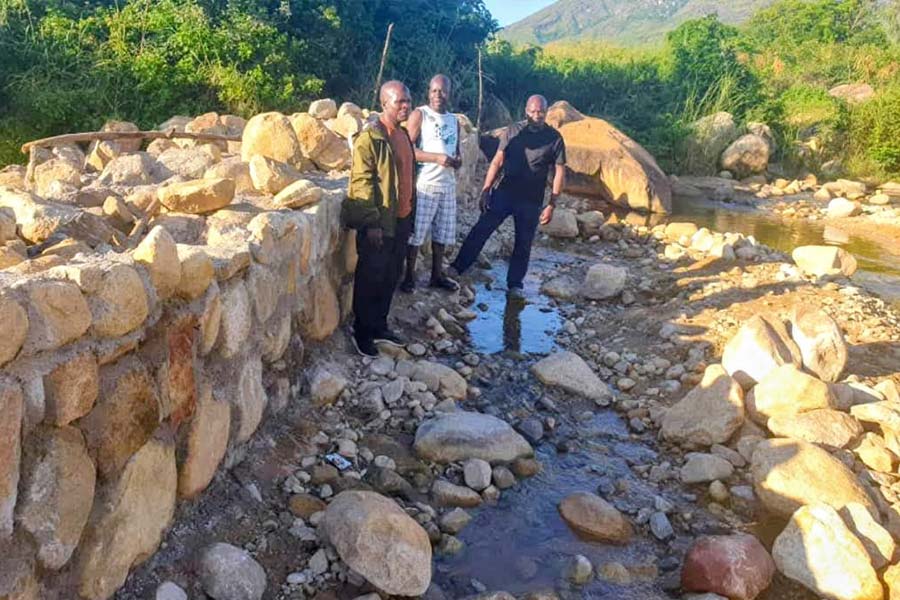
A 2024 study by the Malawi Human Rights Commission (MHRC), in conjunction with UNICEF, warned that survivors in high-risk areas such as Nsambambizi remained exposed to severe danger if relocation was delayed.
The report highlighted how Cyclone Freddy intensified protection risks, including gender-based violence, destruction of infrastructure and repeated exposure to floods in districts such as Thyolo.
Following the assessment, the commission called on the council to urgently secure safer land for the affected communities.
The district council eventually bought the land in 2024. But nearly three years after the floods, survivors are still waiting for authorities to take the next step.
That procrastination has transformed a humanitarian intervention into a prolonged cycle of vulnerability, carrying devastating consequences not only for affected communities but for the entire country.
In Nsambambizi, survival itself has become exhausting.
Without stable farmland, many families have struggled to produce food for several farming seasons. Some depend on piecework. Others survive on lean-season relief assistance or borrowing from relatives. The psychological burden is equally heavy.
Each rainfall revives memories of the night Cyclone Freddy tore through the district with terrifying force. Parents remain anxious that another disaster could strike before relocation happens.
The situation also undermines access to education, healthcare and economic recovery.
Without formal settlement planning, authorities cannot properly install social amenities such as schools, clinics, roads and clean water systems. Communities remain isolated and difficult to reach during emergencies.
The longer the delay continues, the more expensive recovery becomes.
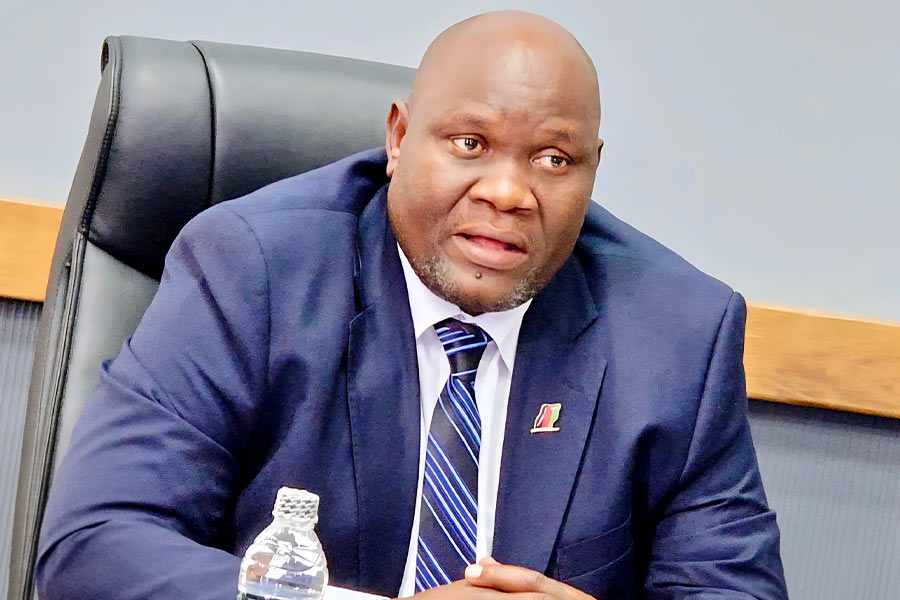
For Thyolo District Council, stalled relocation means recurring humanitarian costs whenever floods strike again, from emergency rescue operations to food relief and infrastructure rehabilitation.
Thyolo District Commissioner Noel Dakamau has confirmed that the Council has secured land in the Nsambambizi area to relocate households affected by Cyclone Freddy, following assessments that found the area highly vulnerable to disasters.
“The process has not stalled. What remains is for the Physical Planning Office to undertake the layout and demarcation of plots to ensure orderly allocation to affected households. Once this is complete, the Council will proceed to allocate the plots to the beneficiaries,” Dakamau said.
He added that relocation involves more than just land. “The Council recognises that relocation must include access to essential social services. Planning for social amenities will therefore form part of the settlement process, in line with available resources and sectoral requirements, to ensure relocated households have access to basic services for sustainable settlement,” he said.
Dakamau assured that the Council remains committed to facilitating the relocation and moving affected households to a safer environment.
What is happening in Nsambambizi mirrors a wider national crisis.
In Phalombe, communities in flood-prone Bokosi Village under Traditional Authority Mkhumba are also battling recurring disaster threats.
Residents there have appealed for support to complete construction of a dyke along the Manyo river after funding shortages stalled the project.
Manyo Club chairperson Henry Naparari said initial works began using K3.5 million from the Catholic Development Commission in Malawi, but the funds ran out before completion.
Once finished, the dyke is expected to protect critical infrastructure, including Phalombe Health Centre, the market and council offices, from future flooding. All were submerged in mud in 2023.
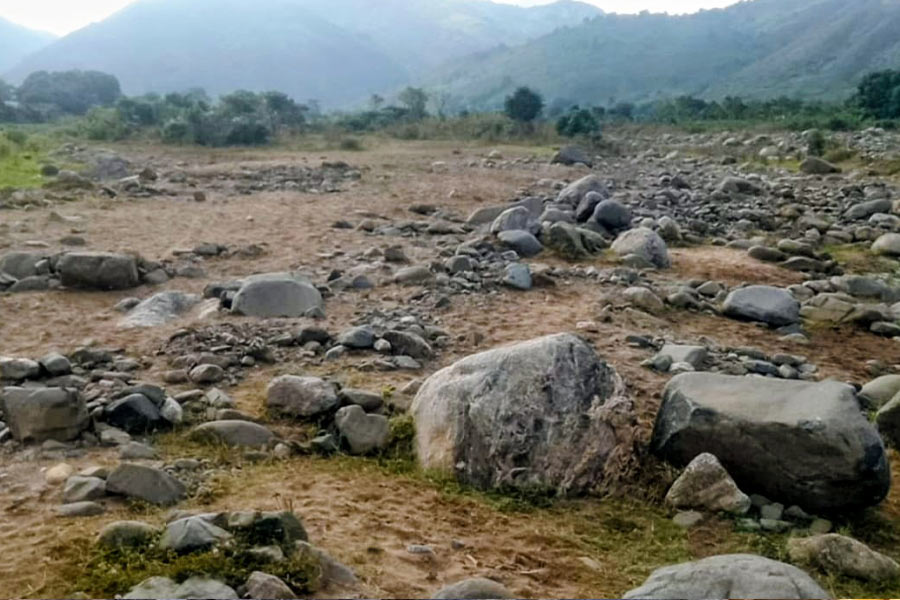
The memories in Phalombe remain painful. Cyclone Freddy revived trauma from the deadly March 10, 1991 flash floods from Michesi Hill, locally remembered as the Napolo disaster, which killed hundreds of people, swept away homes and damaged public infrastructure.
At the national level, the consequences are even broader.
Malawi already loses millions of dollars responding to climate-related disasters. Government estimates show Cyclone Freddy caused losses amounting to approximately US$506.7 million, while recovery and reconstruction costs were projected at US$680.4 million.
When vulnerable communities remain in danger zones despite available relocation plans, disaster spending becomes repetitive rather than preventative.
The pattern is unmistakable: communities repeatedly rebuild while underlying risks remain unresolved. Climate and disaster experts argue that Malawi’s biggest challenge is no longer awareness. It is implementation.
Speaking to Zodiak during commemorations of the International Day for Disaster Risk Reduction, Director of the Department of Climate Change and Meteorological Services Dr Lucy Mtilatila warned that many disasters in Malawi are worsened by human decisions and policy failures.
“Most of the disasters that we experience in Malawi are not purely natural. They are man-made, emanating from societal contributions and policy failures,” she said.
She added: “People continue settling in prohibited areas such as mountains, swamps and riverbanks. When floods or landslides occur, they blame nature instead of recognising that poor planning and weak enforcement are at the root.”
Dr Mtilatila says the department is pushing for a Meteorological Bill that incorporates climate resilience and a Build Back Better approach.
But in Nsambambizi, Thyolo, survivors feel policy discussions mean little if implementation never reaches the ground.
Malawi University of Science and Technology (MUST) senior lecturer in Disaster Risk Management Dr Isaac Mwalwimba believes authorities must move beyond paperwork and begin enforcing long-term solutions.
“Policies are only as good as their implementation. We need to move from paper to practice by ensuring that people in disaster-prone areas are relocated safely. Stakeholders should focus more on problem-based approaches that address root causes rather than temporary solutions,” he said.
His remarks speak directly to the reality in Thyolo, where the land has already been purchased, communities are willing to move, yet bureaucracy continues to delay action.
Although meteorological authorities have projected an El Niño pattern associated with below-normal rainfall and drought in southern Malawi this year, experts caution that weather systems are becoming increasingly unpredictable.
Floods can still occur suddenly, especially in already vulnerable landscapes. That uncertainty leaves communities such as Nsambambizi dangerously exposed.
Malawi has already endured multiple climate disasters in recent years, Cyclone Idai in 2019, Tropical Storm Anna in 2022 and Cyclone Freddy in 2023, each leaving behind a trail of destruction, displacement and economic losses.
Yet despite these repeated warnings, many vulnerable communities remain exactly where previous disasters struck hardest.
In Nsambambizi, people no longer ask whether another flood will come. They ask whether relocation will happen before it does.
And as the rivers continue separating them from the rest of society, survivors remain suspended between rescue promised and rescue delayed, waiting for higher ground that the government already bought but has not yet given them.