


ZODIAK ONLINE
ArtBridge House, Area 47
Sect. 5, P/Bag 312
Lilongwe, Malawi
Sect. 5, P/Bag 312
Lilongwe, Malawi

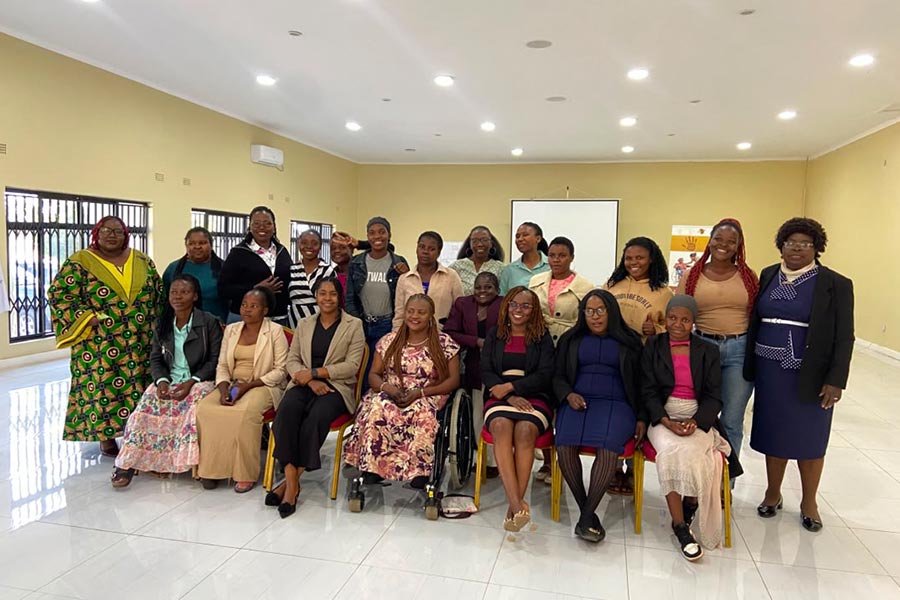
Sonke Gender Justice has expressed concern over the underrepresentation of women and young people, particularly those with disabilities, on global and regional decision-making and advocacy platforms, saying the exclusion limits their ability to influence policies and decisions that directly affect their lives.
Speaking in Lilongwe during a training workshop for representatives of organizations for women with disabilities, civil society and human rights groups, Sonke Gender Justice Policy Development and Advocacy Manager, Mpina Mangwiro Tsanga, said the initiative aims to strengthen advocacy skills, policy engagement and participation in key regional and international platforms.
Tsanga said the training is designed to build the capacity of women with disabilities in feminist leadership and advocacy, enabling them to effectively contribute to policy discussions and ensure their voices are represented in critical decision-making processes.
“We want to increase the participation of underrepresented groups in global and regional platforms because these are the spaces where decisions on resources to end violence against women and girls, including those with disabilities, are made. Governments are also held accountable for their commitments in these forums. When the voices of survivors and other underrepresented groups are absent, the outcomes do not fully reflect the needs of women and girls,” Tsanga said.
Meanwhile, Disabled Women in Africa Chief Executive Officer, Ruth Mkutumula, said there is a need for stronger collaboration among organizations working on disability rights, climate justice and gender equality, particularly at a time when gender equality initiatives are facing increasing resistance.
Mkutumula said inclusive representation is key to ensuring that no one is left behind in advocacy efforts.
“It is important for those of us working on disability rights, climate justice and gender equality to build an ecosystem that strengthens these movements. Representation is not about excluding anyone, whether they come from rural areas or urban areas, or whether they are educated or not. We want every voice to be heard,” she said.
The two-day workshop, which focuses on ending violence against women and girls, has brought together civil society organizations, disability rights groups, human rights activists and other stakeholders from Mauritius, Zambia, Namibia, Uganda, Cameroon, Nigeria and Malawi, with participants attending both physically and virtually.