








ZODIAK ONLINE
ArtBridge House, Area 47
Sect. 5, P/Bag 312
Lilongwe, Malawi
Sect. 5, P/Bag 312
Lilongwe, Malawi

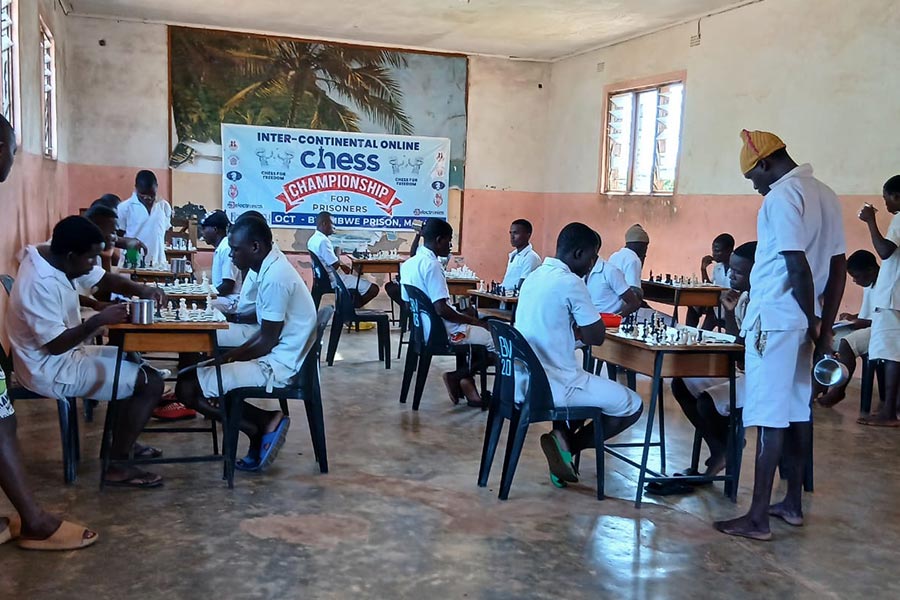
The game of chess, to many, is simply a sport of strategy’ moving kings, queens, and pawns across a checkered battlefield.
It is often praised as a discipline that sharpens the mind, teaching patience, foresight, and critical thinking.
But for Francisis Manyozo Phiri, chess was far more than a contest of intellect. To him, the sixty-four squares were not just a stage for competition, but a sanctuary. Chess became his therapy, a quiet refuge where each move offered relief, focus, and healing.
While others saw the game as a pastime or a test of skill, Phiri, now a former inmate, discovered in it a way to navigate life’s challenges.
The rhythm of planning, anticipating, and adapting mirrored his own journey, turning the board into a space of resilience and renewal.
“Chess has changed my life. When I look at who I am now, I barely recognise the person I used to be.
Chess saved me in ways I never imagined, and I know deep in my heart that I will never go back to that old life.”
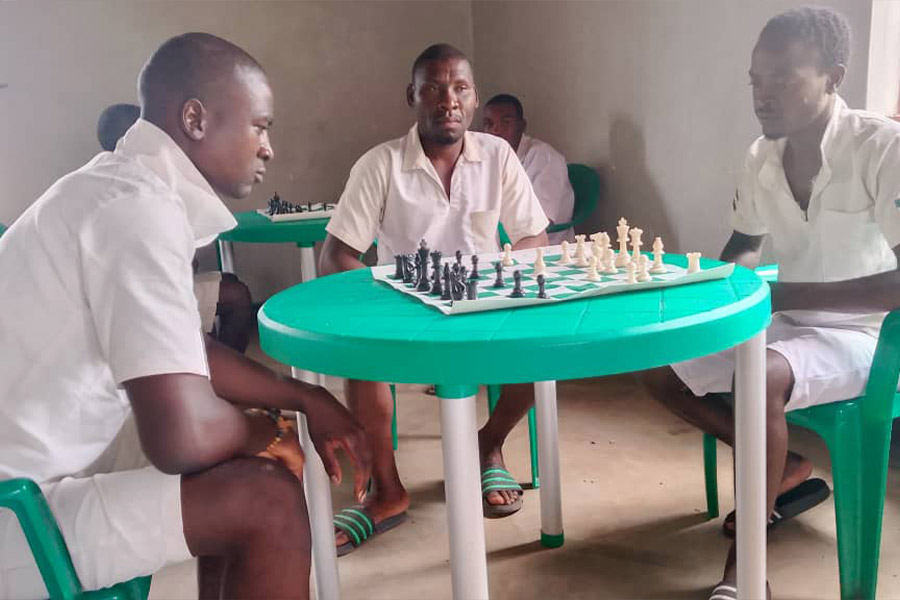
This is a story of change, of how the ancient game of chess is being used as a transformative vehicle for people behind bars.
DADAz Chess Academy, founded by former Chess Association of Malawi (CHESSAM) president Susan Namangale, is bringing the Chess for Freedom initiative into local prisons.
The program is not just about teaching strategy; it is about reshaping lives, offering inmates a chance to think differently, rebuild discipline, and find hope in sixty-four squares.
For years, Malawi’s prisons have been seen as places of punishment rather than reform.
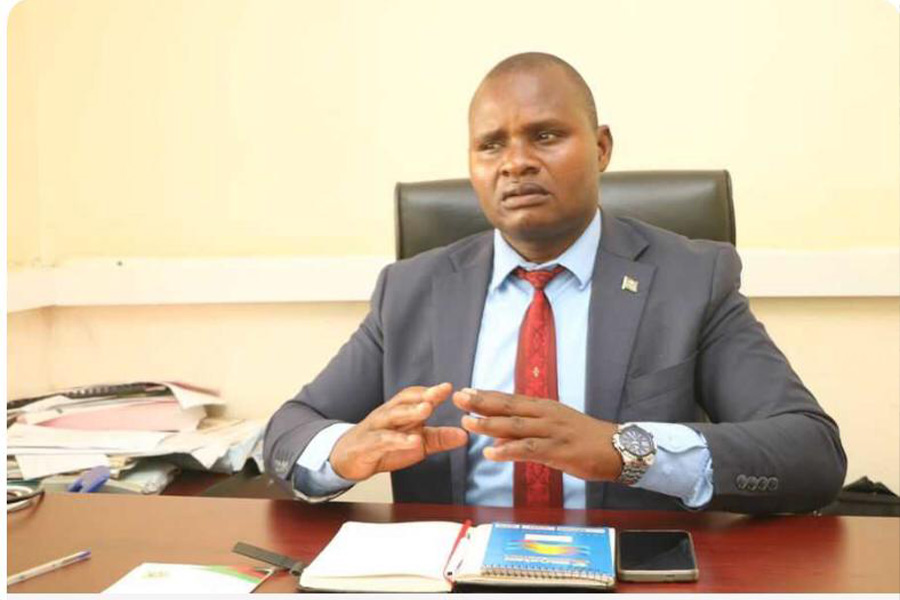
That perception still lingers. But Commissioner of Prisons Baziliyo Chapuwala is determined to change the narrative.
He believes initiatives like chess can help prisons evolve into spaces of rehabilitation, where inmates are given tools to reintegrate into society.
“It tallies well with our reformative agenda because we believe that chess, like any sport, is a discipline.
It instils discipline even in inmates, and prisoners who engage in chess are usually disciplined and do not cause many problems for management.”
At Kachere Rehabilitation Centre in Lilongwe, Shamima Kathumba is serving her sentence.
She echoes the sentiments of Commissioner Baziliyo Chapuwala, describing how the game of chess is bringing hope and a sense of purpose behind bars.
“When I play chess, the world outside disappears. The worries, the distance from home, the noise — it all fades away. Here with my friends, I feel calm.
Chess has become my focus and my safe place. I want to give myself fully to this sport because I am deeply in love with it.”
Chess may be just a game. But for inmates in Malawi, it has become a lifeline, a classroom, and a path to redemption.
Dr. Charles Masulani, a psychologist with St. John of God Hospital Services in Lilongwe, explains that chess builds concentration, decision-making, foresight, and emotional control, skills that are crucial for successful reintegration into society.
“I entirely agree with the utilisation of chess as one of the strategies for rehabilitating inmates. The reason is that for people who engage in deviant behaviour, some of the things that can help them when they are out are what we call diversional techniques.
These are activities that preoccupy their minds so that they do not dwell on thoughts that might lead them to reoffend and end up back in prison,” said Dr. Masulani.
The initiative of bringing chess into Malawi’s prisons is not without admirers. Michael Kaiyatsa, Chairperson for Human Rights and Rehabilitation, has openly expressed his appreciation for the program.
“This is a very good initiative. It is an initiative that, if well implemented, could really help in rehabilitating inmates. As we always say, the idea of prisons is not to punish, but to rehabilitate.
Sports and recreational activities have the potential to help prisoners rehabilitate, ensuring that they become changed individuals and that when they are released, they do not reoffend,” said Kaiyatsa.
The founder of DADAz Chess Academy, the institution driving the initiative to use chess as a tool for meaningful change among inmates, is pleased with the progress being made.
She notes that beyond transforming lives inside prison walls, DADAz has also uncovered hidden talents behind bars, talents that have gone on to represent Malawi at the international level.
“Within a short time, we are now in 20 prisons, with only a few centres remaining. We have been able to organise tournaments within the prisons, and Malawi has also participated in all the intercontinental championships. The first one, Malawi was there.
We participated with two teams from Maula and Zomba Prison. In the second one, we participated with four teams: Maula, Zomba Prison, Kachere Women and we also included the youth from Bvumbwe Young Offenders Rehabilitation Centre. I think that is a big milestone,” said Namangale.

Through the game of chess, Malawi is writing a new narrative for itself, one of impact and change through sport.
According to Andre Vogtlin, Chairperson of the International Chess Federation (FIDE) Social Commission from Switzerland, Malawi is setting a model worth emulating, showing how chess can be harnessed as a powerful tool for transformation and social progress.
“The world is now very open, and we are trying to make the most of it. Chess for Freedom is one of our two flagship projects, autism and prisoners, where we see the greatest potential to make a global impact,” said Vogtlin.
The efforts by DADAz Chess Academy to use the game of chess as a rehabilitation vehicle stand as a clear example of how innovation, combined with collaboration between stakeholders and government, can help transform societies.
If inmates are reformed for good, Malawi will become a better place to live, and this success can help shape the nation’s story to the outside world, showcasing the power of sport as a tool for change.