









ZODIAK ONLINE
ArtBridge House, Area 47
Sect. 5, P/Bag 312
Lilongwe, Malawi
Sect. 5, P/Bag 312
Lilongwe, Malawi


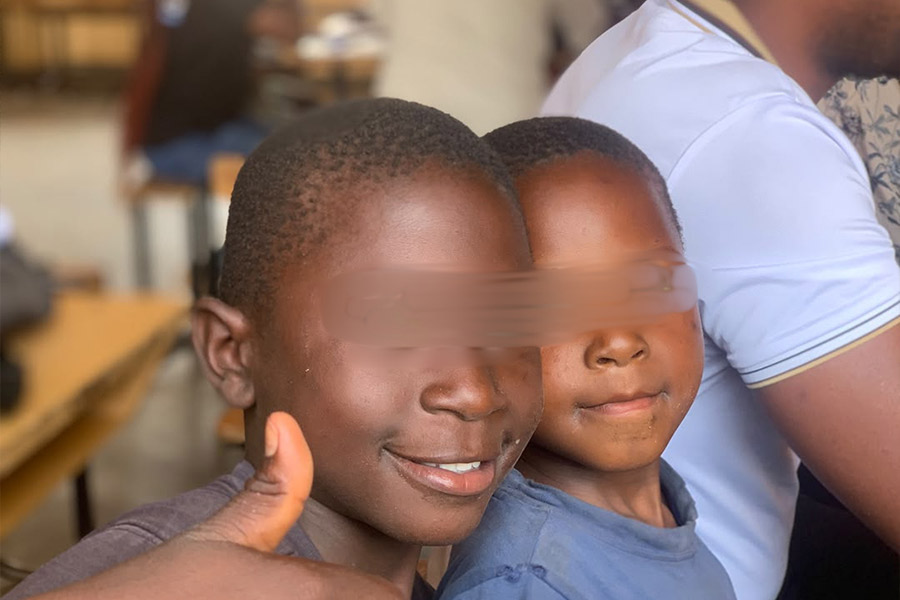
Children are a natural source of joy. Joy for no reason. Just joy.
Parents envision their babies grow into normal adults. But did you know?
There are cases of children who grow features of adulthood before age 9. Girls as young as eight growing breasts, menstruating.
Boys as young as nine growing body hairs and abilities for fatherhood.
Such cases are now being identified among children in Malawi.
Yamikani Ndhlovu's first child has the condition.
Now as her other children are also showing signs of the same, she is appealing for more awareness about the condition as it is not superstition but a medical condition.
Ndhlovu has also asked government to stock necessary medication for children with such conditions.
Although the condition is rare in Malawi, it does exists.
The story of her first-born daughter opens up a national conversation.
When Kamuzu Central Hospital diagnosed precocious puberty, it dawned on the mother that public hospitals did not stock the medication for it.
She needed to import it; AND it was not cheap.
Precocious puberty is a disorder and a rare medical condition.
This is a condition when a person’s puberty begins too early, before age of eight in girls and age nine in boys.
It involves premature sexual development, potential for short adult stature due to early bone maturation, and emotional distress.
If untreated, children may experience early growth plate closure leading to shorter final adult height, as well as psychosocial difficulties.
Experts say precocious puberty may be caused by central nervous system issues, tumors, or genetic factors, requiring evaluation by a specialist.
Now these cases are being confirmed in children in Malawi.
Public ignorance has turned precocious puberty into a subject of ridicule.
Ndhlovu bears testimony to this.
She explained her experience and challenges as people often speak negatively about her daughter.
Some boys even started making advances toward the child forcing her to enroll in boarding school too early for protection.
The emotional effects of this to her daughter was immense.
Feeling isolated and struggles to understand what is happening to her body.
Ndhlovu says her other children are also showing signs of the condition.
Precocious puberty is evaluated through blood tests, bone age X-rays and scans and a certain type of medications are needed to stop puberty progression.
Dr. Amos Msekandiana is Director for Kamuzu Central Hospital.
He says the condition is related to hormonal imbalances.
Dr. Msekandiana says Kamuzu Central Hospital plans stocking medication for the condition in small quantities as the cases are not many and the medicine is expensive.
At the moment, he says, KCH is handling a case of a two-year-old boy who is already showing all signs of puberty.
Dr. Msekandiana condemned some hospital personnel who fail or delay referring such cases to specialized doctors as doing so only challenges the success of help to the patient.
He has also Urged parents to also report such cases on time.
Professor Adamson Muula of Kamuzu University of Health Sciences agrees that delays in presenting cases at hospitals make management difficult especially when they come after time for intervention.
Professor Muula said once reported late, the conditions becomes more difficult or impossible to handle hence his call to medical personnel and parents to always refer children with such conditions to specialized doctors on time.
A nursing expert Donald Kanjere suggests identification of one well equipped facility to exclusively handle precocious puberty.
The idea, he says, is to ensure the cases are not given lesser attention.
For child-rights activist, Memory Chisenga, the need for public awareness and government to stock relevant drugs cannot be over-emphasized.
She stressed on the need for increased awareness so that parents and guardians can recognize early signs and symptoms of the condition, thereby improving reporting on the condition.
Left untreated precocious puberty could result in shorter adult height.
It could also lead to elevated depression, anxiety, low self-esteem, poor body image, antisocial behavior, or substance abuse.
Victims of the condition face social isolation, bullying, unwanted sexual attention AND they struggle with premature sexual feelings.
Society has responsibility to protect and treat those with the condition.
Today. Not tomorrow.