

















ZODIAK ONLINE
ArtBridge House, Area 47
Sect. 5, P/Bag 312
Lilongwe, Malawi
Sect. 5, P/Bag 312
Lilongwe, Malawi

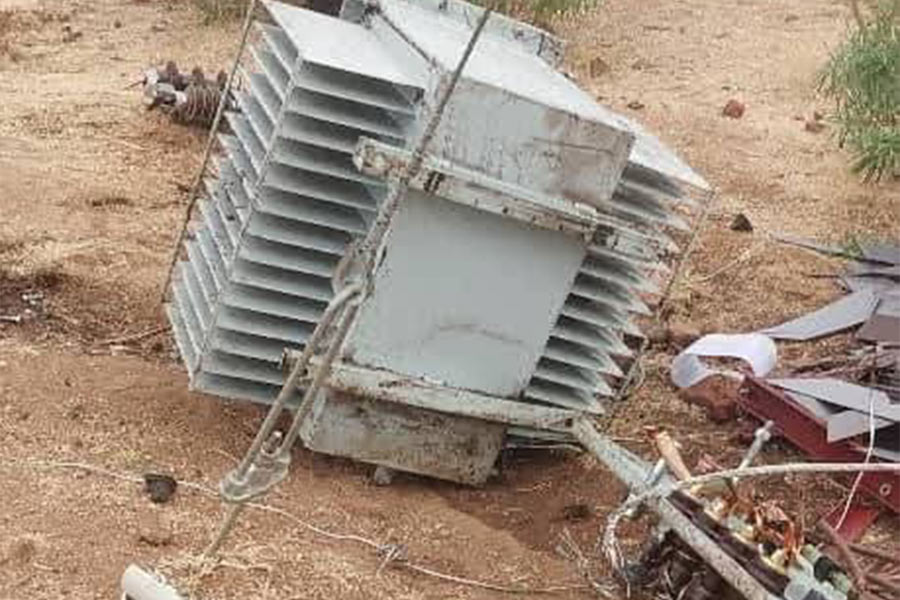
Every year in Malawi, three billion Kwacha is lost in vandalism of Escom equipment.
And that loss comes with disruption of essential social services such as hospitals, every day businesses and water supply. Vandalism of Escom equipment targets transformers and cables, often copper, resulting in chronic power outages that stop these essential services.
In this report, Eamon Piringu discusses how destruction of Escom infrastructure is choking the economic development of Malawi and national efforts to expand access to electricity in a country where close to 75 percent of the population is yet to have access to the public power grid.
On Tuesday, 14 November 2023, residents of Chikwawa and Nsanje districts woke up to a shock.
The usual scheduled power outages had become more disruptive—a prolonged blackout.
A power outage that used to last hours now turned into days, with no apparent solutions in time.
This hampered social services and business transactions in the lower Shire.
At Chikwawa District Hospital, authorities were forced to divert fuel meant for ambulances to power generators to ensure continued operations in the theatre and access to sterilization of medical equipment by personnel.
Meanwhile, emergency responses and patient mobility were adversely affected.
Settie Piriminta is the Principal Health Promotion officer for Chikwawa district hospital.
He notes that the patients requiring urgent care were at a high risk.
“The absence of electricity within the hospital premises because of the vandalism affected service delivery significantly. Critical departments such as the laboratory depend heavily on power, as with scanning and X-ray services, as well as operations in the theatre. Vaccine storage also became a concern due to the need for constant refrigeration,” said Piriminta.
“Although we had backup generators, these relied on fuel, which was often limited. This meant that resources that could have been used for transporting patients between facilities had to be redirected to keep the generators running. In essence, the unreliable power supply from ESCOM disrupted hospital operations and compromised the delivery of essential healthcare services, risking lives,” Piriminta added.
The situation at Chikwawa District Hospital was no different at Nsanje District Hospital.
The facility had to bring in a generator which consumes at least 20 litres of diesel per hour.
As a result, this created pressure on the hospital, forcing periodic shutdowns of the generator to prevent breakdowns, while increasing operational costs at a time when Malawi was facing fuel shortages.
George Mbotwa is Nsanje Principal Health Promotion Officer.
He discloses that this had huge negative effects on services, amid straining their financial muscle.
“We ended up running out of fuel, which placed us in a very difficult position and forced us to suspend some fuel-dependent services. Although we attempted to maintain power supply within the facility, the generator could not operate continuously and required periodic rest. During these intervals, parts of the facility experienced power outages, and critical services were paralyzed, putting patients at risk,” said Mbotwa.
“As a result, there were disruptions in service delivery, including delays in carrying out some procedures that required urgent attention. In summary, the situation posed a considerable operational risk,” he added.
Health facilities, including private clinics, are forced to operate without power when transformers are vandalized, and this affects patient care.
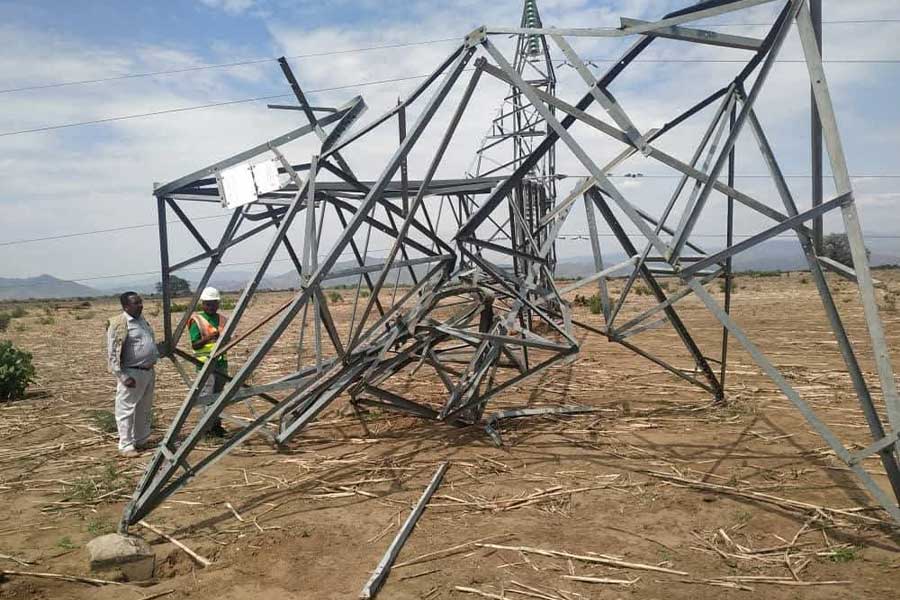
Later this turned out that it was, in fact, the result of vandalism targeting high-voltage electricity infrastructure belonging to the Electricity Supply Corporation of Malawi (ESCOM).
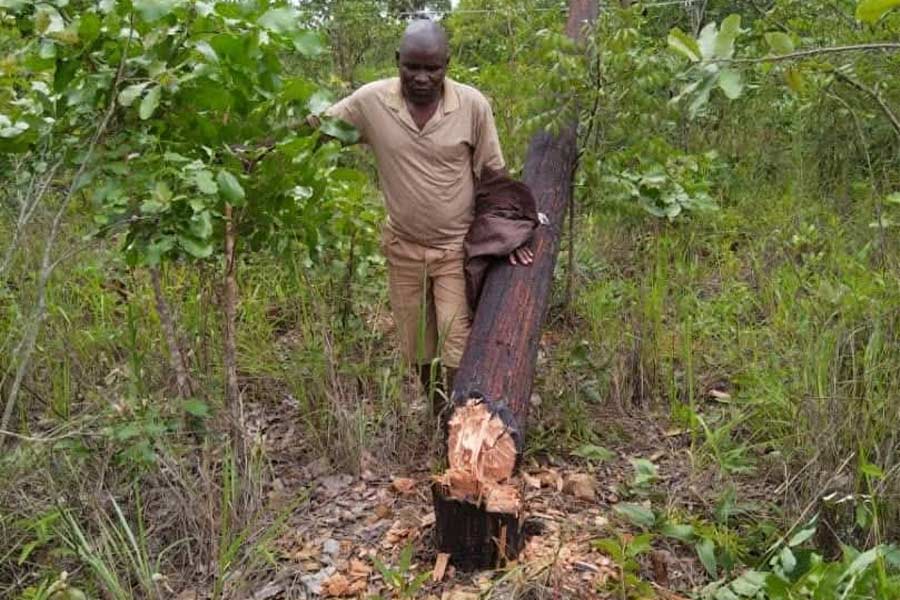
Vandals had brought down twin 132 kilovolts overhead electricity transmission towers at Kasinthula near Maseya in Chikwawa.
Chikwawa and Nsanje were plunged into darkness, courtesy of vandals.
And on March 2, 2026, the vandals struck again.
They made away with ESCOM conductor wires, immediately disrupting supply to some areas.
In a country grappling with high poverty levels, access to electricity provides opportunities for rural communities to become productive and self-reliant.
However, persistent vandalism continues to reverse such gains.
Bonface Munduka is a poultry farmer. The incident destroyed his business.
Thousands of eggs were in his incubators. They all went bad—a loss in thousands of Malawi Kwacha.
“I've been greatly affected due to the vandalism. For instance, I had plenty of eggs in my incubators, but due to that blackout, I lost all those eggs. They didn't even give me what I was intending to have. It's detrimental. They're causing problems. And in fact, we can't even develop as a nation, as a community, having those vandals within us,” decried Munduka.
“It is high time that our offices do a tracing and find out who these perpetrators are,” he added.
Kanduku 1 Village in Mwanza District was set to access ESCOM electricity for the first time.
A transformer had just been installed in the area.
Batumeyo Bekete looked forward to switching power on in his house when vandals struck.
“I have been dealt a huge blow. When I saw ESCOM installing the transformer, I had confidence that I would have electricity at my house for the first time as it is in town. I had saved some money and later bought electrical equipment, and I installed them. The vandals have left me regretting that I could have used the money for other investmentslk0,” lamented Bekete.
Small businesses such as hair salons, barbershops and milling centres are forced to halt operations, causing significant income losses for households and livelihoods.
Elias Kamputa runs a grain milling business in Mwanza.
ESCOM infrastructure vandalism disrupted his business plans.
“This has severely affected our maize mill business. We are out of operation and do not know how we are going to recover without electricity. As a result, we are struggling to feed our families. The situation has also negatively affected ESCOM itself, schools, and hospitals. Honestly, this is a major setback and retrogressive to our development,” he said.
Vandalism and theft of ESCOM infrastructure and equipment have had far-reaching consequences on key sectors of the Malawi economy, which heavily relies on the agriculture sector.
In 2025, for example, the milk industry produced 67 million litres of milk, but over 11 million litres were wasted due to intermittent power outages—most of them linked to vandalism.
That translates to losses in excess of 9 billion Kwacha.
Herbert Chagona is President of the Milk Producers Association of Malawi.
He says vandalism of ESCOM materials is pulling backwards most farmers from the industry.
“It is so negative to the dairy industry, to the milk farmers, because such a loss, 17 percent of 67.3 million litres is quite a lot. It means the farmers are losing business. And that loss really discourages farmers, saying there is no point in bringing milk to the dairy group. It is so discouraging, because if you see the cost of production, it doesn't make business sense. Vandalism of electricity infrastructure is killing our industry.”
Electricity Supply Corporation of Malawi (ESCOM) Chief Public Relations and Communications Officer, Pilirani Phiri, says the corporation spends at least K3 billion annually on vandalized infrastructure and stolen equipment.
Phiri attributes increasing vandalism partly to an unregulated scrap metal trade, which provides a ready market for stolen materials such as copper wire.
He decries that the lack of laws to govern the scrap metal business is a threat to their equipment.
“Criminal syndicates frequently target essential equipment such as copper, transformer oil and various other live wires. These illegal acts disrupt our operations by diverting scarce resources away from new connections towards the constant replacement of stolen infrastructure, which in turn leads to prolonged power outages for our customers,” Phiri noted.
“The scrap metal business needs to be regulated now. We are also intensifying our collaboration with law enforcement, as evidenced by the recent arrest of two Indian nationals who were caught with 56 kilograms of copper disguised as scrap,” added Phiri.

On 18 January 2025, police in Lilongwe arrested four individuals, including a Chinese national, Xu Hongxiang, in connection with vandalism and 40 bags of stolen ESCOM copper wire.
And again, on 10 September 2025, ESCOM recovered stolen copper materials valued at K1.5 billion.
The consignment had been intercepted in Zimbabwe en route to South Africa, the targeted market.
The incident highlights the scale of organised crime against ESCOM infrastructure.
Earlier, on 12 April 2023, the Lilongwe Senior Resident Magistrate’s Court convicted and sentenced a 26-year-old man, Nevas Chimphanje, to three years and four months in jail for vandalism.
He is serving time for stealing 1,500 metres of ESCOM conductor wire valued at K9.7 million in Dzalanyama forest in Lilongwe.
Public awareness has proven essential in educating communities on the consequences of vandalism.
Now, in Phalombe under Traditional Authority Kaduya, Group Village Headman Ganeti is talking to his subjects on how they would respond to the back-to-back vandalism and theft of ESCOM transformers in their community.
“We decided to form a committee and hire guards, and we started contributing funds to pay them. Since then, we have not experienced any other vandalism,” GVH Ganeti explained, encouraging other leaders to adopt similar community-led security measures for uninterrupted power supply.
The theft of components like earth wires results in overloaded transformers that fail, requiring costly repairs that ESCOM can scarcely afford.
Vandalism and theft of ESCOM equipment are stealing from the future by utilising funds meant for grid expansion.
Energy expert Grain Malunga says there is a need for stronger laws and stiffer penalties against perpetrators, noting that former ESCOM employees have been implicated in some instances.
“ESCOM relies on casual workers to do its projects. Now, when those projects are concluded, these people go home, and when they stay there, poverty strikes again. Because they have knowledge of what they did in those projects, they go and steal those materials, which is very unfortunate. These people need to be punished heavily, because they are bringing the development of this country backwards. ESCOM, instead of expanding its networks, is now forced to replace stolen infrastructure,” said Malunga.
To curb this, the Malawi government amended the Electricity Act to impose up to 30-year jail terms for vandalism.
Hannock Ngwata is an economic expert.
He observes that vandalism has a ripple effect on Malawi’s economic growth.
“Electricity allows us to manufacture goods and products at factory level, on a large scale or small scale. If we find that there is one or two people doing this vandalism, let the law do its work. Vandalism of electric equipment decreases the economic growth of any country, not only Malawi,” said Ngwata.
“It disrupts production, increases operational costs, discourages investment, and ultimately affects livelihoods. Reliable electricity is essential for businesses to operate efficiently, create jobs, and contribute to national growth,” he added.
The sad reality of vandalism targeting ESCOM equipment and other utilities is that the country has failed to review the Second-hand and Scrap Metal Dealers Act. This has contributed to continued cases of vandalism involving transformers, cables, and copper wires, which are now flooding the market through illicit trade.
The 1973 law contains extremely outdated penalties, with fines ranging from as little as K5 to K100, or imprisonment of only a few months to one or two years. These penalties do not reflect the true value of the vandalised and stolen infrastructure and are insufficient to deter organised crime.
Patrick Botha, spokesperson for the Ministry of Trade, acknowledges the weakness in the current legal framework but says plans to review the Act are underway.
“The Ministry is aware of the gaps in the legislation. While we are unable to review it at the moment, we intend to do so in the next financial year. We are committed to reversing this trend,” said Botha.
Stakeholders emphasize the need for community involvement in protecting infrastructure. Local residents can play a crucial role by reporting suspicious activities.
Reliable electricity is a key driver of industrial growth, and persistent disruptions send negative signals to potential investors.
In a bid to address the problem, the Malawi Government in April 2023 also imposed a six-month ban on the export of scrap metal following a surge in vandalism targeting ESCOM infrastructure.
Fighting vandals is a responsibility for everyone, not just ESCOM or law enforcement agencies.
It should be a collective action. The lights shall stay on if we all guard the infrastructure.
The Malawi 2063 blueprint envisions a nation driven by industrialization, agricultural productivity, and urbanization. These pillars will remain out of reach in the absence of reliable power.
The theft and vandalism of power infrastructure is not just theft—it is an attack on national development.