


ZODIAK ONLINE
ArtBridge House, Area 47
Sect. 5, P/Bag 312
Lilongwe, Malawi
Sect. 5, P/Bag 312
Lilongwe, Malawi

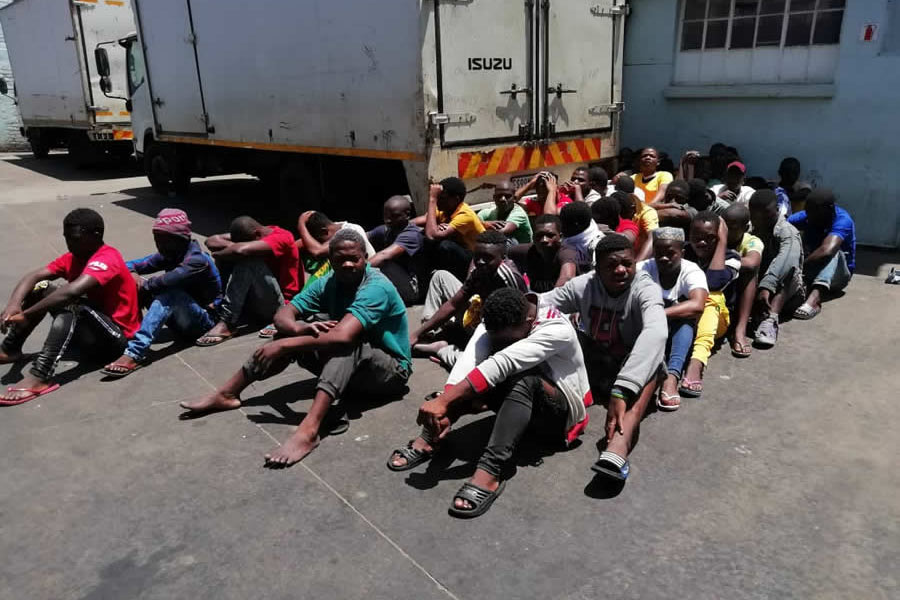
Malawi is at the crossroads of human trafficking. It is both a source country, where citizens are lured abroad under false promises, and a transit route for traffickers moving victims southward.
The crisis is underscored by Malawians still trapped in Oman awaiting repatriation, and by the recent conviction in South Africa of Chinese nationals who trafficked 91 Malawians, 37 of them children, at Beautiful City Factory in Johannesburg.
Government officials admit that funding to support survivors is inadequate, limiting protection and repatriation efforts.
What should be done to end the vicious circle in which between 300 and 1,500 individuals are said to be trafficked within or from Malawi annually?
When Joseph Jeffrey left Malawi for South Africa in 2018, he thought poverty would finally be behind him. Instead, he became one of 91 Malawians rescued from the Beautiful City Factory, an illegal garment plant in Johannesburg. They worked in harsh conditions.
“There were many people that had their eyes damaged. I know of two people. One from Mangochi got injured in the eye, and it doesn’t work anymore; another from Machinga also got his eye damaged. The managers had a policy that said injuries were personal liability and a result of the machine operator’s negligence,” he said.
Freezer Awufi’s story mirrors Jeffrey’s. He too left Mangochi for South Africa, only to end up in forced labour in the secluded compound where the factory was located.
Workers, he says, were confined to the compound, denied rest, and paid below South Africa's minimum wage of $1.64 (K2,900), barely enough to survive.
“We had no choice but to continue working under those harsh conditions. Luckily, we were working with a South African driver, called Zukire, who knew Captain Madimba [a police officer]. And he also knew the manager, Audin, who revealed to his uncle about our suffering. That was how the authorities got to know about us and came to our rescue,” he recalls.
In the months following their rescue, Aufi and Jeffrey would spend their time in a secure shelter camp so they could appear in court as witnesses against their traffickers.
“We were given everything. Food, clothes, everything... However, just staying without doing anything to earn a living was so boring. By the time the trial had concluded almost half us had escaped the shelter going back into local communities to look for jobs,” recalls Aufi.
While Joseph and Awufi endured exploitation in South Africa, “Chikondi”- not her real name - was trafficked to Oman in 2022.
Promised a restaurant job, she ended up in forced domestic servitude. She cared for 15 people and livestock. She endured sexual assault.
Chikondi recalls a Malawian worker dying of prolonged abuse.
She says: “I was once sexually abused by three people. They overpowered me and forced themselves on me. After that I managed to run away, leaving everything behind. My passport, my Visa, because I knew that was not safe.”
Globally, human trafficking is on the rise. A 2025 UN report shows an increase of 31 percent compared to 2019, with child victims, especially girls, seeing the sharpest rise.
There are also merging crime trends with a notable rise in trafficking for forced criminality, where victims are coerced into conducting online scams and other illegal activities which grew from 1% of cases a decade ago to 8% in 2025.
The Destination
Activists say South Africa remains the main destination for trafficked Malawians.
Fula Africa, a nongovernmental organisation, working with South Africa’s Department of Social Development, confirms the country is a hub for smuggled migrants from across the region.
Buti Kulwane is a Social Work Manager in the department.
“The highest number of Malawians ever rescued were 91 men who were exploited at a Chinese factory called Beautiful City. This occurred on the 12th of November 2019.
“On the 25th of February, the Chinese nationals who trafficked these Malawian nationals were convicted on 160 charges, which included the trafficking of Malawian nationals.”
The seven were handed 20-year prison terms each.
Malawi itself is also a transit route for victims trafficked from the Horn of Africa en route to South Africa.
In October 2022, about 30 bodies, believed to be Ethiopian migrants, were found in a forest in northern Malawi, highlighting a major trafficking route where migrants from the Horn of Africa are transported through Malawi to South Africa.
The Driving Force
Poverty is the driving force, says Maxwell Matewere of the UN Office on Drugs and Crime.
"The traffickers will come in as the problem solvers; people who have a solution to the poverty situation. Then secondly, it's an issue of unemployment. The majority of young people that have been found in countries like South Africa, in Zambia, in Mozambique, in Tanzania, have actually mentioned unemployment as the reason why they had found themselves in that situation."
International law obliges nations to repatriate trafficked citizens, but Malawi’s efforts are crippled by limited funds.
In the 2024/25 budget, only $400,000 was allocated - far short of the $2,500 to $4,300 traffickers often demand before releasing victims’ passports.
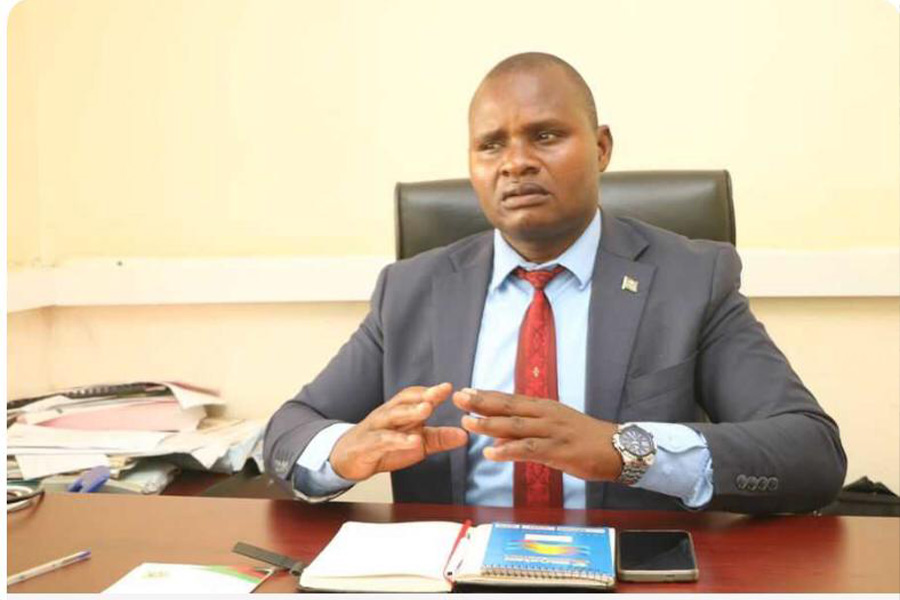
Homeland Security spokesperson Joseph Chauwa admits the funding gap but says the ministry is mapping stakeholders to help bridge the shortfall.
"This was done to at least identify organizations that can support community interventions to address inadequate funding challenges. And we are still, you know, trying to identify as many stakeholders as possible but also engage them so that at least they can be there to support us.
“... as a ministry we're also engaging the treasury you know to see if there can be other ways of supporting us to cover the gaps that are there” says Chauwa.
Charles Luhanga of Fula Africa notes most trafficked Malawian victims come from Mzimba, Mangochi, and Machinga districts — some as young as 15.
“These minors really come from rural areas where they don't even know the language of where they are going. They cannot even speak for themselves; all they do is carry phone numbers on their papers of which we wonder why this is happening.
“From Mangochi, we are having little girls as young as 15 and that is very massive; and they're heading to two places only which is Durban and Cape Town and around Johannesburg. We don't understand why this is the case."
Survivors also face stigma at home. Stella, rescued from South Africa, was forced to relocate to Mozambique after her community rejected her. We spoke to her auntie, Shaibu.
“After she came back home from South Africa, she faced many problems. She was not accepted here. She didn’t even have a blanket to use at night when sleeping at night. She only had a worn-out blanket that I had given her some time back.
“Stella struggled to find food. She tried to search for a better life in South Africa, but she failed. Back home, she faced more challenges. She had no place to sleep, which is why she decided to leave again, following her brother to Mozambique,” he says.
Children in Harm’s Way
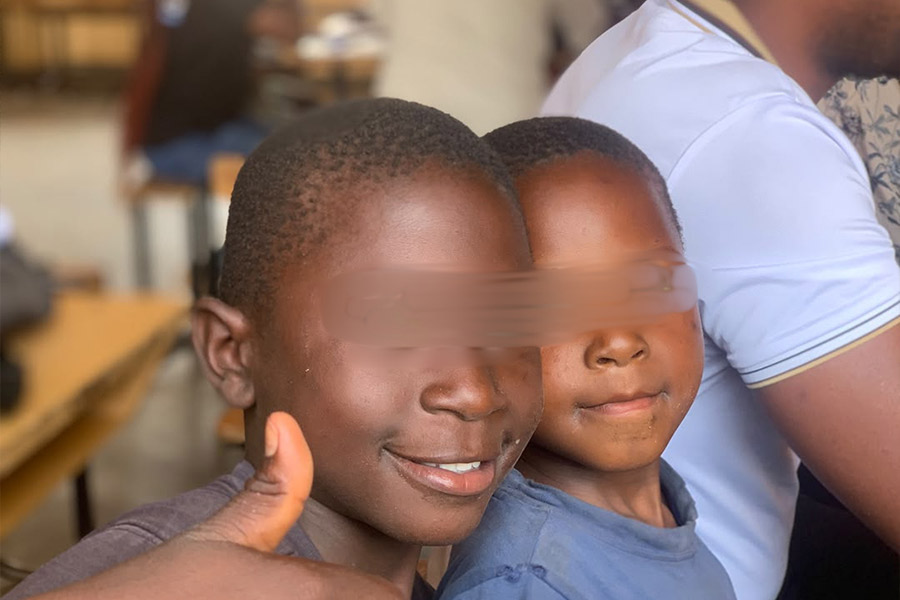
It is not only adults; children are increasingly at risk too.
The Malawi Human Rights Commission reports that over 400 adopted children between 2016 and 2025 cannot be traced, raising fears of trafficking through orphanages, a previously unsuspected trend in the cycle.
Behind all this is money. Matewere claims that suspicious adoptions and profiteering, sometimes up to K500 million per child, fuel exploitation.
“You might also recall the case involving a mother who went to register for election only to be told that as he had a national ID, in the system she was reported as a dead person because there was a death certificate that was issued.
“When the matter was investigated, it was then discovered that one of the orphanages in Blantyre had put forward her three children for adoption after she was listed as dead. These children are now in the US.
“The mother has been in court. But what is important is the things that we learn from this particular case, that indeed, there are so many, so many children who have been taken from rural communities, put on Facebook pages and trafficked.
“So you will literally see faces of children on Facebook pages with the false stories attached to them to attract the interest of well-wishers or those parents in the developing countries who also wish, or want to adopt children in Africa,” adds Matewere.
Human trafficking devastates individuals and communities. Victims are stripped of dignity, exposed to abuse, and families are left fractured.
Charles Luhanga warns that social media and language barriers make Malawians more vulnerable, while weak immigration checks ease traffickers’ work. He says truck drivers must be put into the equation, specifically.
“I strongly believe that either in Malawi, or in South Africa, when somebody is smuggled, it doesn't become a case. So once somebody has been smuggled into a country, it results in human trafficking, of which that minor becomes vulnerable.
“If you look at the issue of the 91 Malawians who came to South Africa, who assisted them? It's the same mode that they used, the transporters. So, this needs to be looked at very carefully,” Luhanga adds.
Breaking Trafficking Cycle
While the global number of convictions might have risen by 36%, according to the UN, only 17% of these are for forced labor, despite it being the most common form of exploitation.
Considering this, Matewere stresses the need to strengthen Malawi’s capacity to investigate and prosecute traffickers.
“We need to look into our laws, like the Adoption Act, which was enacted way back in 1949, that need to be reformed. Weak legislation is one area of growing concern. We also have the absence of a smuggled migrants’ legislation in the country.
“We are happy that the government has taken a step in terms of developing a bill that will help eventually formalise to deal with this element of smuggled migrants. So once that has passed, it means that every person that will be engaged or involved in smuggling of migrants, will be treated as a criminal, while the smuggled migrants will be treated as vulnerable witnesses,”.
Stefan Jansen, Country Director of Norwegian Church Aid adds that civic education is vital to help citizens recognize the warning signs before falling into harm's way.
“We think that we can make strides in terms of awareness raising about trafficking in persons, but also tackling the root causes of why people do migrate and why people are falling victim to traffickers. When it comes to the knowledge deficit that we have, there is a lot of misinformation also sparked by fake social media.
“There are a lot of people who fall victim to trafficking because there are criminal organizations who are pretty professional in trafficking of people and that is something that especially with the government and with the law enforcement agencies we need to tackle as a whole together,” he suggests.
Chauwa says the government is working with diplomatic missions to repatriate victims from the Middle East, though the process is complex, especially because the number of those in need keeps rising.
“Repartition is a process. We cannot, as a country, just do it on our own. We have also to engage our colleagues from other countries. So, we started the process. And as of now, the sources were located. I can report that we have started the repartition processes and we managed to get resources for that.
“And we are, you know, in contact with relevant stakeholders and authorities to finalize and have those Malawians that are still there repatriated to Malawi. So, this process was initiated and it's in progress and soon we'll have our compatriots be repatriated back to Malawi. But also ensure that when they get here, they are properly assisted to ensure they integrate back into society.
As Malawi tries to expand transit shelters and reintegration programs to discourage survivors from seeking risky opportunities abroad again, experts and activists say there is more to be done.
Malawi must increase investigations and prosecutions of sex and labor trafficking and enforce severe penalties under the Trafficking in Persons Act.
Fraudulent recruiters and orphanages must be held accountable, victim support services, especially for women and girls lured by false job offers abroad, must be expanded.
Until such steps are taken, Malawi will remain both a source and a transit point for human trafficking, and its citizens will continue to pay the price. Slavery!
(Additional reporting by Ireen Kaimira)