













ZODIAK ONLINE
ArtBridge House, Area 47
Sect. 5, P/Bag 312
Lilongwe, Malawi
Sect. 5, P/Bag 312
Lilongwe, Malawi

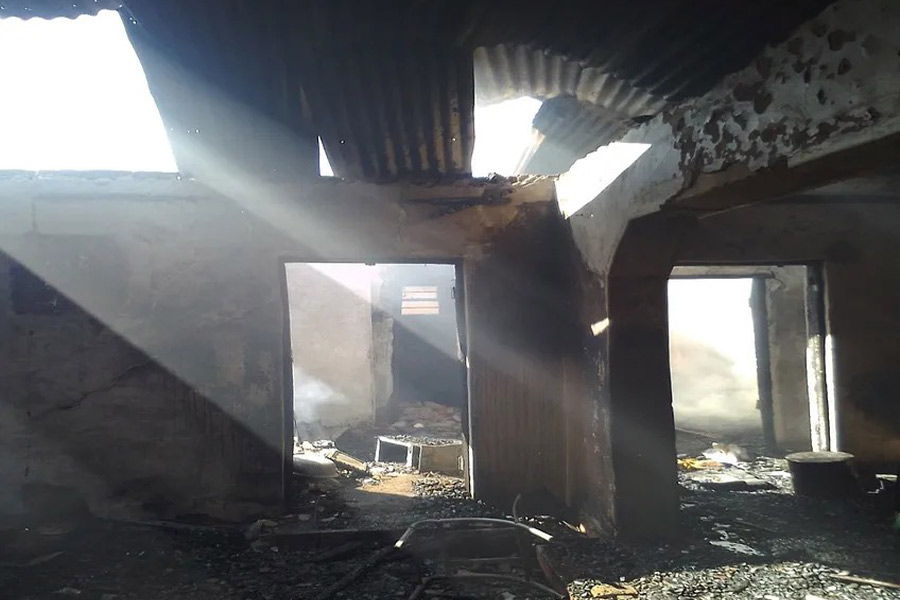
In Mangazi Village, Traditional Authority Chimaliro in Thyolo, what began as a routine evening meal ended in a devastating inferno.
“The incident occurred when the fire broke out while the victims were cooking supper using a charcoal burner in the house of a 32-year-old Joyce Maganga who was allegedly keeping illegal fuel stock in jerrycans,” said Thyolo Police Spokesperson, Rabecca Kashoti.
Within moments, flames from the charcoal burner ignited the petrol. That was an unforgettable August 3, 2025.
“The flames reportedly ignited the petrol, leading to a deadly explosion,” Kashoti added.
By the time the fire was contained, three people were dead: six-year-old Grerson Chizungu, 14-year-old Sandikonda Stephano, and 28-year-old Peter Makolija. Several others were left nursing serious burn injuries in hospital.
This tragedy is not uncommon. It is part of a growing and deeply alarming trend across Malawi, where fuel scarcity pushes citizens into dangerous survival tactics, turning homes into potential death traps.
In Chikwawa, a similar disaster unfolded in the same month of August 2025.
According to Public Relations Officer for Chikwawa Police Station, Dickson Matemba, a house belonging to the Lipenga family from Chapananga area caught fire after petrol stored on the veranda began leaking.
“The fire started on the veranda due to leaking petrol. The flames spread to jerricans stored inside the house, which exploded and intensified the blaze.”
Matemba said inside the house, two children, Sparrow Lipenga, aged 4, and Jersey Lipenga, aged two, were asleep.
Despite rescue efforts, both sustained severe burns and later died. Their parents survived but suffered serious injuries.
Weeks earlier in Mangochi, another family was torn apart under nearly identical circumstances.
“On the night of the incident, the three family members brought a charcoal burner into the house to warm themselves due to cold weather. Unfortunately, the burner was placed too close to the stored fuel, igniting a violent explosion," Mangochi Publicist, Amina Tepani Daudi, explained.
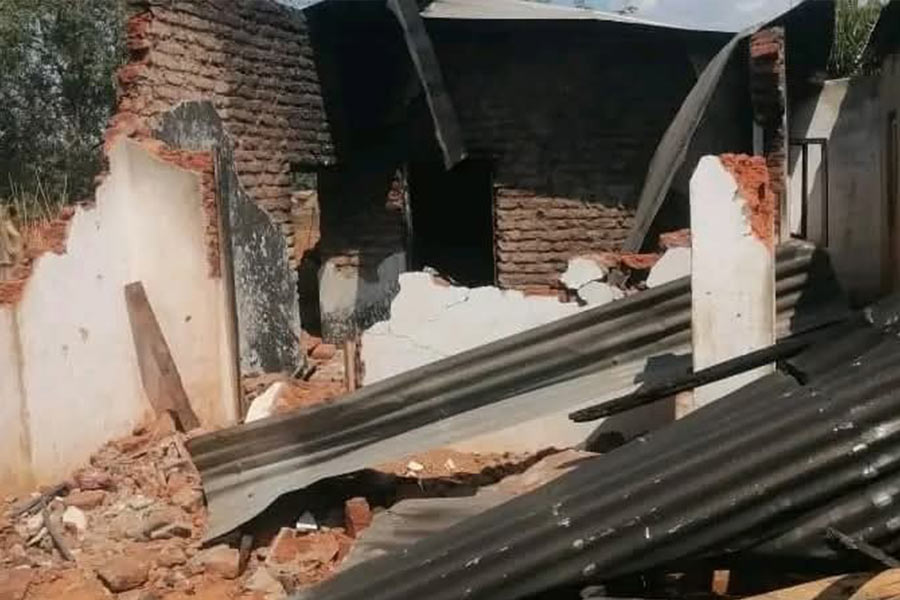
The explosion killed 45-year-old Jika Willard and her 13-year-old son, Sherif Mussah.
“Their bodies were later recovered, completely burned with some parts reduced to ashes,” Daudi said.
A 20-year-old survivor, Aisha Mussah, escaped with severe burns and was referred to Mangochi District Hospital for specialized care.
These repeated tragedies in the southern region unfolded against the backdrop of a persistent fuel shortage in Malawi.
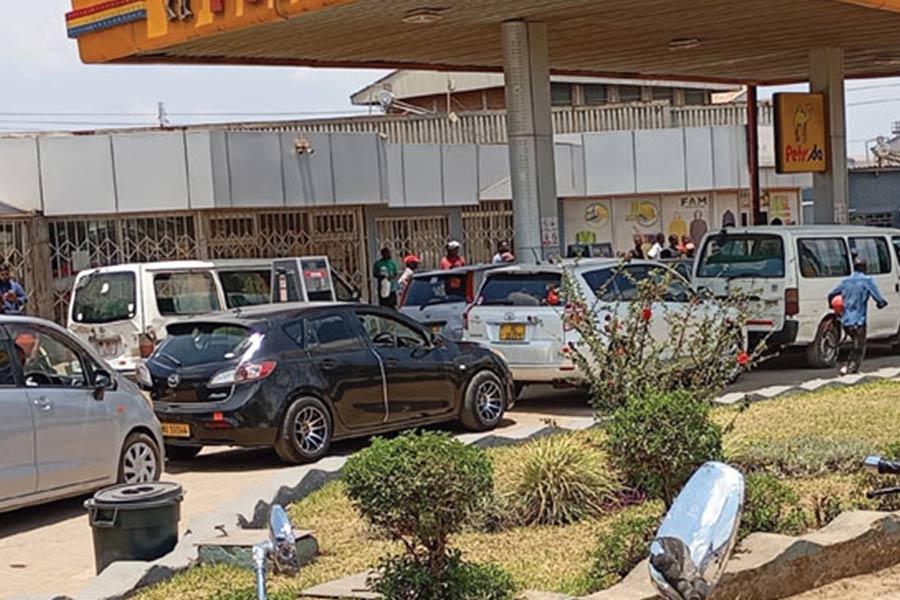
During periods of scarcity, long queues at filling stations become common. In some cases, people have been forced to sleep overnight at service stations in hopes of accessing fuel.
The shortage also fueled a rise in illegal fuel vending and household storage of petrol in unsafe conditions.
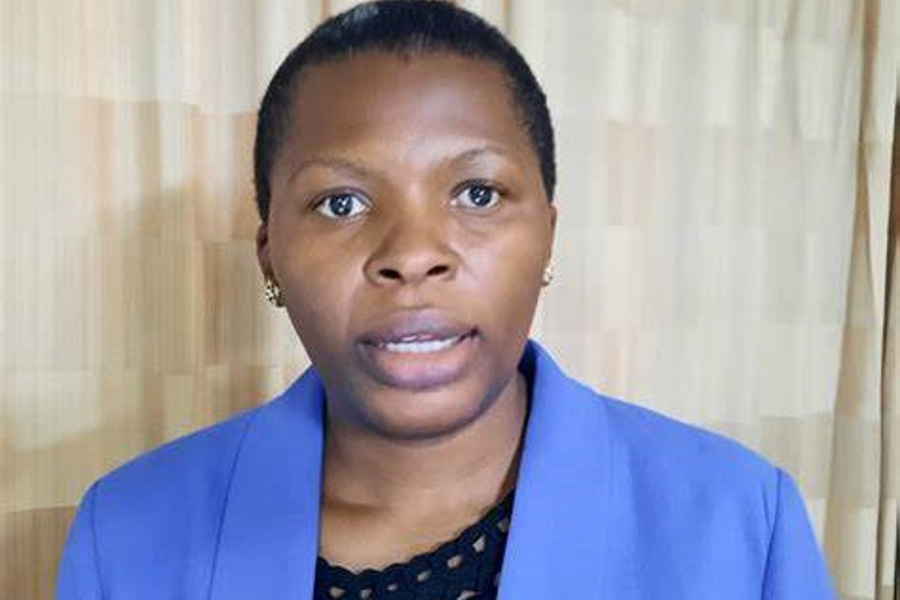
The Malawi Energy Regulatory Authority (MERA) spokesperson Fitina Khonje said the shortage was usually due to “fuel loading challenges by importers at the ports," adding that it is sensitive to comment on growing fire accidents when there is scarcity.
“The issue of fuel fire is very sensitive to talk about at this moment, but we are working hard to ensure that people are aware of the consequences of keeping flammables and impact of fuel vending to the supply chain,” she said.
As of early 2026, Malawi required approximately 2 million litres of fuel (combined petrol and diesel) daily to meet demand.
Ministry of Energy and Mining announced plans to increase the country’s strategic fuel reserves capacity from 60 days to 120 days by 2030 to ensure stability security of fuel supply.
This came four years after government had also disclosed the expansion plans when the National Oil Company of Malawi (Nocma) said construction was expected to run from April 2022 to December 2024.
In a recent performance report, the ministry said apart from foreign exchange shortages, the country’s fuel supply challenges emanates from lack of storage capacity.
The ministry said that expanding strategic fuel reserves capacity is key because the limited capacity, compared with the current daily fuel demand, contributes to volatility of fuel supply in pump stations.
“The nation’s current daily fuel demand is estimated at two million litres. However, supply falls short of this requirement due to the limited strategic fuel reserve capacity of 60 million litres and ongoing foreign exchange constraints that affect the maintenance of adequate fuel stock levels...."reads the report in part.
“... NOCMA, is undertaking an expansion of the strategic fuel reserves from 60 million litres to 120 million litres, with Blantyre, Lilongwe and Mzuzu each set to gain an additional 20 million litres in holding capacity," it added.
Energy expert Dr. Suzgo Kaunda, warned that the combination of petrol storage and open flames is extremely dangerous, calling on the government to regulate the black market.
“It is very risky to buy fuel from black markets in time of deficits because the black-market sellers may compromise the quality of fuel. Because it is illegal to sell fuel without a valid licence, the solution to stop fuel black market is to enforce the regulations on selling of fuels in Malawi,” he said.
He added: "efficient mobility of people improves quality of social activities, which is also important for economic development. In times of fuel shortages, movement of people and goods are limited and sometimes limited severely. This situation can affect social-economic development of our country especially if it becomes a frequent phenomenon".
Beyond the immediate risk of fire, storing fuel indoors exposes families to serious health and environmental hazards.
Health experts said petrol fumes contain toxic chemicals such as benzene, which can cause, respiratory complications, headaches and dizziness, eye and skin irritation and long-term organ damage
"Environmentally, fuel spills and leaks contaminate soil and groundwater. In rural communities where households rely on shallow wells, this can compromise drinking water, microorganisms and agricultural productivity, said environmentalist Gresham Kamnyamata.
In response to the crisis early last year, MERA intensified crackdown efforts aimed to stabilize supply and curb illegal practices that contribute to shortages.
The Authority suspended 18 filling stations including the Thyolo ENGEN and one oil marketing company for withholding 200,000 litres of fuel and allowing sell of the commodity in jerrycans without authorization.
Additionally, the energy regulator introduced new measures in September 2025 require all filling stations to install CCTV systems, with strict penalties for non-compliance.
For many Malawians, especially in rural and peri-urban areas, access to fuel is inconsistent. This forces households to adopt coping mechanisms that prioritize immediate survival over safety.
Petrol is stored in bedrooms, kitchens, and verandas, often in used containers not designed for safe storage.
Cooking is done nearby. Children sleep within metres of highly flammable substances. And when something goes wrong, the consequences are catastrophic.
The fires in Thyolo, Chikwawa, and Mangochi reveal a harsh truth: fuel scarcity is no longer just an economic issue, it is a public safety crisis.
Behind every statistic is a family, a home, and lives cut short. In Mangazi Village, the silence left behind by three lost lives is a stark reminder of what is at stake.
Because during fuel shortages in Malawi, the search for fuel is no longer just about mobility or convenience. It is, always, a matter of life and death.