














ZODIAK ONLINE
ArtBridge House, Area 47
Sect. 5, P/Bag 312
Lilongwe, Malawi
Sect. 5, P/Bag 312
Lilongwe, Malawi

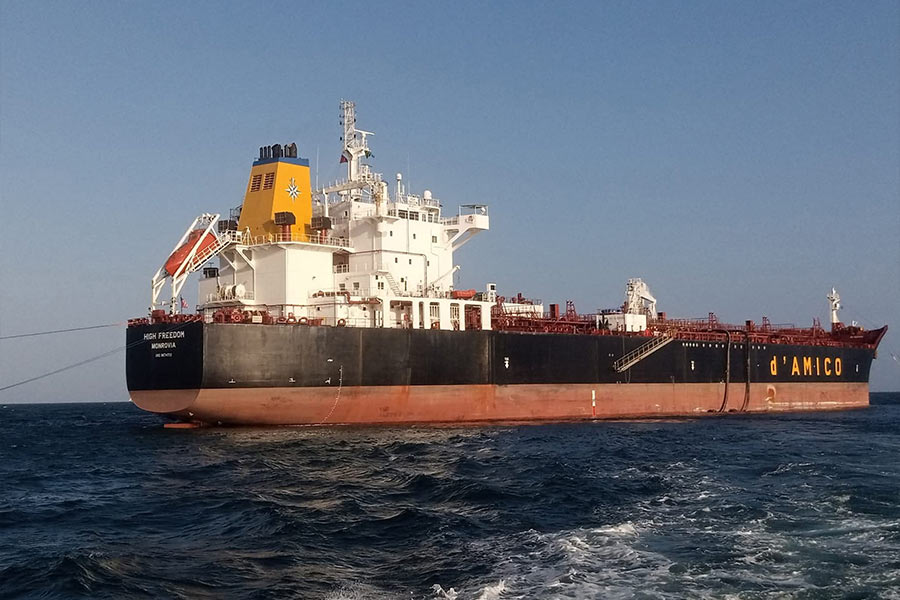
In April 2025, in the midst of a recurring fuel supply crisis, disagreements emerged over the best approach to resolve the situation.
While some government officials argued that Malawi stands to benefit more by sourcing fuel directly from oil-producing nations in the Gulf through a government-to-government arrangement, others within the administration opposed the idea, preferring to maintain the system that uses a private agent company operating through Kenya.
In this special report, Eamon Piringu examines the debate at a time when the government is intensifying efforts to permanently address a problem that continues to affect the daily lives and economic well-being of Malawians.
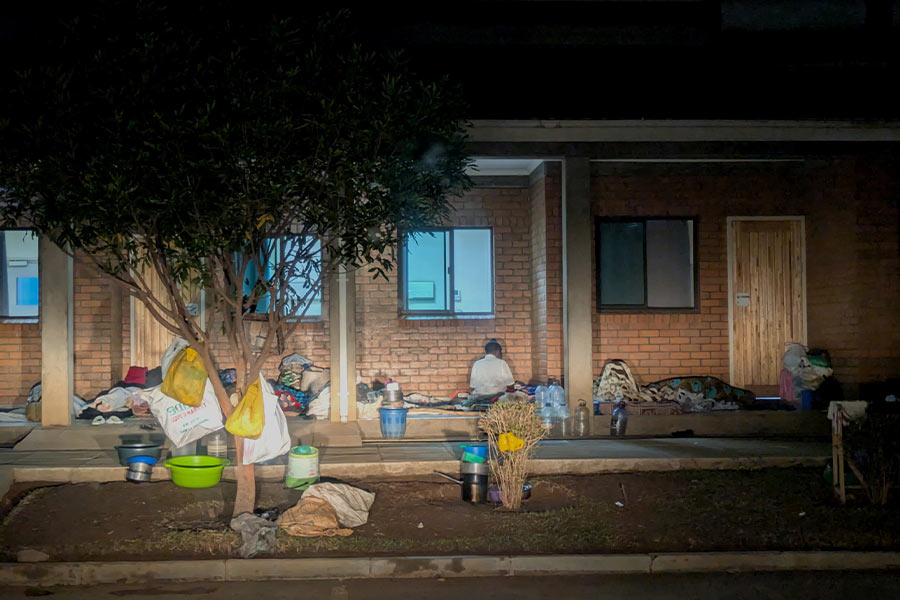
Susanna Mbulaje Soko has no idea why the price of a box of matches keeps going up each time she visits her favorite grocery store.
This is the ordeal faced by many Malawians who have little understanding of how fuel prices and availability impacts the cost of goods and services on the market.
But this nation is discussing the problems of forex, food, fertilizers and also fuel.
These are political commodities. Today there are political problems affecting the well-being of Malawians.
Fuel ferries the box of matches from the manufacturer to Susanna's favorite shop. That has a cost.
The absence of fuel can grind progress to a halt. It can push prices up and spark public uproar and unrest.

Fuel is a sensitive and indeed strategic commodity. It must always be available, accessible and affordable.
But Malawi is landlocked. It has no direct and open access to the seas. That is also a problem that pushes resultant costs at the doorstep of the consumer. In the case of Malawi, poor villagers like Susanna Soko.
In response to these challenges, on 27th November last year, President Lazarus Chakwera announced the introduction of the Government to Government (G2G) model of fuel acquisition, essentially to achieve consistency in supplies and stability in pump prices and ultimately stability in the general cost of living for the citizenry.
“Time for us to take a different approach. For this reason, my administration has decided to begin the process of transitioning Malawi from the open tender system for procuring fuel to a government to government arrangement that will make our access to fuel all secure,” announced Chakwera.
This was a shift from the traditional complete reliance on the open tender system (OTS) for fuel supplies.
Chakwera presented this as a solution to strengthening Malawi's fuel supply security, reduce fuel costs, and promote greater accountability in the fuel procurement process.

Recently, Malawians saw rigorous efforts to quench the country's fuel thirst through fuel supplies from Kenya through Tanga in Tanzania, which was dogged with a string of logistical challenges on delivery.
The background to this had been recurring fuel shortages in the country that saw vehicles queue for kilometers at pump stations in the major cities and throughout Malawi.
Zodiak has evidence that a task team on this mission to the United Arab Emirates made recommendations focused on identifying, engaging, and assessing five state-owned enterprises that could supply fuel cheaply.
The paradigm shift meant Malawi procuring fuel from oil producing countries with direct contracts with state oil producing entities and cutting out agents that have been used for some time now.
Insiders insist that the primary objective of the mission was to ensure a transparent and competitive selection process to guarantee long-term fuel security, price stability and flexible payment terms for Malawi.
The new fuel supply arrangement overseen by the government coordination committee was to ensure delivery of a stable, secure and affordable G2G fuel supply and a smooth transition from complete reliance on the hitherto traditional open tender system (OTS).
Before this there were wrong assertions that oil producing countries were not interested to enter into a direct fuel supply contract with Malawi due to its relatively low consumption, hence the use of middlemen.
To expedite the process, in February this year, energy minister Ibrahim Matola nominated the National Oil Company of Malawi (NOCMA) as government agent to acquire and recommend a G2G fuel supplier.
But when we called Minister Matola for the latest on the development, here is what he had to say: “I don’t speak on behalf of NOCMA or MERA. Can you give me time, then we will come up with a statement.”
Insiders insist that the primary objective of the mission was to ensure a transparent and competitive selection process to guarantee long-term fuel security, price stability and flexible payment terms for Malawi.
Sam Chiwaula is an economist. While casting down the deal, hopes it is crucial for Malawi if it goes through.
“First thing is that when they went for the first discussion, we were told that Malawi was going to benefit because we were going to have a lot of fuel at least to sustain us for some time. But that never happened and the prices were supposed to go down slightly, that never happened. Now, we come to this situation. I don't think that this is going to work soon, but I still believe things will change,” said Chiwaula.
Our confidants indicate that four of the five submitted proposals to the Malawi test team were sent for assessment.
The task team recommended the award of fuel supply contracts to oil-producing State Owned Enterprises such as Kuwait Petroleum Corporation (KPTC), Saudi Aramco, and OQ Trading of Oman who submitted the most competitive offers.
Average Cost Insurance, Freight (CIF) premiums for 90 days credit secured by Letters of Credit (LC) are $51.66 per metric ton for KPTC, $52.12 per metric ton for Aramco and $64.47 per metric tONs for OQ Trading and for 180 days credit secured by LC's for KPTC is 62.56 United States dollars per metric tons, at Aramco $63.24 per metric ton and OQ Trading is $74.53 per metric ton.
Additionally, OQ Trading’s offer for $50 million and secured credit provided an additional advantage to Malawi especially considering the forex challenges that the country has been facing.
John Kapito heads the consumer rights body, Consumers Association of Malawi (CAMA). He uploads the upcoming deal.
“It has come at the right time when we know that fuel is the biggest driver in the country and I think to have continued supply and uninterrupted supply would help us achieve economic growth. Since fuel is one of the drivers of our economy. So let us really thank them for doing a good job," Kapito noted.
"For the other part where you are talking about the prices, maybe let's leave those until when we have the figures for us to comment on,” added Kapito.
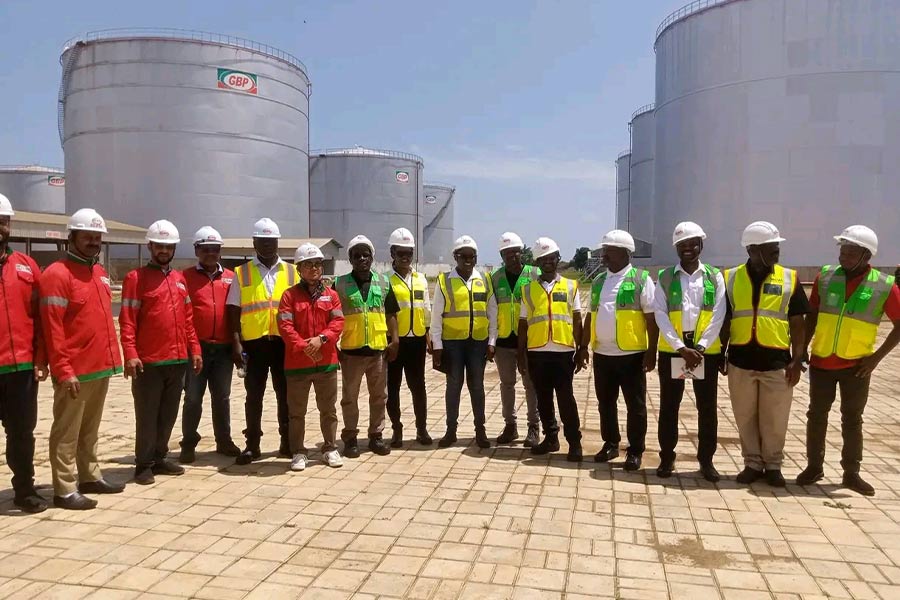
The policy shift toward back procurement of petrol and diesel through a G2G arrangement was informed by regional trends and insights gained from Kenya's implementation of a similar framework.
The shift was implemented through amendment of the liquid fuels and gas production and supply act gazetted in January 2025.
But what was the intended purpose?
Communication we have seen indicates that contrary to assertions that oil producing countries were not interested in entering into direct fuel supply contracts with Malawi due to its relatively low consumption, the five Gulf nations that the task team engaged demonstrated significant interest in working with Malawi.
And the fuel supplies from the gulf region appear significantly cheaper than those through Kenya.
Principal Secretary in the ministry of Energy, Engineer Chikuni Alfonso speaks on what the outcomes of the assignment were and the gains for Malawi.
“It was a very good courageous decision to go to G2G because the prices indicate that they are significantly low in terms of the premiums, because the parts of the pricing of the fuel divided into a couple of categories, one of them that is clear is the premium that is charged for bringing fuel from the refinery to the end user,” he said.
An energy expert, Grain Malunga, believes the government-to-government fuel procurement deal could offer much-needed relief to Malawi at a time when the country is grappling with a shortage of foreign exchange, noting that such arrangements are generally more cost-effective.
“Government-to-government fuel arrangements can ease pressure on foreign exchange reserves while ensuring a more stable and affordable supply of fuel for the country. Hopefully we are going to move this direction,” he said.
There are unconfirmed reports however that as attractive as a prospective Gulf region deals look, there could be hidden costs that the nation could be faced with later.
But what could these costs be?
The evolution of the fuel supply mode should reflect the strategic response to Malawi's prevailing constraints.
The willingness of the Gulf nations to discuss broader economic cooperation, particularly in energy infrastructure development and supply of fertilizers sounds attractive if it's presented in good faith.
The differences in opinion over the best route to take in the G2G arrangement had better been well meaning. It is imperative to pay attention to all voices of reason.
Ultimately, the people of Malawi should be the winners. The winners ought to be people such as Susana Mbulaje Soko of Bibi Kuluwinda in Salima. People who physically shoulder the brunt of the prevailing high cost of living.
Malawi’s development framework recognizes energy—including fuel—as a critical driver of economic growth and poverty reduction.
Under the Malawi Vision 2063 (MW2063), energy security is a key priority area, particularly within the pillar of industrialization.
The MW2063 and its implementation plans, such as the Malawi 2063 First 10-Year Implementation Plan, highlight the importance of ensuring consistent fuel supply, reducing supply disruptions, and improving procurement systems.
This includes diversifying supply sources, strengthening storage capacity, and promoting efficient logistics—issues directly linked to the push for government-to-government (G2G) fuel arrangements.