








ZODIAK ONLINE
ArtBridge House, Area 47
Sect. 5, P/Bag 312
Lilongwe, Malawi
Sect. 5, P/Bag 312
Lilongwe, Malawi

Mchinji district, sandwiched between Malawi’s capital Lilongwe to the south and Zambia to the north, is blessed with fertile soils and reliable rainfall.
Its geography and climate position it as a potential economic hub for both Malawians and Zambians.
Day and night, traders cross the border, moving goods and services.
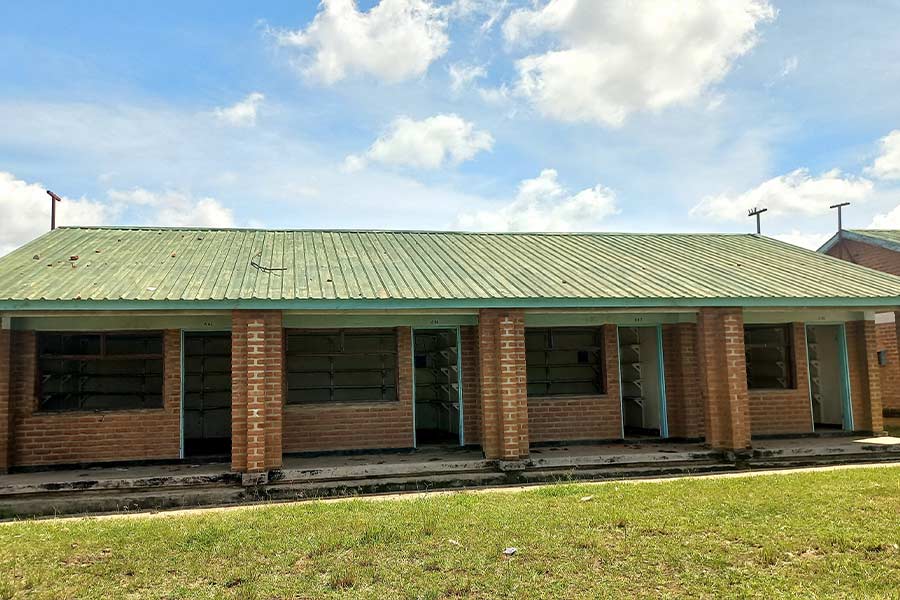
Yet, just 35 kilometers from the Boma, a K250 million government-built market — completed in 2019 — stands eerily silent.
The Mkanda Flea Market, with its green iron-sheet roof symbolizing Malawi’s agro-based economy, was meant to transform local trade. Instead, it has become a “sleeping giant.”
For six years, the facility has remained unused. Shepherds graze their livestock on the overgrown grass, while traders continue to operate from the old, overcrowded market.
Why the Market Lies Idle
Clever Kamuzu, chairperson of Mkanda Market, calls the situation “pathetic.”
He says vendors cite poor consultation and delayed electricity connection as reasons for their reluctance to move.
“Many feel the council failed to involve them in the planning process, leading to unmet expectations and unresolved issues,” Kamuzu explains.
Local trader Blessings Winstone Banda agrees. “The current status is punitive to traders who had high expectations of profiting from their businesses after investing heavily during construction,” he says.
Former councilor White Musha estimates the council is losing about K6 million monthly in market fees due to the facility’s inactivity.
Meanwhile, vandalism has become rampant.
Police spokesperson Limbani Mpinganjira reports eight arrests in 2025 alone, though most suspects were released for lack of evidence.
Community Outcry
Traditional Authority Mkanda laments the wasted opportunity. “The non-functionality of the new market pains me most. Business opportunities are being lost, and the old market is prone to accidents,” she says.
Leah Mkanasi, former vice chairperson of the Area Development Committee, adds: “The council is to blame for not involving local communities from the onset. The facility gave us hope for boosting trade and development.”
Engineer Elis Tembo, Director of Public Works at Mchinji District Council, says funds are being awaited for maintenance.
“A contractor has already been identified to fix the market, including electricity connection and road construction,” Tembo notes.
Accountability advocate Willy Kambwandira of CSAT calls the project “a textbook case of systematic public finance failure.”
He argues that capital investments are often prioritized for political optics rather than community needs.
“Without punishment for negligence and corruption, such projects will remain monuments of waste and impunity,” he warns.
Malawi 2063 Vision
The Mkanda Flea Market was envisioned as part of Malawi’s 2063 development blueprint, which emphasizes globally competitive infrastructure to drive domestic trade and foreign investment.
Yet today, it stands as a stark reminder of unfulfilled promises.
Can the government and council revive Mkanda Flea Market by addressing traders’ concerns, or was K250 million spent only to create a vandalism hotspot?
For now, the market remains a sleeping giant. But if awakened, it could transform Mchinji’s economy and contribute to Malawi’s broader development goals.