







ZODIAK ONLINE
ArtBridge House, Area 47
Sect. 5, P/Bag 312
Lilongwe, Malawi
Sect. 5, P/Bag 312
Lilongwe, Malawi

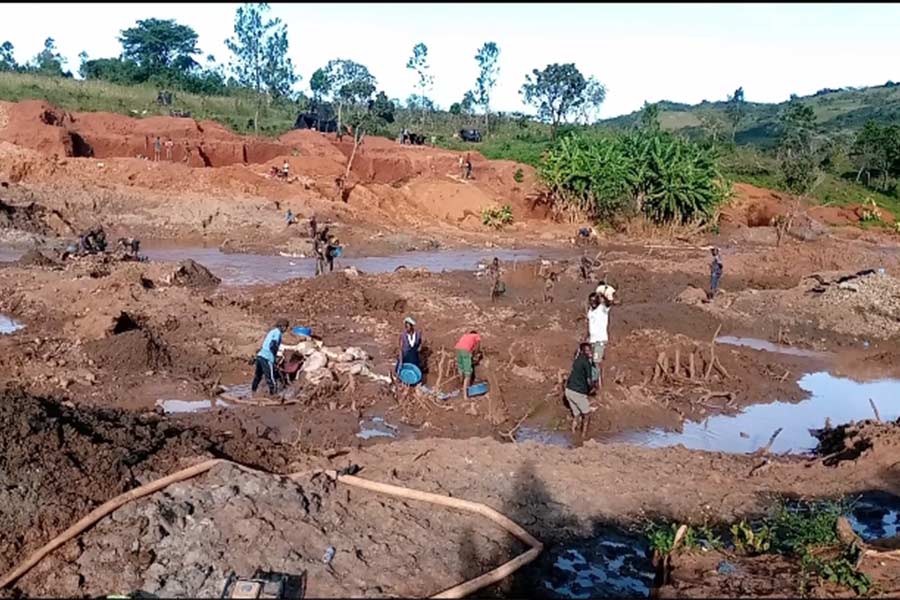
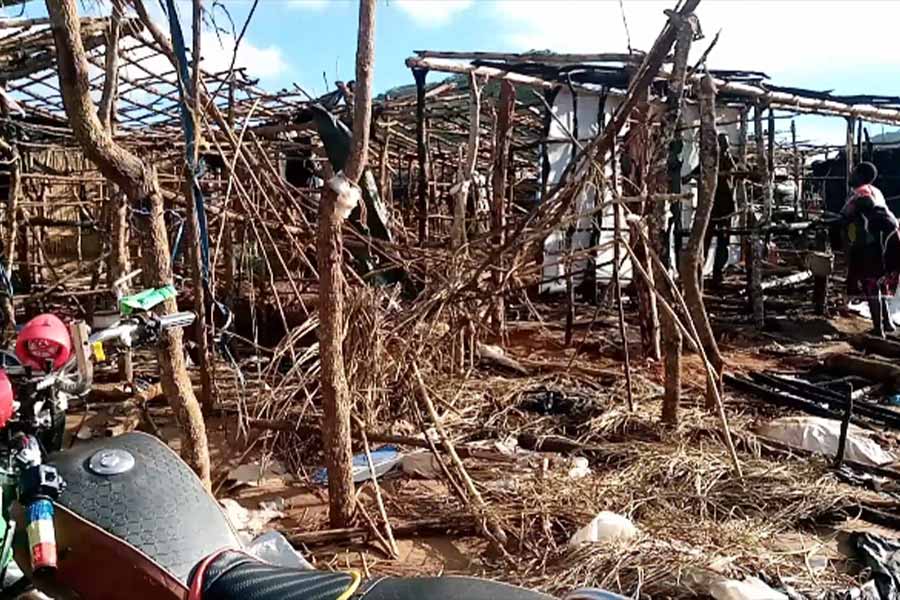
The night of April 7, 2026, did not just burn down the makeshift shelters of the Kamchocho gold miners and vendors, it incinerated the futures of women like 29 year old Rose Chirwa.
In a single hour of state sanctioned chaos under what is termed as Operation Samala Mgodi, the green hilly areas of Kamchocho were transformed from a land of opportunity into a landscape of screams and black smoke.
For Rose, the nightmare began with the splintering of wood.
In the frantic moments that followed, Rose describes a scene of harrowing vulnerability. Soldiers seized her, tore her wrapper away, and left her shivering and naked in the freezing night air.
As she fled into the darkness to save her life, she looked back to see her shelter and her entire livelihood erupt in flames.
Rose had come from Champhira along the M1 Road to Lilongwe, lured by the promise of the gold rush in Senior Chief Mabulabo’s area.
She wasn’t there to dig for gold. She was there to build a life through honest trade after obtaining a K25 million loan from Vision Fund. She had established a grocery stall to serve the miners.
In sixty minutes of rampage, her K4 million in cash savings and millions more in stock turned to ash.
"I came here to do business and when I was sleeping on seven April without knowing anything I just heard the shattering of the door of my shelter, I woke up and they seized me they tore all my clothes I was completely naked they took me out and started assaulting me, all groceries almost worth K20 million was destroyed, cash from the weeks sales totaling about 4 million vanished I had a big stall, I had gotten a loan of 25 million from Vision fund but now I don't even know how I will be able to repay the loan.
A few yards away, Bernadeta Kajani from Embangweni is equally devastated. She also came to the area to sell plastic containers, shovels, mats and tents, things which are essential for sifting gold from the swampy riverbanks.
Kajani says she was dragged out of her shelter; her clothes were torn and she watched her shelter and merchandize go up in smoke
"We heard gun sounds outside, I tried to get out and they grabbed my hand and started beating me they tore my clothes destroyed my merchandize, about 50 tents, 45 mats and some shovels I was selling were destroyed, even money from the sales I had done was destroyed or vanished, about K3 million was nowhere to be seen, I am worried I got a loan from Vision fund and am now stranded, I don't know how I will pay back the loan," said Kajani.
For Rose and Bernadeta, the millions lost in this operation are not just figures, they are the amounts of unpaid loans and the loss of the only safety nets they had.
Both women are now haunted by a single, desperate question , how to pay back a debt when the very tools they used to earn it have been reduced to ashes?
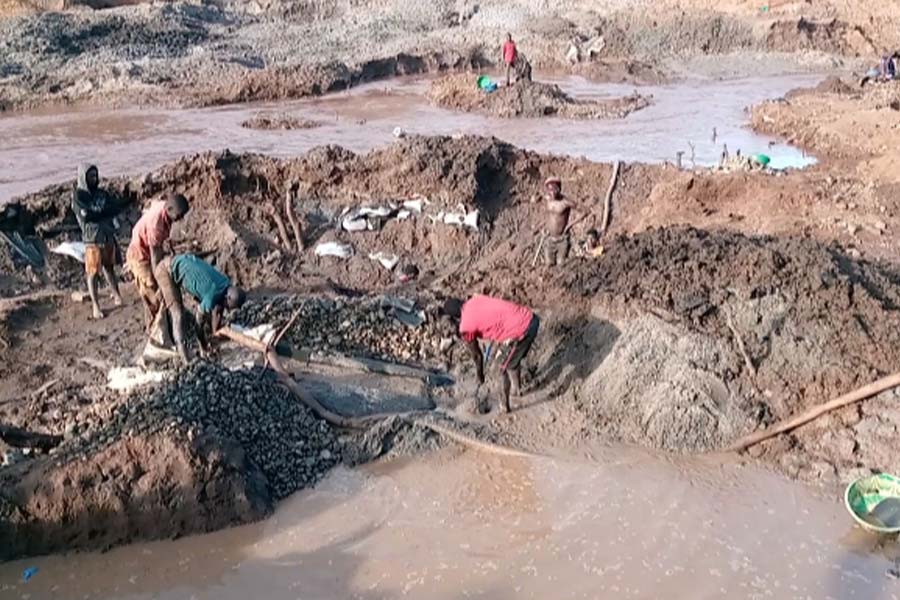
The destruction spared no one. It moved to the surrounding villages.
Teresa Banda, a poor local mother of seven, a villager of the area, had recently sold her ancestral land to the miners for K16 million, hoping to build a modern home for her family and start a small business to fend off her poverty.
Banda says her house was torched, property destroyed and the K16 million vanished.
"We were innocently sleeping then we head gun sounds that's when they broke the door of our house and torched the roof, when they saw that we dozed the fire off they came again and used petrol this time, and burnt all our property, money amounting to K16 million also vanished, it was money we got after selling our land to the miners so that we can build ourselves a house", said Banda
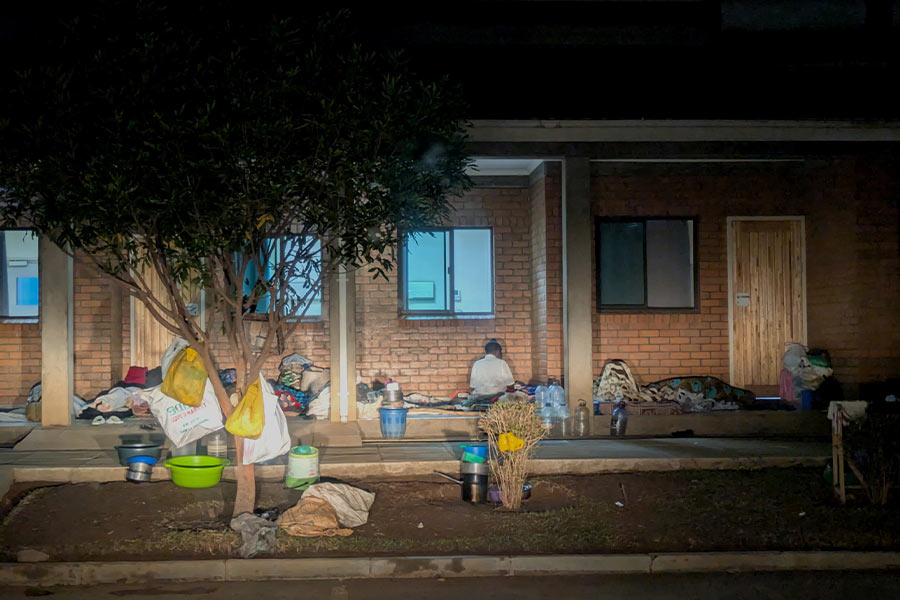
Her family’s exit strategy from poverty vanished in the same fire that claimed the makeshift shelters and destroyed property of the over 5000 people around the mining area now being estimated at billions of kwachas
Thomas Banda is chairperson of the mining community at Kamchocho.
He too had a share of the consequences of illegal artisanal mining in Malawi.
"I was assaulted and my leg hurts up to now as you can see am limping and was kept at their camp for three days before being taken to court, all my property almost worth K16 million was destroyed, my vehicle had tires slashed with knives, the windscreen shattered, I just want the country to hear the cries of these people, those sitting in offices are making oppressive decisions", said Banda
Operation Samala Mgodi is a joint taskforce initiative initiated by the Malawi Ministry of Energy and Mining in collaboration with the Malawi Defense Force (MDF) and the Malawi Intelligence Services (NIS) to combat illegal mining in Malawi.
The purpose is to ensure compliance with the Mines and Minerals Act of 2023.
The operation was prompted by increased illegal mining in Kasungu and Mzimba, which resulted in fatal mine collapses, deaths and security concerns. The operation is also aimed at reducing health hazards, environmental damage, and illegal smuggling in the small mines.
In the Malawi 2063 national development blueprint plan, the mining sector is assigned to increase its contribution to Gross Domestic Product (GDP) from approximately one per cent to 12% by 2027 and 20% by 2030.
Malawi is thus in a desperate and rapid transition to unlock underutilized natural resources in order to move from being an agriculture-dependent economy to a mining-centric one.
The idea is to achieve desired national development goals.
Tiyanjane Nandie Mambucha speaks for the mining and minerals regulatory authority.
She says Operation Samala Mgodi was meant to curb challenges facing the mining sector.
Now the ministry is working on formalizing small scale mining through mining cooperatives.
"What people should understand is that the operation is meant to bring sanity in the mining sector so now the ministry is emphasizing on the formation of cooperatives to allow the miners to do their activities legally" said Mambucha.
On assuming office in September 2025, President Peter Mutharika suspended new mining licences and banned the export of raw minerals to ensure value addition occurs within Malawi.
The idea was to use the mining sector to create more local jobs and increase revenue collection.
The Malawi mining sector has identified significant deposits of high-value minerals.
At Kasiya in Lilongwe, for example, Malawi is known to host the world's largest rutile and second-largest flake graphite deposits, while in Balaka at Kangankunde, Malawi hosts one of the world's largest rare earth deposits. At Kayerekera in Karonga, Malawi is known to have uranium deposits.
But Executive Director for Mzimba Institute for Development Communications Trust, Christopher Melele, says involving the military in the operation has ignited suffering among the poor people.
He says instead of creating opportunities and protecting lives of the vulnerable who depend on small-scale mining, the government unleashed terror on its own poor citizens.
"We are concerned and disappointed with how artisanal miners are treated in the country these are poor people who want to make a living not criminals, instead of creating opportunities and protecting the lives of vulnerable people government actions are becoming a source of suffering and economic destruction for the poor people"
Melele urges the government to create a conducive environment for the miners through facilitating formation of cooperatives, offering essential training and proving licences for them to be operating legally.
The Malawi Human Rights Commission now says it will embark on a fact finding mission to establish what happened on 7 April at Kamchocho.
Habiba Osman is Executive Director of the commission.
"As a Commission we will embark on a fact finding mission to establish what really happened before commencing any investigation in the matter", said Osman
The World Bank projects that, where properly managed, Malawi mineral exports could generate up to $30 billion between 2026 and 2040. That is about 53 trillion Kwacha in under 14 years.
But the sector is reportedly already losing billions of Kwachas in potential revenue due to the smuggling of gold and gemstones, as well as under-declaration of production by mining firms.
Cartels involving politicians and senior officials are blamed for bypassing procedures in the extractive industry. Bottlenecks for the industry include poor roads and unreliable power supply.
There are also prospects of substantial oil and gas in Lake Malawi and the Shire Valley.
While prospects for prosperity through mining are high, the management of the same should be sensitive to the dignity of citizens in a country where everyone wants out of dire poverty, suffering.
The average levels of national literacy should also guide how government policy is being driven.
Isaac Cheke Ziba is a social commentator.
He detests the treatment of artisanal miners as criminals when they are impoverished, unemployed people in search of economic empowerment.
"Government should adopt a more humane approach to artisanal mining through formalizing small scale mining, providing licenses, technical support and creating safer regulated environments rather than restoring order through force at the expense of human dignity" said Ziba.
Ziba says responding to the situation through pure force is not only unjust but unfair as it is a violation of social justice principles.
He called on the government to address the root cause of poverty that push citizens into such risky activities.
"Restoring order should never come at the expense of human dignity, a balanced approach that combines regulation, protection of rights and economic empowerment is the only sustainable path forward for Malawians to be credible and meaningful participants in the economic activities of the country," said Ziba.
After service in the military, Blessings Amedi from Nkhotakota ventured into mining.
He describes what happened on the night of 7th April as an ambush on innocent civilian citizens.
"I too was attacked, I didn't really know what was happening in fact what happened was an ambush as the people did not even know what was happening, these people suffered,” said Amedi.
Is it not ironic that hot on the heels of this seemingly well-meaning operation, officials from the Department of Mines returned to the ruins of the artisanal mines telling people to proceed mining?
Perhaps a stress on the formation of mining cooperatives would have served better than force.
As the smoke clears over the skies of Kamchocho and the rich streams below, it is the physical and mental wounds that require management. And that will, without doubt, take some time to heal.