













ZODIAK ONLINE
ArtBridge House, Area 47
Sect. 5, P/Bag 312
Lilongwe, Malawi
Sect. 5, P/Bag 312
Lilongwe, Malawi

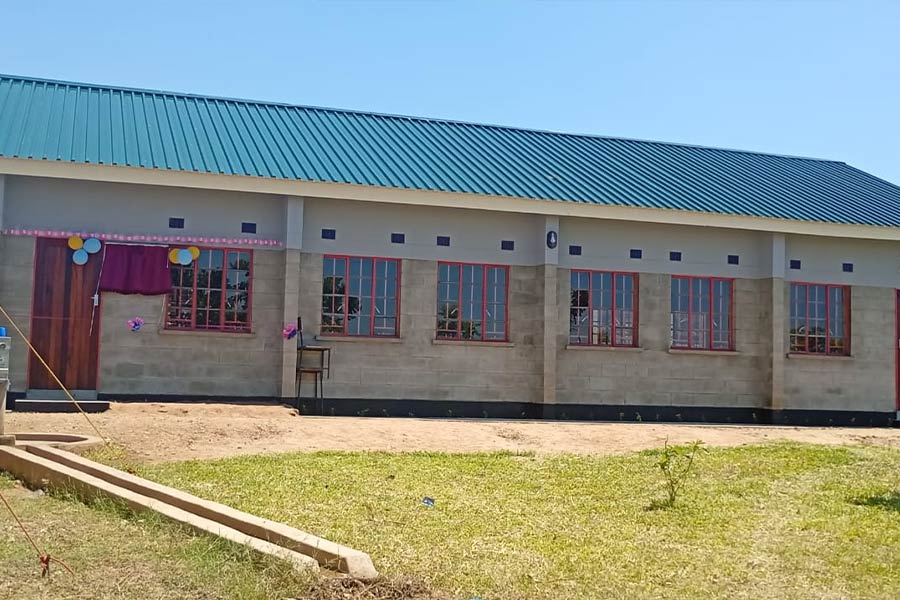
Not long ago, when darkness fell over Katole Community Day Secondary School (CDSS) in Thyolo, learning came to a halt.
For Stephano Bikoko and his classmates, nightfall meant closing books, abandoning studies, and surrendering their dreams — not because they lacked ambition, but because they lacked light.
Situated in Gombe, about 68 kilometres from Thyolo District Council, the hard-to-reach school stood in isolation: no electricity, no computers, no laboratory. Just students determined to get an education.
“Studying at night was impossible,” Bikoko recalls. “Without electricity and proper facilities, our performance was poor.”
For many students, education felt like a distant promise—one shining brighter in urban schools than in their own village.
Today, Katole CDSS tells a different story. As the sun sets, lights flicker on across classrooms. Computer screens glow. Students gather, not to end their day with a chat, but to begin a new chapter of learning well into the night.
When solar-powered electricity arrived, it brought possibilities. “Now everything is clear,” says Bikoko, smiling. “We can research using the internet, download study notes, access information, and learn beyond the classroom. My performance has improved, and I know I will pass.”
What was once a struggle is now an opportunity.
This transformation has been powered by partnerships.
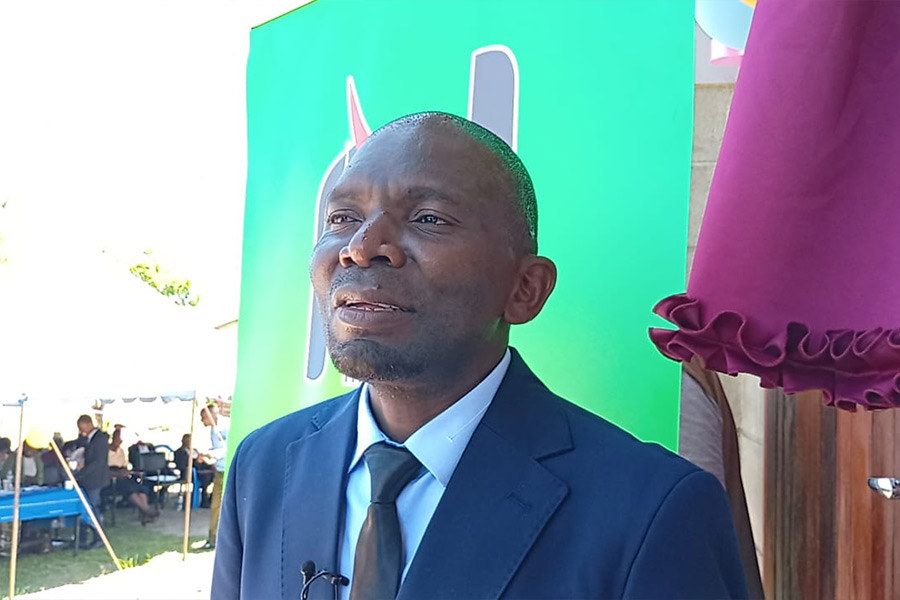
The K52 million solar electrification project, funded by the Netherlands-based Sopowerful Foundation, has brought light to the school — both literally and metaphorically.
With electricity in place, Petroleum Importers Limited (PIL) invested K150 million to construct a modern ICT laboratory and library.
For the first time, students are typing on keyboards instead of copying from chalkboards. Lessons are projected. Knowledge is no longer limited to textbooks.
Students’ president Hopson Malamulo says the impact is life-changing.
“We can now study in the evening, learn computer skills, and use projectors during lessons,” he says. “This has opened our minds. We feel like other students. We are very thankful to the two companies.”
For Traditional Authority Thukuta, the transformation goes beyond the classroom.
“This is the first secondary school in this area. These developments have changed everything. Our children now have a real chance to succeed,” he says.
Where there was once neglect, there is now pride. Where there was darkness, there is now hope.
Headteacher Edward Kondwani Abraham walks through the newly powered campus with quiet satisfaction.
Not long ago, teachers could not even print exams. Today, assessments are conducted on campus. Students are learning computer studies. And, most importantly, they are dreaming bigger.
Abraham explains, “Students now come to study at night, something that never happened before. We have introduced computer lessons, and we are preparing our learners for the digital world.”
His ambition is clear: “Our goal is to send our first cohort to university this year.”
For the Sopowerful Foundation, the project is about more than light.
“Our mission is to provide solar electricity where it matters most. Without electricity, teaching and learning become very difficult,” says Impact Sustainability Manager Chikondi Makina.
The solar system, installed in 2024, is a hybrid model monitored remotely, with the school contributing 8 percent towards maintenance to ensure sustainability.
Makina adds, “We trained the project committee on how to manage the system. After this inauguration, we will return annually to monitor it. Of course, it is a hybrid system, so we can also monitor it remotely.”
PIL General Manager Martin Msimuko says the K150 million investment is about equity.
“We want rural students to have the same opportunities as those in cities. My appeal to the students is to embrace discipline and prioritize education, which is the key to their future.”
Meanwhile, Shire Highlands Education Division Manager Evelyn Njima lauded PIL’s support, urging students to utilize the facilities and communities to protect them from vandalism.
Despite the progress, Katole CDSS still faces challenges. The school has no potable water and only two teachers’ houses for 12 staff members, according to headteacher Abraham.
Yet teachers continue to show up, driven not by comfort, but by commitment.
The initiatives at the school align with the Malawi 2063 development agenda through the Economic Infrastructure enabler, which supports solar energy, ICT labs, and libraries. It promotes alternative energy sources to increase power generation capacity, reduce reliance on the Shire River, and mitigate climate change. The enabler also advocates for a “robust ICT infrastructure” for a digital economy, including e-learning, e-libraries, and internet connectivity in schools.
At Katole, as night deepens, the classrooms remain alive with light.
Books are open. Computers hum. Students lean forward, focused, determined.
For Stephano Bikoko, the darkness that once defined his education is now a memory.
In its place is something far more powerful: hope. And for the first time, that hope is bright enough for the students to see their future in light years.