

ZODIAK ONLINE
ArtBridge House, Area 47
Sect. 5, P/Bag 312
Lilongwe, Malawi
Sect. 5, P/Bag 312
Lilongwe, Malawi

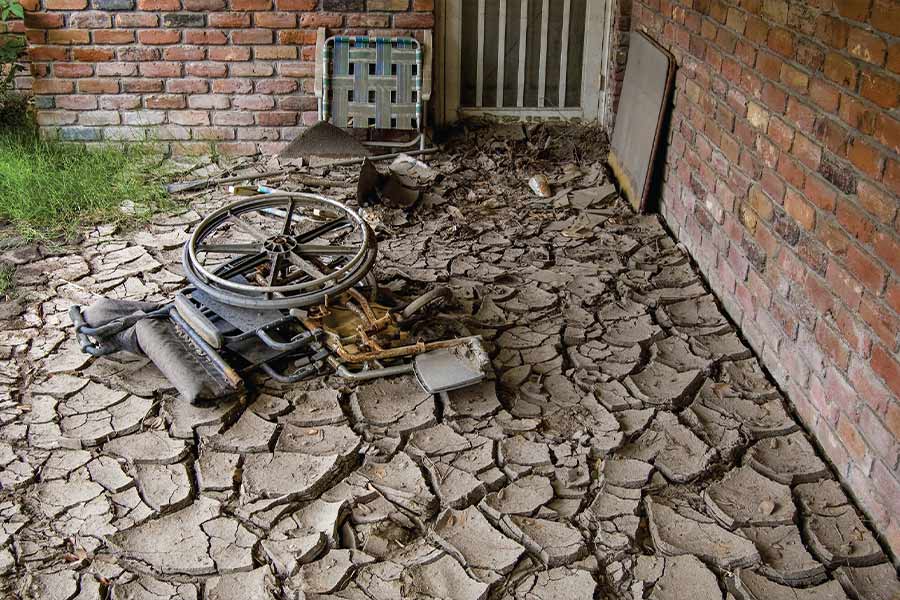
Whenever disaster strikes, the instinctive thought is survival—saving oneself before thinking of family or others. Yet in the chaos of fleeing floods or cyclones, people with disabilities are often forgotten, left on the margins of rescue efforts.
“I saw people running. I couldn’t hear anything. Everyone was running for their lives, but I couldn’t run. I am a person with a disability. It was hard for me to flee to a safer place. I was scared,” recalls Stephano Maneya, a man with a hearing impairment from Nsanje, describing the day Cyclone Freddy devastated his community in 2023.
Maneya’s story is not unique. Across Malawi, persons with disabilities are frequently excluded from disaster preparedness. Early warning systems, emergency messages, and rescue operations rarely prioritize their needs. For many, survival depends not on planning but on what Maneya calls “a miracle from God.”
Living With Fear
For Clement Thete, a father with a physical disability in Tengani, Nsanje, the fear is constant. His home sits between two rivers, Namiyala and Nkhande.
“When it rains heavily, my life is disturbed. It is hard to flee, hard to protect my children. As a father, this puts our lives in danger,” he says.
Communities Taking Action
Despite these challenges, hope is emerging. In Nsanje, persons with disabilities and their allies are taking proactive steps.
Misheck Martin, Chairperson of the Area Disability Forum in Tengani, explains: “We first identify people with disabilities living in dilapidated houses. Strengthening these homes to withstand floods is crucial.
With my little resources, I help others—sending children to hospital, sourcing funds from organizations, and constructing houses for persons with disabilities.”
Southern districts such as Nsanje, Phalombe, Blantyre, and Chikwawa were among the hardest hit by recent cyclones. In response, the Malawi Red Cross Society is implementing the ECHO Project, funded by the European Union Civil Protection and Humanitarian Aid Operations through the Danish Red Cross.
The project promotes anticipatory action—clearing blocked bridges, constructing new ones, and creating waterways to manage heavy rains. It also provides group cash transfers, enabling communities to rehabilitate houses for vulnerable groups, including persons with disabilities.
Stories of Resilience
Emily Mankhwala from Phalombe, who has a physical disability, says: “Heavy rains used to terrify me. I couldn’t run to save myself or my children. My house was dilapidated, but community members rehabilitated it. Now it can withstand heavy rains. I am safe. I no longer live in fear.”
Her sentiments are echoed by Dorothy Kamulaza, also from Phalombe: “My house was miserable and unsafe. I feared for my life. Thanks to the community, I am safe now. I no longer worry.”
Phalombe District Rehabilitation Officer, Chelewani Pius, notes that with over 3,000 people with disabilities in the district, the housing initiative has significantly reduced their vulnerability during disasters.
In Blantyre, Hope Nyirenda, Vice Chairperson of Masomphenya in Chilobwe, reports that their group received K4.4 million through the ECHO Project, rehabilitating 150 houses for persons with disabilities.
Institutional Support
Harriet Kachimanga, spokesperson for the Malawi Council for Disability Affairs (MACODA), says the council is deeply concerned about the challenges faced by persons with disabilities during disasters, describing current proactive initiatives as “crucial in safeguarding lives.”
Similarly, Linda Moyo, spokesperson for the Ministry of Gender, emphasized that the government is rolling out interventions to protect persons with disabilities during emergencies.
Looking Ahead
As natural disasters increase in frequency and intensity, persons with disabilities remain among the most vulnerable—often abandoned, forgotten, and exposed to abuse, violence, and severe psychological impacts.
Experts stress that proactive measures, rather than reactive responses, are the most sustainable solution. By strengthening homes, building resilient infrastructure, and ensuring inclusive disaster planning, communities can reduce casualties and guarantee that persons with disabilities are not left behind when disaster strikes.