













ZODIAK ONLINE
ArtBridge House, Area 47
Sect. 5, P/Bag 312
Lilongwe, Malawi
Sect. 5, P/Bag 312
Lilongwe, Malawi

Human trafficking in Malawi is no longer the work of shadowy recruiters and border smugglers. Increasingly, it is being driven by digital platforms—Facebook pages, WhatsApp groups, and online job adverts that lure victims into modern slavery.
Activists warn traffickers have become highly “professional” in their use of social media, exploiting misinformation and poverty to prey on vulnerable communities.
With the rise in Internet access in Malawi, this growing global trend in internet in human trafficking is putting many people at risk. How can the public avoid falling into the trap?
What began as the promise of a lucrative job for Chikondi—not her real name—ended in disaster.
After spotting an online advert for work in the Middle East, she began the process: securing a passport and applying for a visa through an agent.
Promised a restaurant job, she was instead forced into domestic servitude—caring for 15 people and livestock, while enduring sexual assault.
“I was once sexually abused by three people. They overpowered me and forced themselves on me. After that I managed to run away, leaving everything behind. My passport, my Visa, because I knew that was not safe,” she says
Chikondi recalls a fellow Malawian worker dying after prolonged abuse.
“After they heard that there were plans to rescue the group of Malawians, the abuse became worse. I lost a friend named Aida. She died because she was overworked. She had anaemia and other diseases. She was raped, sometimes anally. Her stomach swelled as a result, and she died right there in Oman.”
While Chikondi suffered in Oman, Joseph and Awufi were exploited in South Africa. They too were lured online, believing life abroad was better.
They were among 91 Malawians rescued from Beautiful City, an illegal garment factory in Johannesburg owned by Chinese nationals. They worked in slavery-like conditions.
“There were many people that had their eyes damaged. I know of two people. One from Mangochi got injured in the eye, and it doesn’t work anymore; another from Machinga also got his eye damaged. The managers had a policy that said injuries were personal liability and a result of the machine operator’s negligence,” says Joseph.
Workers, Aufi says, were confined to the compound, denied rest, and paid below South Africa's minimum wage of $1.64 (K2,900), barely enough to survive.
“We had no choice but to continue working under those harsh conditions. Luckily, we were working with a South African driver, called Zukire, who knew Captain Madimba [a police officer]. And he also knew the manager, Audin, who revealed to his uncle about our suffering. That was how the authorities got to know about us and came to our rescue,” he recalls.
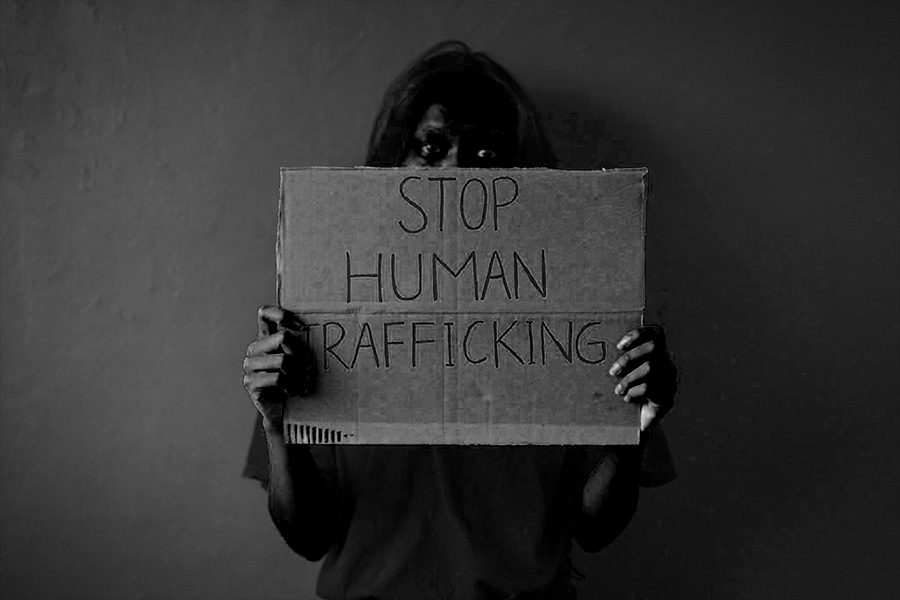 For young Malawians, unemployment and poverty make online job offers irresistible. Recruiters advertise restaurant or domestic work abroad, often through WhatsApp or Facebook, only for victims to end up in forced labour or sexual exploitation. Children are not spared.
But how can one identify possible trafficking threats online?
Dr. Charles Fodya, head of Malawi Communication Regulatory Authority (Macra’s) Malawi Computer Emergency Response Team, shared written responses to our questions.
“Traffickers no longer use force at first — they use phones, promises, and persuasion. People can detect online trafficking threats in different ways, including: Job offers that sound too good to be true, requests to move conversations to private messaging quickly, pressure to keep communication secret, requests for personal documents or upfront fees and lack of verifiable company or physical address.
“If someone you don’t know is rushing you to make life-changing decisions online, that is a red flag.”

Maxwell Matewere of the UN Office on Drugs and Crime warns of another alarming trend: suspicious online adoption schemes.
According to the Malawi Human Rights Commission, between 2016 and 2025, more than 400 adopted children in Malawi cannot be traced.
Orphanages are suspected of using digital platforms to profit from illegal adoptions—sometimes fetching up to K500 million per child.
“You might also recall the case involving a mother who went to register for election only to be told that as he had a national ID, in the system she was reported as a dead person because there was a death certificate that was issued.
“When the matter was investigated, it was then discovered that one of the orphanages in Blantyre had put forward her three children for adoption after she was listed as dead. These children are now in the US.
“The mother has been in court. But what is important is the things that we learn from this particular case, that indeed, there are so many, so many children who have been taken from rural communities, put on Facebook pages and trafficked.
“So you will literally see faces of children on Facebook pages with the false stories attached to them to attract the interest of well-wishers or those parents in the developing countries who also wish, or want to adopt children in Africa,” adds Matewere.
Charles Luhanga, Executive Director of Fula Africa, also confirms the trend.
“These minors really come from rural areas where they don't even know the language of where they are going. They cannot even speak for themselves; all they do is carry phone numbers on their papers of which we wonder why this is happening. And you’ll find that mostly they are getting information from friends on the Internet, Facebook, WhatsApp and the like
“From Mangochi, we are having little girls as young as 15 and that is very massive; and they're heading to two places only which is Durban and Cape Town and around Johannesburg. We don't understand why this is the case."
Digital misinformation is compounding the problem.
Stefan Jansen, Country Director of Norwegian Church Aid, stresses that traffickers exploit the “knowledge deficit” created by fake social media content.
“We think that we can make strides in terms of awareness raising about trafficking in persons, but also tackling the root causes of why people do migrate and why people are falling victim to traffickers. When it comes to the knowledge deficit that we have, there is a lot of misinformation also sparked by fake social media.
“There are a lot of people who fall victim to trafficking because there are criminal organizations who are pretty professional in trafficking of people and that is something that especially with the government and with the law enforcement agencies we need to tackle as a whole together,” he suggests.

The Malawi Police Service (MPS) is aware of the trend, says Deputy Police Spokesperson Alfred Chinthere.
“MPS is warning the public that traffickers are increasingly exploiting the internet and social media platforms to deceive unsuspecting victims, often through fake job offers, scholarships, and romantic relationships, for example. And people can detect such threats by being cautious on offers that seem too good to be true, or when they request personal information (0:26) and avoid physical meetings or verifiable identification.
“So we should avoid sharing sensitive personal information online, at least try to consult family members or authorities before making any commitments.
“We are intensifying our cyber surveillance, especially using the digital forensics and cyber security unit, which is under the criminal investigation department at police, and also working with Interpol and conducting some awareness campaigns through our community policing branch. So, we are warning the public to always report suspicious online activities to police,” says Chinthere.
Security expert Sherif Kaisi says internet and mobile phone providers must strengthen their security features, but insists every person has a responsibility to guard against the vice.
People have such a huge responsibility because those are sinister kind of endeavors as they go through online. Our two mobile lines companies also have a responsibility to strengthen their security systems. Coming to the service users, I think we shouldn't depend on what one will do for us, but in fact, we need to protect ourselves. You know, our problem is that people are gullible in getting money for free sometimes.
“People can be corrupted with social media, can be corrupted using the phone, that there is this and that. People think you can get money easily or get a good job if you go somewhere outside Malawi. That’s wrong thinking.
“So, in such a way people are being trafficked from one place to the other because of having a gullible heart of thinking they can get rich quickly. Ask yourself, who is this person that is conniving or is telling me to go somewhere to do some work in such a manner.
Traffickers no longer rely on brute force at first—they use phones, promises, and persuasion.
Dr. Tsoka of Malawi CERT advises that people should verify job offers through official channels and never send personal documents or photos to strangers.
“People must always verify job offers through official channels, never send personal documents or photos to strangers, avoid paying recruitment or processing fees online, talk to family, community leaders, or authorities before travelling, and educate young people about online manipulation tactics. Trafficking thrives on secrecy — protection comes from verification and conversation.
“Through Malawi CERT, MACRA is monitoring online threats and trends linked to cyber-enabled crimes, conducting public cyber safety awareness campaigns, working with law enforcement, telecom operators, and other stakeholders, issuing advisories on online scams, fraud, and digital exploitation, and promoting responsible and safe use of internet platforms. While MACRA does not investigate trafficking directly, it plays a key role in prevention, awareness, and coordination in the digital space.”
Digital technology in Malawi is a double-edged sword: it increases trafficking risks through online recruitment, but also offers new avenues for investigation.
While low internet penetration currently limits large-scale cybercrime, social media is increasingly used to deceive and recruit vulnerable youth.
Experts agree: human trafficking may start online, but it can be stopped offline—through awareness, verification, and reporting.
The internet should be a gateway to opportunity, not exploitation.